Can AI Detectors Detect Claude Generated Text in 2026?
TABLE OF CONTENTS
Key Highlights
Can AI Detectors Detect Claude? The Short Answer
What the Evidence Looks Like in 2026
How AI Detectors Actually Work
Why Claude Can Be Harder to Catch Than Older Chatbots
Does Turnitin Detect Claude?
Does GPTZero Detect Claude?
Claude vs ChatGPT AI Detection
Claude AI Detection Accuracy: What Changes the Result
False Positives: When Human Writing Gets Flagged
How to Check Claude Text with AI Checker Pro
How to Detect Claude AI in Writing
Practical Tips for Students, Bloggers, and Teachers
Conclusion
FAQs
Get an AI summary of this post on:





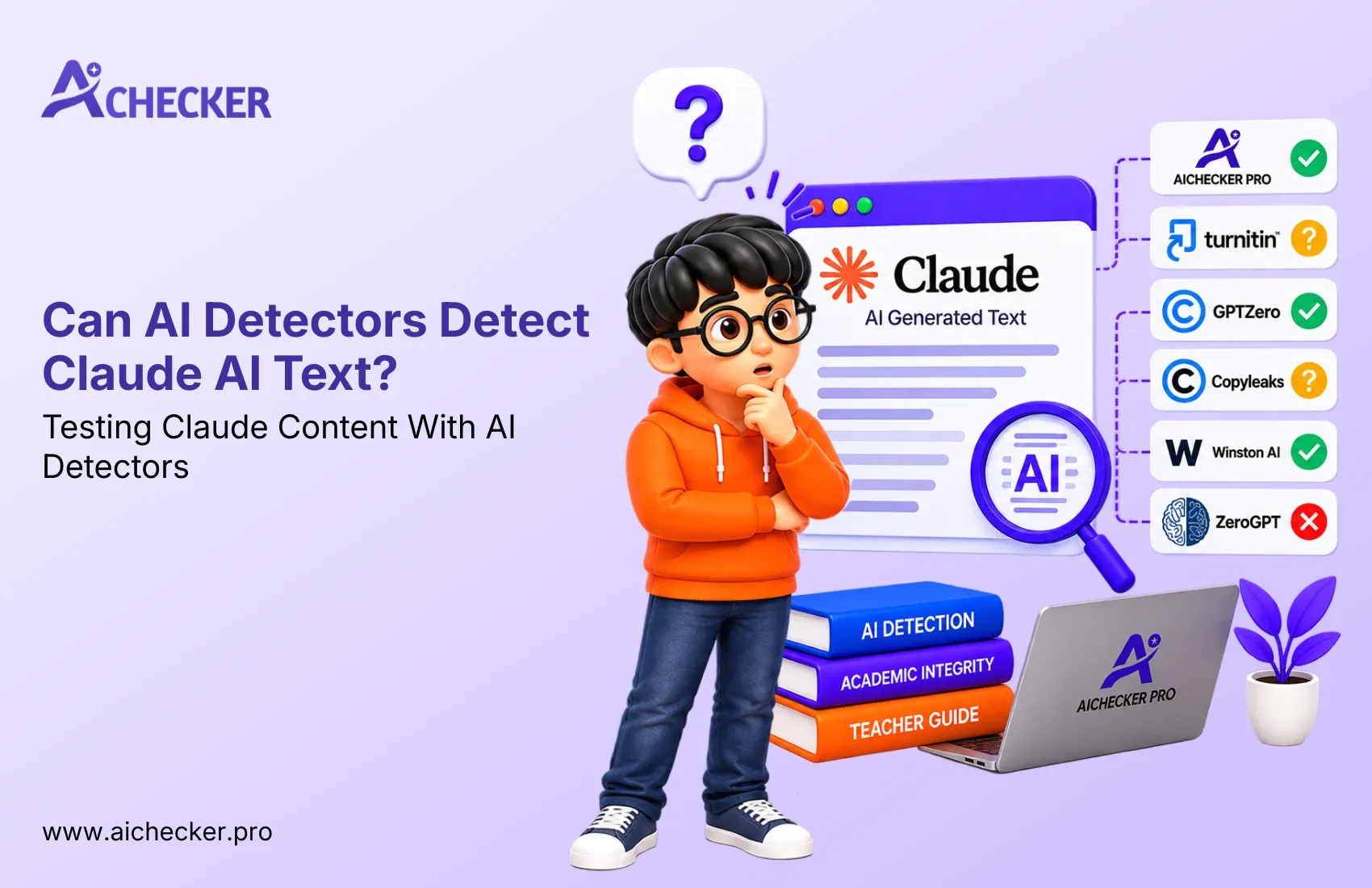
It does, although not always. The majority of major detectors will catch raw, unpolished Claude text some of the time, but Claude's text has a more natural flow than older chatbots, making it more slippery than early ChatGPT text.
Accuracy falls off sharply when the text is edited, paraphrased, or humanized, and there is a significant risk of falsely flagging genuinely human text. No detector provides a definitive answer. Always consider the possibility of a false positive.
Key Highlights
- Raw Claude text gets flagged some of the time, but results swing a lot between tools.
- Claude often scores lower than raw ChatGPT text in side-by-side checks, though this is not guaranteed.
- Turnitin, GPTZero, Originality.ai, and Copyleaks all behave differently on the same Claude sample.
- Editing, paraphrasing, and humanizing reduce detection accuracy greatly.
- Human-written text, especially formal or non native English writing, can be falsely flagged.
- No AI detector is 100% accurate, so never rely on one score alone.
- Running a second opinion with a sentence-level checker like AI Checker Pro gives you a clearer picture.
Can AI Detectors Detect Claude? The Short Answer
If you have ever pasted a Claude draft into a checker and anxiously waited for the results, you are not alone.
The big question in the year 2026 is whether AI detectors can pick up on Claude's text, and how much you can trust the outcome.
The short answer? Can AI detectors detect Claude text? Well, in some cases, yes, but the results can be all over the place, depending on the tool, the length of the text, edits made, and more. Claude has a certain 'flow' to it that makes it somewhat detectable, but no AI detector is 100% reliable, so take the results with a grain of salt.
What the Evidence Looks Like in 2026
I have tested many AI detectors, and most of them are not reliable when it comes to detecting fresh model outputs.
Claude is one such model. When asked if AI detectors can detect Claude-generated content, most people would expect a clear yes or no answer. The truth is more complex.
This is what the reality looks like in 2026. Claude's raw output, copied word-for-word from the chat window, occasionally triggers detectors as non-human content. Minor edits to the text decrease the score.
Text that has been heavily edited or run through a humanizer may register as human content on many detectors.
That is why the question of whether Claude is detectable does not have a simple answer. It depends on the detector, the prompt, the text length, and the amount of editing.
Why the Answer Keeps Changing
Detectors are trained on samples of specific models at a specific time. Claude receives an update, detectors are retrained, and the window moves on. The result of a test from three months ago may not be accurate for today's test. So if you are asking, can Claude be detected, the honest answer is it depends on what the detector this week is using.

Get Lifetime Access with 60% OFF
Stop paying monthly subscriptions. Enjoy unlimited AI detection and humanizer access forever with future updates included.
- One-time payment
- Unlimited access forever
- All future updates included
How AI Detectors Actually Work
Let me think of a simpler analogy. Most detectors can't truly know what chatbot wrote what. They only have an estimate based on patterns of human and AI writing that they were trained on.
The Main Signals
- Perplexity: how easy to predict each word choice is. AI text tends to be smoother and more predictable.
- Burstiness: how much sentence length and structure vary. Humans mix short and long sentences more unevenly.
- Detection model scoring: a trained model gives a probability that a passage is AI written.
- Sentence-level highlighting: some tools score each sentence so you can see exactly which parts look machine-made.
Why This Matters for Claude
Claude is good at varying sentence lengths and using different tones of voice. This makes some of these signs less strong. A simple Claude artificial intelligence detector that only looks at levels of confusion can miss text that a more powerful classifier would catch. That's also why any Claude content detector you try can give you a different answer than the next one.
Why Claude Can Be Harder to Catch Than Older Chatbots
In my testing, Claude drafts often read less "stock" than early ChatGPT drafts. A few reasons stand out:
- Claude tends to vary sentence length more naturally.
- It follows tone instructions well, so a casual or personal voice is easy to request.
- It uses fewer of the obvious filler phrases that older chatbots leaned on.
But Claude still leaves tell-tale signs. It likes to make balanced, hedged statements. It has a tendency to use tidy little summaries for each paragraph. It can fall into the trap of using neatly bullet-pointed lists and evenly spaced sections. All things a good Claude text detector or a good teacher can spot.
A clear "Yes!" or "No!"? Well, no. Is Claude AI detectable? In reality, it's a coin toss. It's just not dependable enough. It can often be detected, but it can't always be detected with certainty.
Does Turnitin Detect Claude?
This is the question students ask most often, so let me be blunt. Does Turnitin detect Claude? Turnitin has declared in public media that its system is designed to detect text from large language models in general and not only ChatGPT.
It gives an estimated percentage of the text that seems AI-written and has stated that it accepts false positives to reduce the number of AI texts that do not actually appear AI-generated.
So can Turnitin detect Claude AI text? Well, in my experience, sometimes yes and sometimes not.
Claude essays appear much more likely to have a high score if they are raw, unedited, and long, while short pieces, edited versions, and mixed human and AI writing are far less predictable.
A few things to keep in mind:
- Turnitin is a school-based learning tool. Students usually cannot run it themselves before submitting.
- Several major universities have scaled back reliance on a single AI detection score and treat it as a conversation starter, not proof.
- Turnitin's score is an estimate, not a verdict.
If you are a US college student, the safest bet would be to know their policy on AI, write it in your own voice, and keep all notes and drafts. Having the version history on Google Docs can help you exemplify how it came to be.
Does GPTZero Detect Claude?
Does GPTZero detect Claude? GPTZero is extremely popular among teachers, as it offers sentence-level highlighting and a free tier for testing, making it easy to use for trial.
In my experiments, GPTZero detected some raw Claude samples and failed to detect others, with the difference being the length of the sample and the number of edits.
Other tools perform differently again. In my experience, Originality.ai is much stricter, which is why many SEO agencies utilize it to scan blog posts for plagiarism.
Copyleaks is in the middle and is common in business and educational settings. When I tested the same Claude paragraph on 4 plagiarism checkers, I got 4 different results.
That is the value of one experiment, which teaches significantly more than any marketing page. What is the lesson? Do not rely on one plagiarism checker; always ask for at least two.
Claude vs ChatGPT AI Detection
How does Claude vs ChatGPT AI Detection compare? In my own non-scientific tests, raw text from ChatGPT was easier for detectors to identify than raw text from Claude, especially texts generated by early versions of ChatGPT. The newer models are generally closer to each other, and the less difference there is between the models, the less room there is for improvement in the training of the detectors.
Here is a quick comparison of tools you will likely run into:
| Tool | Accuracy | Free Tier | Humanizer Included | Best For |
|---|---|---|---|---|
| AI Checker Pro | Sentence-level detection; results vary by text, like every tool | Check the pricing page for current limits | Yes | Students, bloggers, and agencies who want to detect and fix AI content in one place |
| Turnitin | Estimate-based, institution-controlled | No, access comes through schools | No | Universities and instructors |
| GPTZero | Varies by text length and editing | Yes, limited | No | Teachers and quick checks |
| Originality.ai | Often stricter, can lean toward flagging | Paid, credit-based | No | SEO teams and publishers |
No tool in that table is perfect. Accuracy changes with every model update, and anyone claiming 100% is not being honest with you.
Claude AI Detection Accuracy: What Changes the Result
When people ask about Claude AI detection accuracy, they often forget that the text matters as much as the tool. Several factors move the score:
- Length: Very short text gives detectors little to work with, so results are shaky.
- Editing: Even moderate human edits can lower the AI score noticeably.
- Prompting: A prompt that asks for a personal, specific, imperfect voice produces less detectable text than "write an essay about X."
- Topic: Generic topics tend to look more machine-written than text with real personal detail.
- Paraphrasing and humanizing: Detection accuracy drops significantly on rewritten or humanized AI content compared to raw AI text.
Turnitin has also mentioned that they are working on detecting text modified by bypass tools, so relying heavily on paraphrasing is becoming riskier.
That is why I recommend making actual edits instead of just a quick paraphrase.
Here is the shocking part. Claude AI detection is not only about if Claude wrote the text, but whether the text is similar to what a detector has been trained to look like text from Claude.
This is why you could also be flagged as a human.
False Positives: When Human Writing Gets Flagged
This is the part that worries students the most, and it should. Human-written text can be flagged as AI, especially:
- Formal academic writing
- Text from non native English writers who stick to simple, correct sentence patterns
- Heavily edited or very polished prose
- Technical writing with repeated structure
I have seen genuinely human essays come back with a high AI score because the writer was careful and formal. It is frustrating, and it is why a score alone should never decide a grade.
How to Reduce Your False Positive Risk
- Keep drafts, notes, and version history so you can show your process.
- Add specific examples, names, dates, and details only you would know.
- Vary your sentence length naturally. Read the draft aloud and fix anything that sounds stiff.
- Run your own work through a checker before submitting, so you are not surprised.
- If you are flagged, ask for a review and share your drafting history.
Have you ever been flagged when you wrote every word yourself? You are far from the only one.
How to Check Claude Text with AI Checker Pro
If you want a simple way to detect Claude-generated text, AI Checker Pro can help you check the content sentence by sentence. Instead of showing only one overall percentage, it highlights individual sentences that may need a closer look.
AI Checker Pro supports text from ChatGPT, GPT-4, GPT-5, Gemini, and Claude. It is used by 100K+ users.
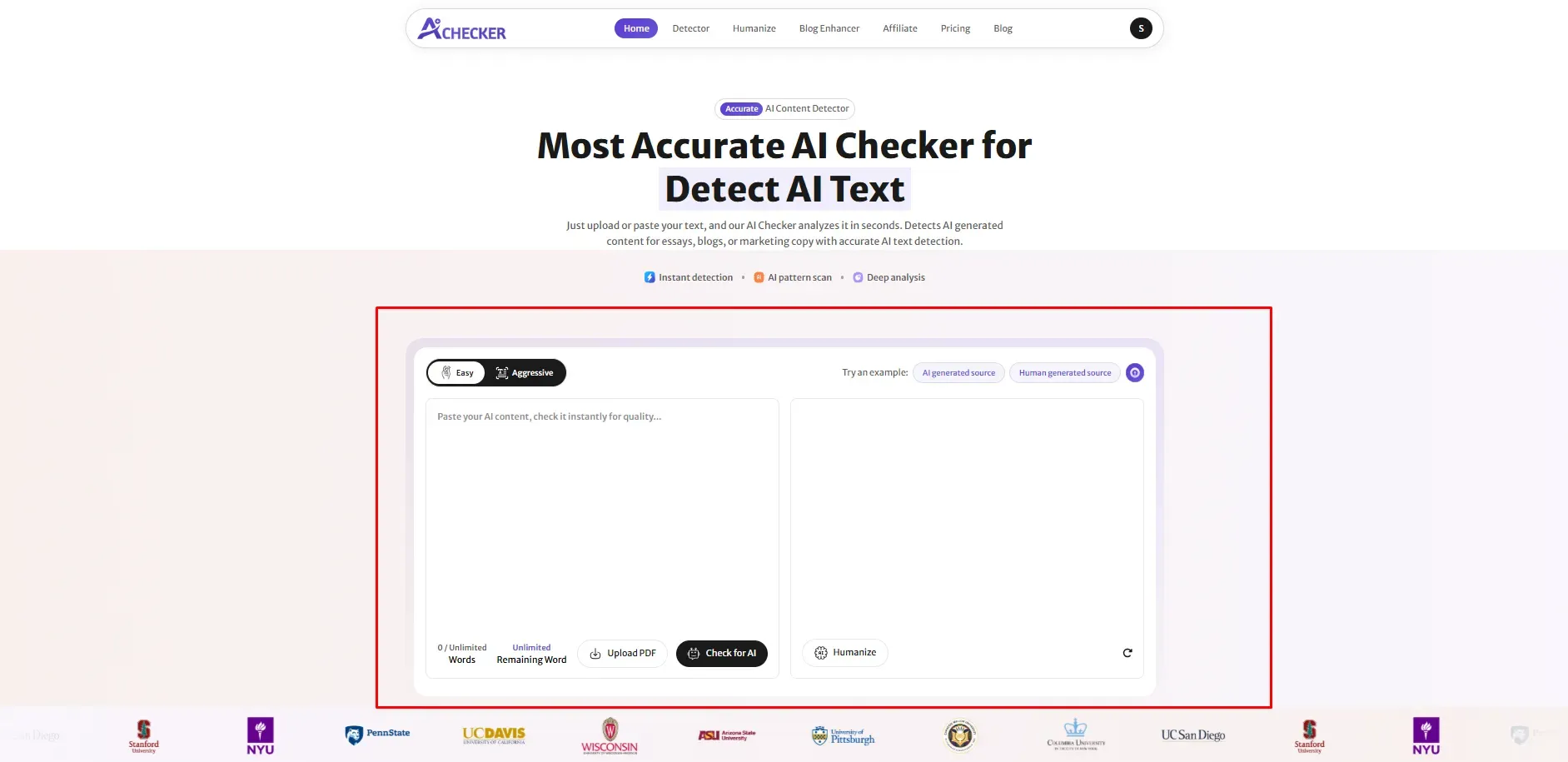
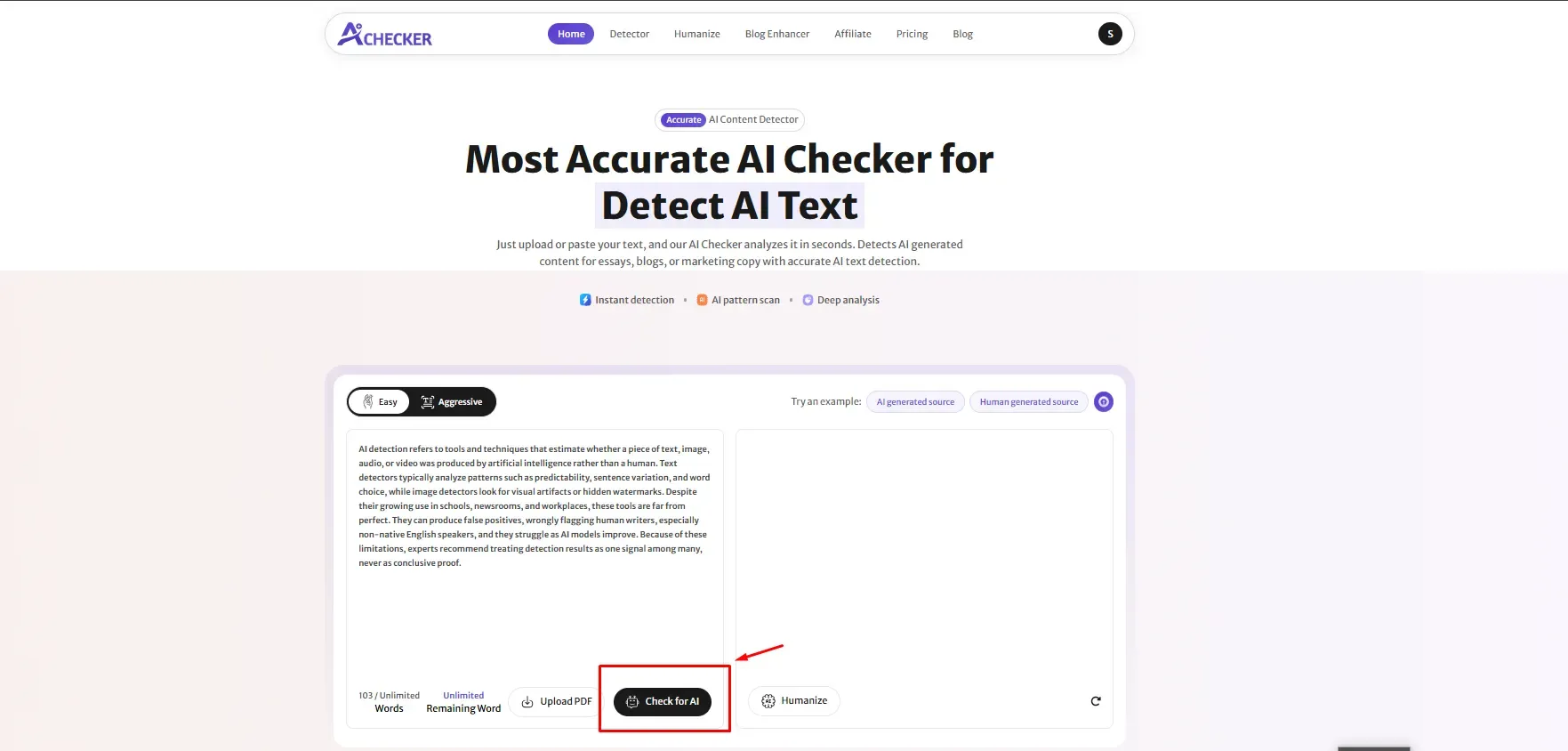
Step 1: Open the AI Detector
Go to the AI Detector and paste the Claude-generated text into the text box.
Step 2: Run the AI Detection
Start the detection process and wait for the results. The tool will analyze your text and show sentence-level results.
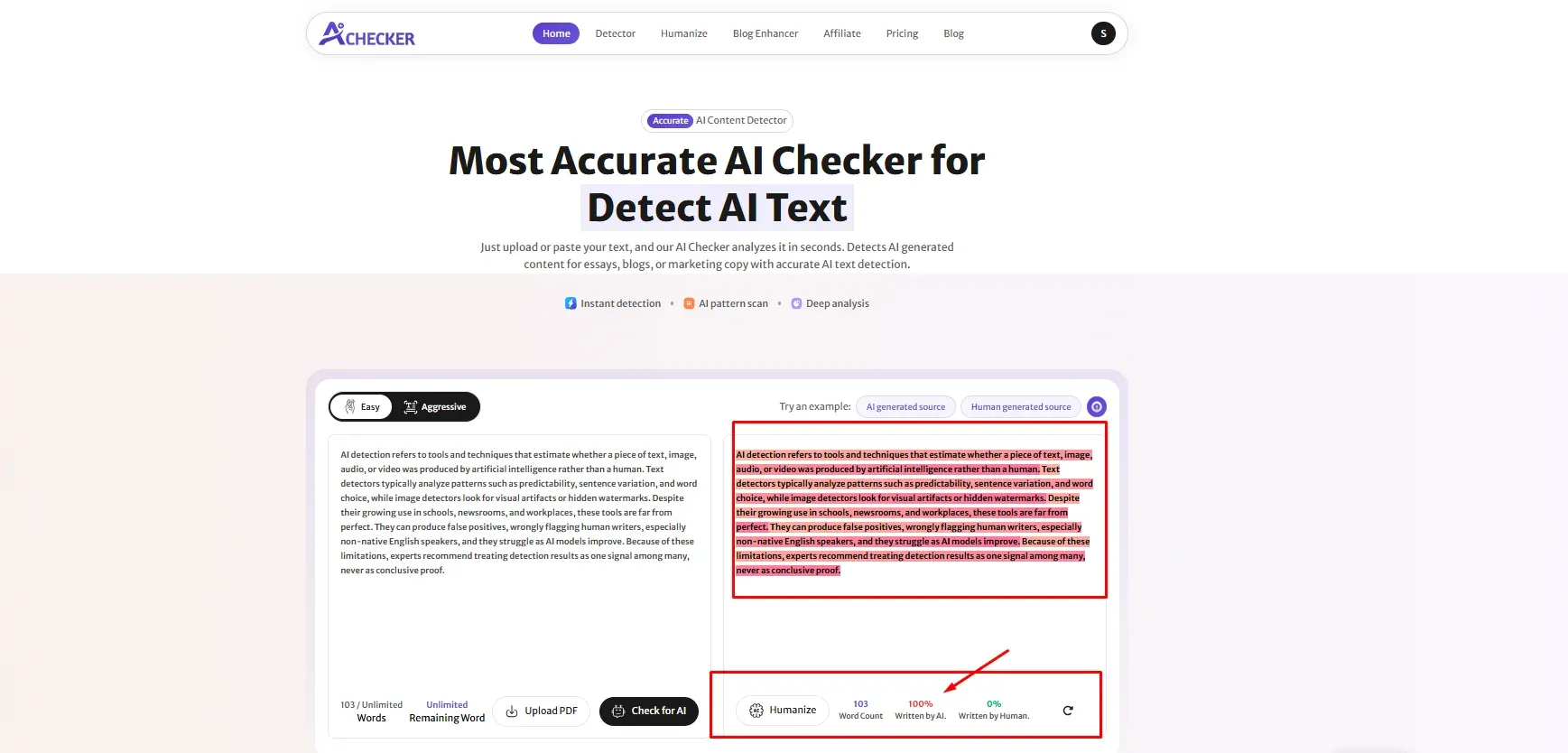
Step 3: Review the Highlighted Sentences
Check the sentences that are highlighted as potentially AI-generated. Focus on these sections instead of rewriting the entire article.
Step 4: Rewrite the Flagged Parts
Rewrite the highlighted sentences in your own voice. Add personal details, real examples, opinions, or information that makes the content more natural and specific.
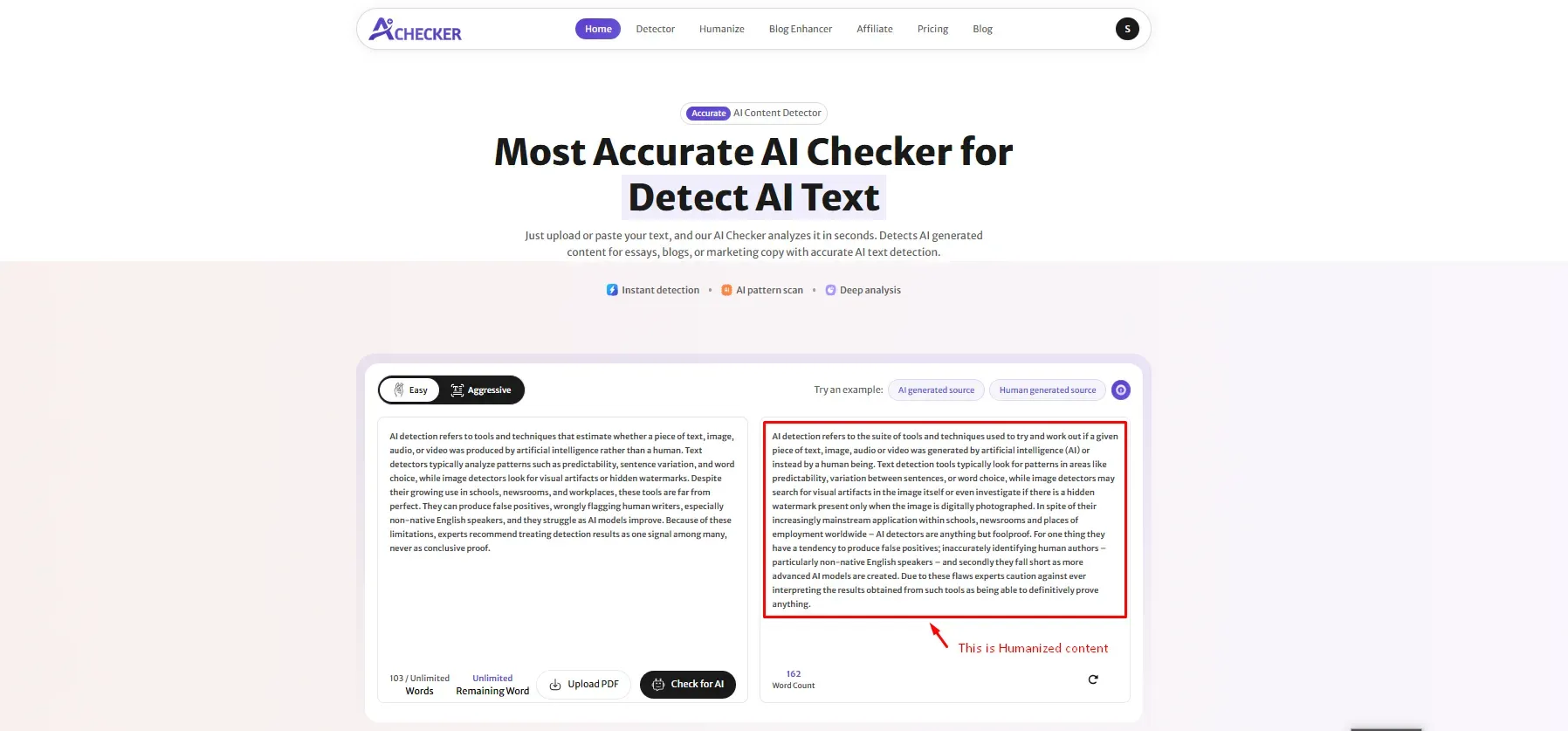
Step 5: Use the AI Humanizer if Needed
If you want a faster first pass, run the flagged text through the AI Humanizer. After that, review and edit the content yourself.
Step 6: Check the Text Again
Run the revised text through the AI Detector one more time. Review the sentence-level results and make any final changes that are needed.
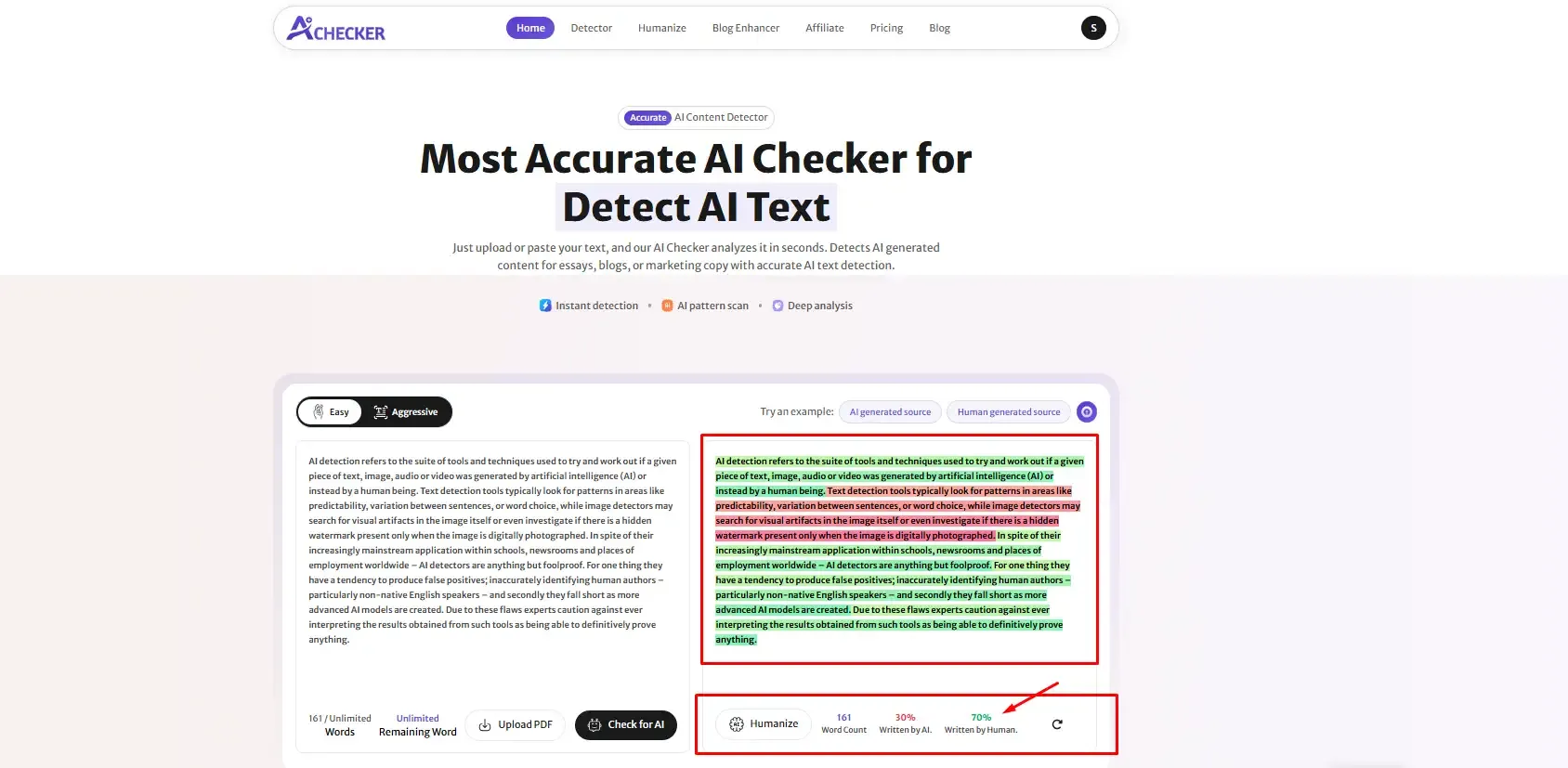
Step 7: Review Before Publishing
Read the complete article yourself before publishing or submitting it. Make sure the content is accurate, natural, useful, and written in a voice that represents you.
How to Detect Claude AI in Writing
If you are checking someone else's writing, look for patterns such as very tidy wording, repeated hedging, evenly sized paragraphs, summary sentences at the end of sections, and limited personal detail.
However, these style patterns are not proof that a text was written by Claude. Use an AI detector for Claude as an additional check instead of relying only on writing style.
Practical Tips for Students, Bloggers, and Teachers
For Students
Know your school's AI policy before using AI for academic work. If your instructor allows it, use AI as a helper for brainstorming or creating outlines, but write the final text yourself. Keep your drafts and notes so you can show how your work developed if needed.
For Bloggers and SEO Pros
Google has said that it focuses on helpful content rather than who or what wrote it. However, thin or generic AI content may not provide much value to readers. Add first-hand experience, original examples, and real opinions to make your content more useful. If you want to improve a weak draft, you can also try the Blog Enhancer and Humanizer.
For Teachers
Do not rely on an AI detector score alone when evaluating student work. Use the result as a starting point for a conversation, ask students to explain their work, and review their drafting history when available. A low detector score does not prove that a student wrote the work without AI, and a high score does not prove cheating.
Conclusion
So, can AI detectors detect Claude? Sometimes. Tools such as Turnitin, GPTZero, Originality.ai, and Copyleaks may identify patterns often found in raw Claude-generated text. However, detection is not always accurate.
Editing, rewriting, or humanizing AI text can change these patterns, while fully human-written content can also be flagged by mistake.
For this reason, AI detectors should be treated as a signal, not final proof. If you use Claude for writing, keep your drafts and add your own ideas, examples, and personal experience. For important work, checking with more than one tool can give you a broader view.
FAQs
Can AI detectors detect Claude?
Is Claude detectable?
Does Turnitin detect Claude?
Does GPTZero detect Claude?
Is Claude harder to detect than ChatGPT?
How does a Claude AI detector work?
How to detect Claude AI in writing?
Can human-written text be flagged as AI?
Does editing Claude text lower AI detection scores?
How accurate is Claude AI detection?

Harshil Barvaliya
SEO Executive & Content Writer at AI Checker Pro
I’m Harshil Barvaliya, an SEO Executive and Content Writer at AI Checker Pro. I focus on improving the website’s search engine visibility through effective SEO strategies, including keyword research, on-page and off-page optimization, and content development.Get Started Free
Create a free account for advanced AI detection and scan history.
Trusted by thousands worldwide.
Recent Blog's
Discover how AI-powered content creation can elevate your website's reach and engage your audience like never before. Explore the real impact of AI on crafting content that connects.