How Accurate Are AI Content Checkers? Best Tools & Truth Explained (2026)
TABLE OF CONTENTS
The Rise of AI-Generated Content in 2026
Why AI Content Checkers Are Gaining Popularity
What You'll Learn
What Are AI Content Checkers?
How AI Content Detection Actually Works
Why AI Content Detection Is Not 100% Accurate
Real-World Accuracy Tests (2026 Insights)
Best AI Content Checker Tools in 2026
Popular AI Detection Tools Compared
Pros and Cons of AI Content Checkers
Can AI Content Really Be Detected? (The Honest Truth)
How to Avoid Being Flagged by AI Checkers
Are AI Content Checkers Reliable for SEO & Blogging?
Use Cases: Who Should Use AI Detectors?
Ethical Concerns Around AI Detection
Future of AI Content Detection (2026 and Beyond)
Conclusion
FAQs
Get an AI summary of this post on:





When you publish content online during two years, you receive one common question: which parts of your work could an AI system create. The second part of your question occurs when you need to determine which content in your inbox belongs to human writers and which content comes from language models.
The Rise of AI-Generated Content in 2026
By 2026, AI-generated content has stopped being a novelty. It's infrastructure. Marketing teams, solo bloggers, academic students, and enterprise brands all rely on some form of AI writing assistance whether that's drafting full articles or just polishing rough paragraphs.
The volume is staggering. Estimates suggest that more than half of all new web content now involves AI in some capacity, whether as a primary author or a co-writer. That shift has created an entire new category of tools known as AI content detectors software designed to analyze writing and flag whether a human or a machine produced it.
Why AI Content Checkers Are Gaining Popularity
The concerns driving adoption are real. Schools don't want students submitting work produced by machines and passing it off as their own the broader debate around AI writing in academic settings has made this one of the most urgent issues in education today. Editors want to know they're publishing original voices. SEO professionals worry about thin, templated content flooding search results. And some platforms have strict rules about synthetic content.
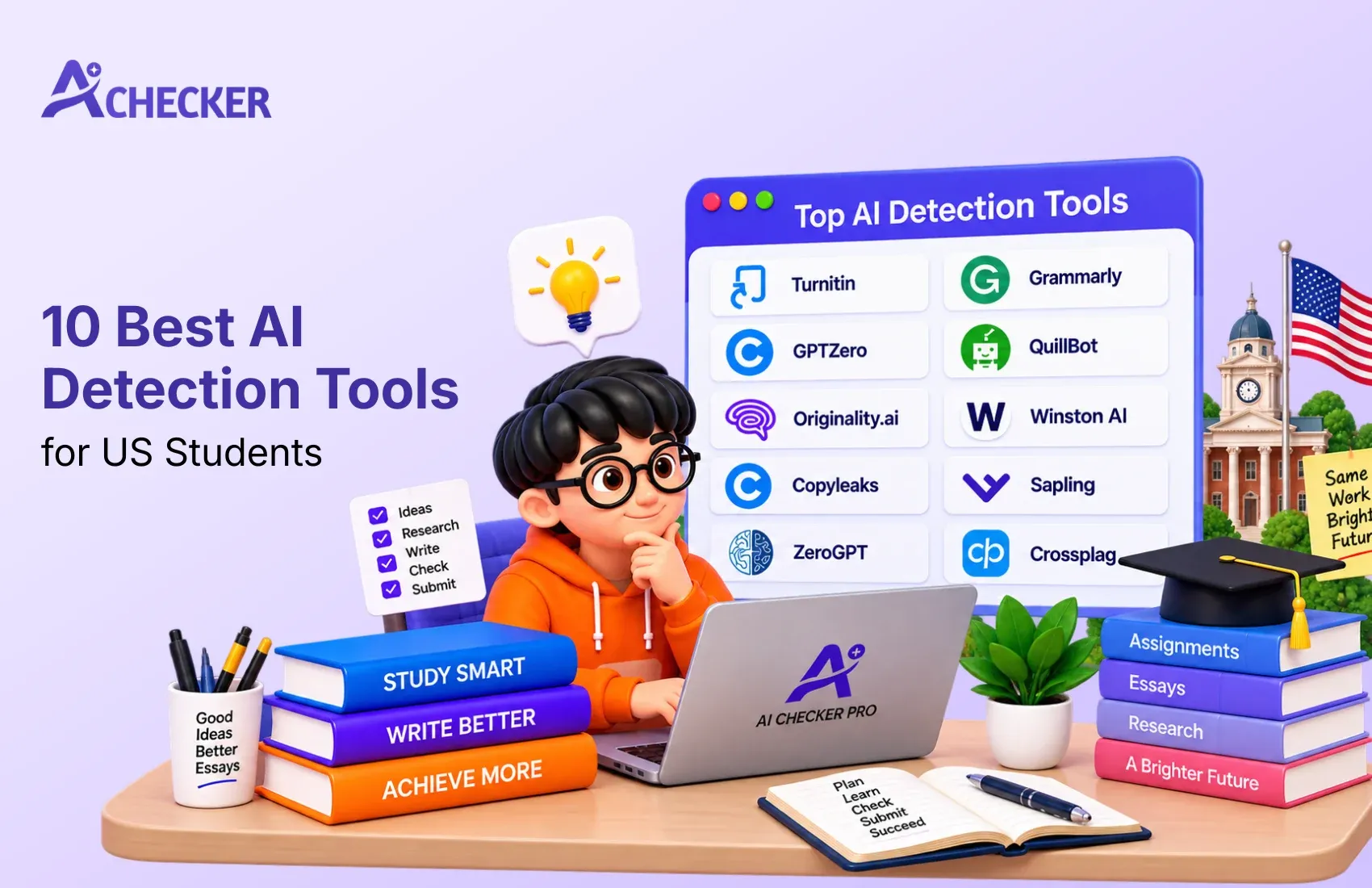
So naturally, tools that claim to sniff out AI writing tools like GPTZero, Originality.ai, Turnitin, and Copyleaks have become popular fast. Some charge monthly fees. Some offer free tiers. They all promise some version of the same thing: we can tell if a human wrote this.
What You'll Learn
This article cuts through the marketing hype and gives you a clear, honest picture of:
- How these tools work
- How accurate they actually are
- Which ones are worth your time
- What their limitations mean for you whether you're a student, a blogger, a marketer, or a business owner
What Are AI Content Checkers?
Simple Definition
An AI content checker is a tool that analyzes text and outputs a probability score indicating how likely it is that the content was generated by an AI model rather than written by a human. Most tools give you a percentage something like "87% AI-generated" along with highlighted sections they find suspicious.
They don't read meaning. They read patterns.
Current Use Cases
The most common use cases in 2026 include:
- Academic integrity: Universities run student submissions through Turnitin or Copyleaks to catch AI-assisted plagiarism.
- Publishing and editorial: Content managers screen freelancer submissions before publishing.
- SEO and content marketing: Agencies verify that outsourced content meets quality and originality thresholds.
- HR and recruitment: Some companies now screen cover letters and writing samples for AI use.
- Journalism: Fact-checkers and editors flag potential AI-sourced copy before it runs.
AI vs. Human-Written Detection
The core challenge here is a real one. AI writing has gotten dramatically better. The output from modern language models is fluent, varied in tone, and often indistinguishable from competent human writing especially at the surface level. Detection tools are essentially trying to solve a problem that becomes harder with every new model release.
How AI Content Detection Actually Works
Perplexity and Burstiness In Plain English
Two concepts show up constantly in AI detection conversations: perplexity and burstiness. They sound technical, but the ideas are simple and if you want a deeper breakdown of how detection engines use them, our guide on perplexity and burstiness covers the mechanics in full detail.
Perplexity measures how "surprising" a piece of text is. AI models tend to pick the most statistically likely next word. That means AI-generated text is often less surprising, more predictable, more statistically smooth. Human writing tends to have higher perplexity because we make unexpected word choices, wander off-script, and break our own patterns.
Burstiness refers to variation in sentence length and structure. Humans naturally write with bursts of short punchy sentences followed by longer, more complex ones. AI writing, especially from early-generation models, tended to produce consistently medium-length sentences with a similar rhythm throughout.
Detection tools measure these signals and compare them to what they've learned from training data.
The Role of Machine Learning
Most detection tools are themselves trained on large datasets of confirmed AI text and confirmed human text. They use classification models typically transformer-based architectures that learn to identify patterns associated with each category.
The problem? These models are trained on yesterday's AI. As new language models are released, detection accuracy drops until the detector is retrained.
Pattern Recognition and Training Data
Detection is only as good as its training data. If a tool was trained heavily on GPT-3.5 output and you submit content from a newer, more nuanced model, the tool may not recognize it as AI-generated. Conversely, if you write in a clean, academic style, you might get flagged even though you're entirely human.
Probability-Based Detection
Nothing is certain here. Every detection tool outputs a probability, not a verdict. "92% AI" doesn't mean the content is AI-generated it means the tool's model considers that the most likely outcome based on patterns it has seen before. That distinction matters enormously, especially when someone's academic future or professional reputation is on the line.
Why AI Content Detection Is Not 100% Accurate
This is the part nobody marketing a detection tool leads with, but it's the most important thing to understand.
False Positives
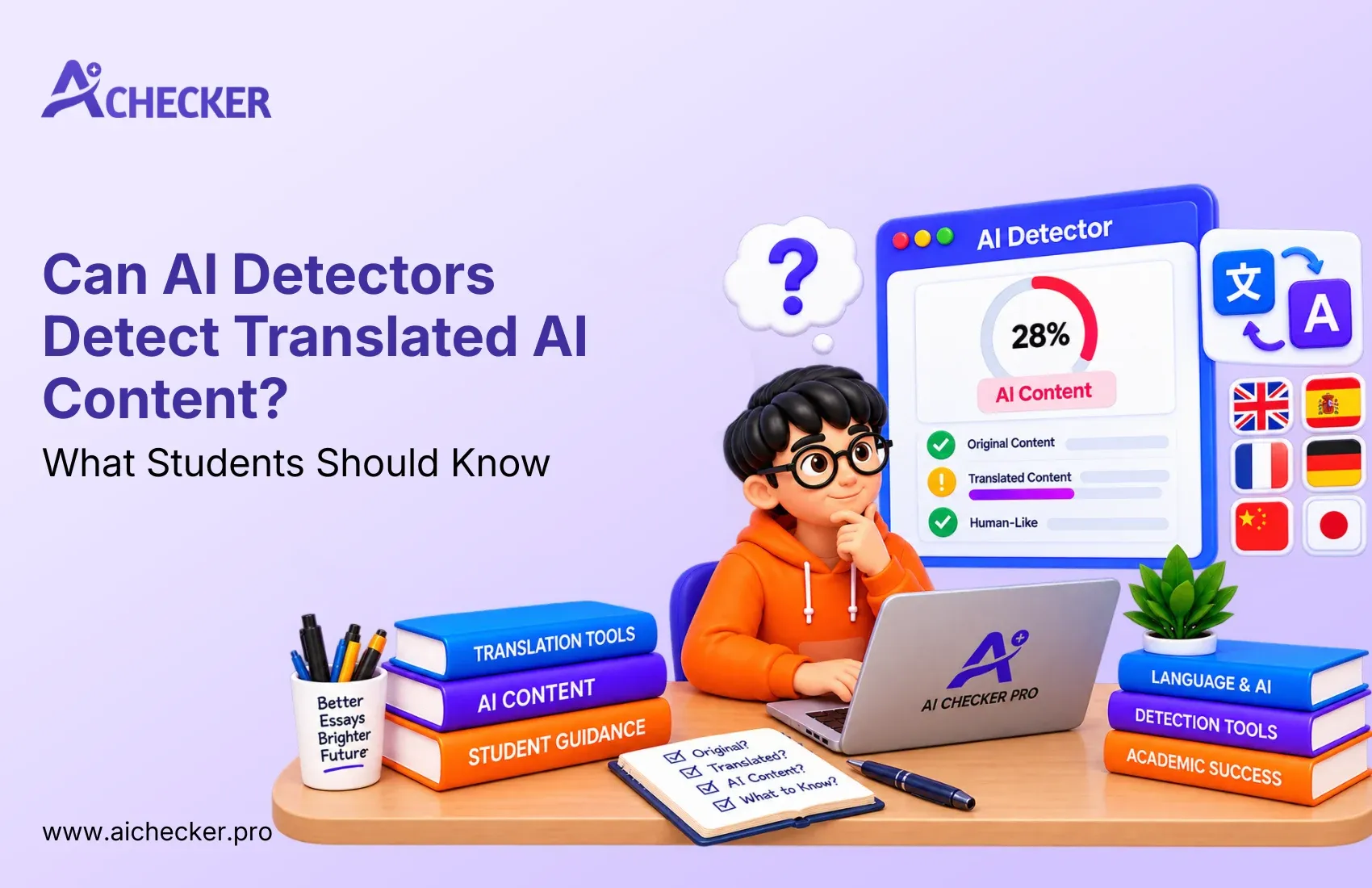
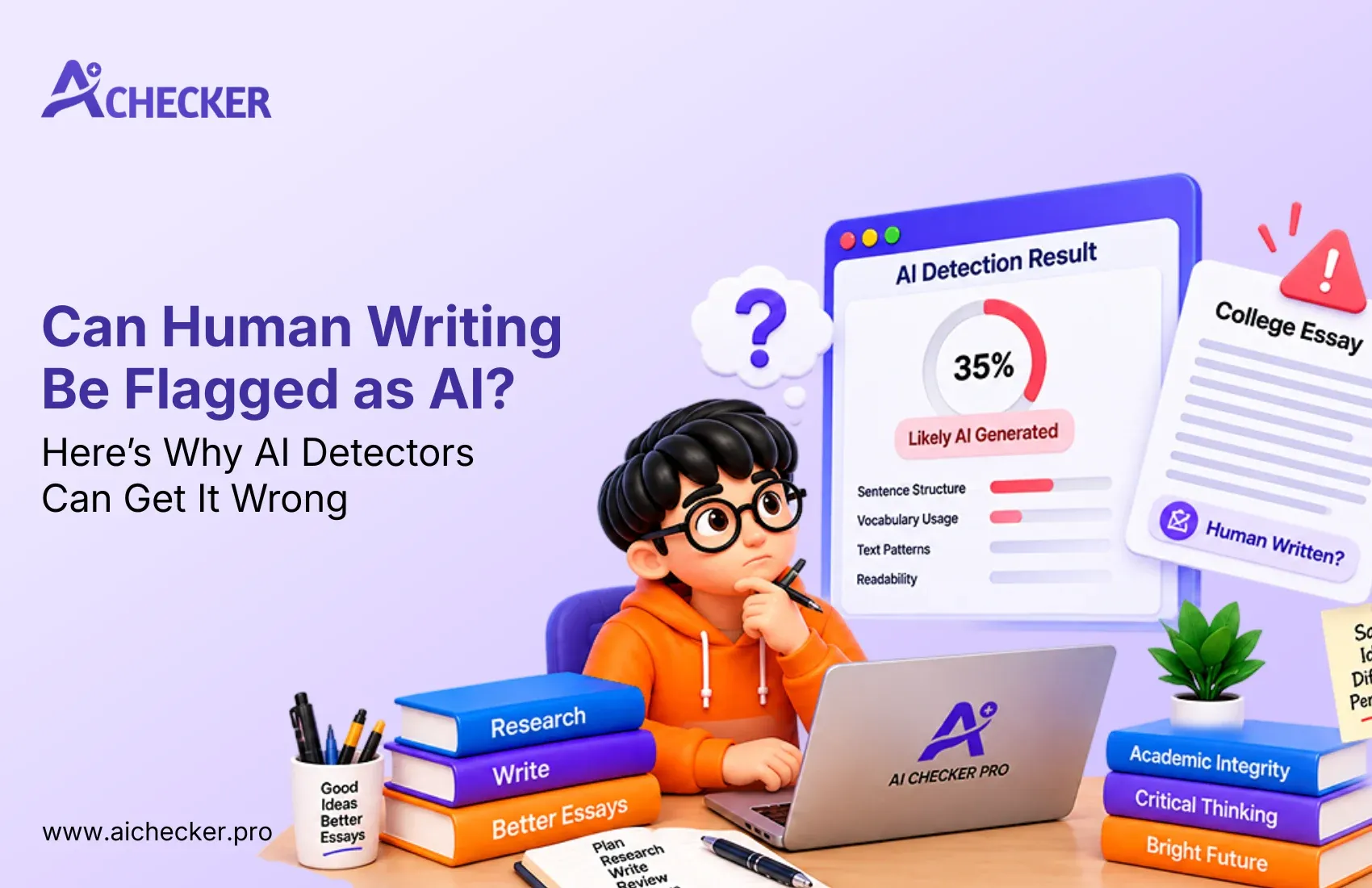
A false positive happens when a tool flags human-written content as AI-generated. Understanding false positive rates is critical and this problem is far more common than people expect. Writers with clean, concise styles particularly those who've trained themselves to write clearly and precisely often trigger AI detectors.
Academic writing is especially vulnerable. A well-structured essay with formal vocabulary and logical transitions can look "too clean" to a detector. There are documented cases of Nobel laureates, established journalists, and published authors having their work flagged as AI-generated.
This is not a minor issue. False positives in academic settings have led to real consequences for students who genuinely wrote their own work.
False Negatives
The opposite problem is equally real. False negatives occur when AI-generated content passes undetected. As AI models become more sophisticated and as users learn tricks to evade detection more AI content slips through unnoticed.
A 2025 study found that lightly edited AI content passes major detection tools with a "mostly human" score more than 60% of the time. That number has likely grown since.
Paraphrasing Impact
One of the simplest evasion strategies is paraphrasing. Paraphrasing tools like QuillBot, Wordtune, and even Claude itself can rephrase AI-generated text in ways that significantly reduce detection scores. This creates a cat-and-mouse dynamic where detection tools are perpetually chasing evasion tactics.
Writing Style Influence
Your personal writing style can dramatically affect your scores. If you naturally write in short declarative sentences with minimal hedging, you may score high on AI likelihood even on your most personal work. Conversely, a verbose, meandering AI output might score lower because it mimics the kind of sprawl human writers often produce.
Real-World Accuracy Tests (2026 Insights)
Tool Comparisons
Independent testing from 2025–2026 consistently shows that no major detection tool achieves above 85% accuracy across all content types. Most hover between 68–80% on real-world mixed content. Performance varies significantly depending on:
- The AI model used to generate the content
- How much editing was done post-generation
- The writing domain (academic vs. casual vs. technical)
Human vs. AI Experiments
Researchers at several universities ran blind tests submitting both human-written and AI-generated essays to popular detection tools. Results were humbling: tools consistently misclassified 15–25% of human-written content as AI, and missed a significant portion of AI content that had been lightly edited.
One experiment had professional journalists write short articles, then run them through five major detectors. Nearly one in five human-written articles came back flagged.
Mixed Content Challenges
The hardest case for any detector is hybrid content where a human writes a draft, uses AI to fill in sections, then edits the whole thing. These pieces genuinely blend both voices. Detection tools have no reliable way to handle this scenario, and their scores on mixed content are essentially unreliable.
Realistic Expectations
If you're using these tools to make high-stakes decisions expelling a student, rejecting a freelancer, penalizing a content creator you're operating on shaky ground. These tools are useful indicators, not forensic instruments. They should inform judgment, not replace it.
Best AI Content Checker Tools in 2026
Overview of Top Tools
The field has matured significantly. If you want a comprehensive side-by-side breakdown, our guide to the best AI detector tools covers the full landscape. The top tools in 2026 are faster, more regularly updated, and better calibrated than they were two years ago but the fundamental accuracy ceiling remains.
Key players worth knowing:
- GPTZero - AI checker built specifically for academic use, strong in educational settings
- Originality.ai - preferred by SEO professionals and content agencies
- Writer AI Detector - clean interface, good for casual use
- Copyleaks - enterprise-level, handles multiple languages well
- Turnitin - dominant in academic institutions, now with dedicated AI detection layer
Free vs. Paid Comparison
| Tool | Free Tier | Paid Starting Price | Best For |
|---|---|---|---|
| GPTZero | Yes (limited) | ~$10/month | Students, educators |
| Originality.ai | No (trial credits) | ~$15/month | SEO agencies |
| Writer AI Detector | Yes | Part of Writer suite | Marketers |
| Copyleaks | Limited | ~$10/month | Enterprise, multilingual |
| Turnitin | No (institutional) | Institutional pricing | Academic institutions |
Best Tools by Use Case
- For students worried about false flags: GPTZero it's specifically calibrated for academic writing
- For content agencies: Originality.ai offers bulk scanning and plagiarism checks together
- For enterprise HR or publishing: Copyleaks handles scale and multiple languages reliably
- For bloggers and casual creators: Writer AI Detector's free tier is a good starting point
Popular AI Detection Tools Compared
GPTZero
GPTZero became the first tool developed specifically for teachers and has undergone major improvements since its initial release. The system now provides sentence-level highlighting, a classroom dashboard, and support for commonly used learning management systems. It guards against false positives more effectively than most competitors making it better suited for academic disputes though this conservative calibration does come with reduced detection sensitivity.
Originality.ai
SEO professionals have chosen Originality.ai as their primary tool for testing. The system provides AI detection capabilities together with plagiarism detection and includes a Chrome extension. The platform updates its scoring model more frequently than competing systems, enabling it to maintain accuracy with recent AI technology.
Writer AI Detector
Writer AI Detector is straightforward and free at the basic level. It's good enough for a quick gut-check but lacks the depth and calibration of paid alternatives. For casual bloggers who just want a rough sense of where their content sits, it's a practical starting point.
Copyleaks
Copyleaks has a strong enterprise reputation. It supports over 30 languages, making it one of the few realistic options for non-English content detection. Its AI detection module was added to an existing plagiarism detection product, which gives it a useful dual-purpose position. Accuracy on English content is solid; performance on non-English content is improving but still inconsistent.
Turnitin
Turnitin is the name most students recognize and for good reason. It's embedded in thousands of universities globally. Its AI detection layer, launched in 2023 and refined since, now assigns an AI writing percentage to submitted documents. Turnitin is conservative by design, preferring to miss some AI content rather than falsely accuse innocent students. That calibration choice matters: it's a policy decision as much as a technical one.
Pros and Cons of AI Content Checkers
Pros
- Fast screening at scale - tools can process hundreds of documents in minutes
- Useful as a first pass - flags content worth reviewing more carefully
- Improves over time - leading tools update their models regularly
- Discourages lazy AI use - the existence of detectors nudges users toward more thoughtful content
- Supports editorial accountability - gives editors a data point, not just a gut feeling
Cons
- False positives punish innocent writers - a real and documented problem
- Easily evaded with light editing - paraphrasing tools largely defeat most detectors
- No standardization - different tools give wildly different scores on the same content
- Training data lag - new AI models outpace detectors until they're retrained
- Overconfident UIs - many tools present scores in ways that feel more certain than they are
- Not admissible as evidence - no detection tool has been validated as legally or academically definitive
Can AI Content Really Be Detected? (The Honest Truth)
Full Detectability
For unedited, raw AI output? Yes most tools catch it with reasonable reliability. If you paste straight ChatGPT output without touching it, you'll score high on almost every detector. The patterns are still recognizable at that level.
Hybrid Content Challenges
Once human editing enters the picture, all bets change. Even 15–20% human rewriting can drop a detection score dramatically. And for content where a skilled writer uses AI as a brainstorming tool rather than a ghostwriter, detection becomes essentially guesswork.
System Limitations
The deepest limitation is structural: AI detection is trying to solve a problem that AI generation is simultaneously making harder. Every time a new, more capable language model is released, detection tools face a version gap. The race isn't close, and detection tools are perpetually behind.
The honest conclusion: AI content detectors are useful screening tools, not truth machines. They can raise a flag, but they cannot deliver a verdict.
How to Avoid Being Flagged by AI Checkers
Whether you're a human writer who keeps getting falsely flagged, or someone who uses AI assistance and wants to ensure your content reads as authentically yours, these strategies help.
Humanizing Tips
The most effective way to reduce false flags is to genuinely humanize your content not game the system, but write in a way that reflects authentic human thought patterns:
- Vary your sentence length - deliberately mix very short sentences with longer, more complex ones
- Use first-person perspective and personal anecdotes - these are strong human signals
- Include informal transitions - "here's the thing," "that said," "worth noting" - phrases that feel conversational
- Add specific details and numbers - AI tends toward the general; humans get specific
Editing Strategies
- Read your content aloud if it sounds robotic, it'll score as robotic
- Break predictable structures if every paragraph follows the same intro-point-conclusion pattern, break a few
- Cut or rewrite any sentence that sounds like it belongs in a brochure
Responsible AI Usage
The most sustainable approach is to use AI as a tool, not a replacement. Draft your own ideas, use AI to expand or polish specific sections, then edit the whole piece until it reflects your voice.
| Approach | Description | Detectability |
|---|---|---|
| Bad | Paste a topic into ChatGPT, copy the output, submit it | Easy to detect |
| Better | Write your main arguments yourself, use AI for a stuck section, then rewrite in your own words | Harder to detect |
| Best | Use AI for research/idea generation, write everything yourself, use AI to proofread | Nearly undetectable |
Are AI Content Checkers Reliable for SEO & Blogging?
Google's Stance
Google has been explicit: it does not penalize AI-generated content as a category. What it penalizes is low-quality, thin, unhelpful content regardless of how it was produced. A well-researched, genuinely useful article written with AI assistance is not a ranking liability. A templated, repetitive article stuffed with keywords is AI or not.
Google's Helpful Content guidelines are the real filter, not AI detection.
Ranking Myths
The idea that Google runs AI detection on content and penalizes it accordingly is a myth. There's no credible evidence this happens, and Google's own documentation contradicts the premise. Chasing AI detector scores as an SEO metric is a distraction.
What Matters for SEO
- Genuine expertise and original insights
- Content that actually answers the user's question better than competing pages
- Technical fundamentals: page speed, mobile experience, core web vitals
- Trustworthy authorship signals: author bios, E-E-A-T signals, backlinks from credible sources
AI detection scores don't factor into any of this.
Use Cases: Who Should Use AI Detectors?
Students
Students are the group with the most at stake. If you're submitting work to an institution that uses Turnitin or Copyleaks, it's worth running your own work through AI checker tools before submitting not because you're hiding anything, but to catch any sections that might trigger a false positive and address them proactively. If you write in a clean, formal academic style, you're more at risk of false flags than you might expect.
Writers and Editors
Freelancers and editors working with new contributors can use AI detectors as a first-pass screening tool. But treat results as a starting point for conversation, not a final judgment. Ask for samples, check writing history, and use context clues alongside any score.
Businesses
Businesses commissioning content at scale marketing agencies, publishing platforms, content networks benefit most from tools like Originality.ai that integrate detection and plagiarism checking together. The goal isn't to create a witch hunt but to ensure content quality and originality meet the standard your brand requires.
Ethical Concerns Around AI Detection
False Accusations
The most serious ethical issue is simple: people are being accused of academic dishonesty or professional fraud based on tools that are demonstrably unreliable. A high AI score is not proof of anything. Using it as though it is causes real harm to real people.
Several documented cases involving students facing expulsion hearings were based solely on AI detection scores, with no supporting evidence. Some of those cases were later overturned. Some weren't. That reality should give any institution pause before treating a detection score as a verdict.
Privacy
Most detection tools require you to paste text into their platform. That raises questions about what they do with that content. For sensitive documents legal briefs, medical reports, confidential business materials sending content through a third-party AI detection tool is a privacy risk that deserves consideration.
Overdependence
There's a broader risk of institutions and platforms becoming over-reliant on automated systems to make decisions that should involve human judgment. AI detectors are useful inputs. They are not adjudicators.
Future of AI Content Detection (2026 and Beyond)
The AI vs. AI Race
The fundamental dynamic is an arms race. AI generation improves constantly. Detection tools try to keep pace. Neither side wins decisively, and the gap between them shifts back and forth with every major model release.
Some researchers argue that detection as a strategy is inherently losing ground that as AI writing becomes more humanlike, the statistical signals that detectors rely on will disappear. The logical endpoint is a world where reliable detection becomes effectively impossible.
Improvements on the Horizon
More promising approaches include:
- Watermarking at the generation level - some AI providers are building invisible statistical markers into their output that can be detected downstream
- Provenance tracking - metadata standards that let content carry its creation history
- Behavioral analysis - looking at how content was created (keystrokes, revision history) rather than just the final text
Predictions
By 2027–2028, the most accurate "detection" is likely to happen at the infrastructure level through watermarking and provenance standards rather than through text analysis tools. The era of reliable post-hoc detection from text alone is probably already ending.
Conclusion
AI content checkers can be helpful but only if you understand their limits. They don't actually "know" whether something is written by a human or AI; they simply analyze patterns and probabilities. That's why false positives are common, especially with polished or professional writing.
In reality, no tool today offers consistently reliable results across all types of content, and even light editing or paraphrasing can easily bypass detection. Importantly, search engines like Google don't penalize AI-assisted content; what matters is quality, originality, and usefulness to the reader.
The smart way to use these tools is as a first-pass filter, not a final judge. They're useful for spotting obvious issues or identifying content that might need a closer look, but decisions shouldn't rely on them alone especially when stakes are high.
Whether you're a student, editor, or creator, the best strategy is the same: focus on clear thinking, authentic voice, and real value. At the end of the day, great content stands on its own regardless of how it was created.
FAQs
1. Are AI content checkers 100% accurate?
2. What does an AI-generated percentage actually mean?
3. Can human-written content be flagged as AI?
4. Can AI-generated content bypass detection tools?
5. Which AI content checker is the most accurate in 2026?
6. Do AI detectors work better on raw AI content?
7. Does Google penalize AI-generated content?
8. Are AI content detectors reliable for academic use?
9. Why do different AI detection tools give different results?
10. What is the best way to avoid being flagged by AI checkers?

Nathan Porter
Content writer at @Aichecker
I am a content writer at AI Checker, where I craft engaging, SEO-optimized content to enhance brand visibility and educate users about our AI-driven solutions. My role involves creating clear, impactful messaging across digital platforms to drive engagement and support company growth.Get Started Free
Create a free account for advanced AI detection and scan history.
Trusted by thousands worldwide.
Recent Blog's
Discover how AI-powered content creation can elevate your website's reach and engage your audience like never before. Explore the real impact of AI on crafting content that connects.