I Tested 30+ AI Detectors. Here Are My Top 6 Picks for 2026
TABLE OF CONTENTS
What Are AI Detectors?
How I Tested 30+ AI Detectors
What Makes a Good AI Detector?
Top 6 AI Detectors for 2026
Comparison Table
Are AI Detectors Really Accurate in 2026?
Who Should Use AI Detectors?
Tips to Use AI Detectors Effectively
Conclusion
Frequently Asked Questions (FAQs)
Get an AI summary of this post on:




AI-generated content is everywhere right now. The world of content production includes blog posts and college essays and product descriptions and news articles. You name it, and there's a good chance some of it was written by ChatGPT, Claude, or Gemini. The AI writing tools of 2026 have reached such advanced levels that readers find it difficult to identify their use through text evaluation.
My research became more thorough because I conducted an extensive examination of AI detection methods. I evaluated more than 30 AI detection tools using human-created content and AI-generated material which included blogs, academic essays, product descriptions, creative writing, and paraphrased content.
I experimented with the same samples through each tool and tracked their accuracy, speed, ease of use, and value for money.
This article breaks down the top 6 tools that actually stood out. The resources that you need exist in this collection which serves both teachers who evaluate student assignments and content managers who assess freelancer work.
What Are AI Detectors?
AI detectors function as tools which examine text to determine whether a human or an AI produced it. The system operates through established methods which depend on fundamental techniques that form its core functions.
- Perplexity analysis: AI-generated text tends to be very predictable. Low perplexity means the text followed an expected, "safe" pattern. Human writing is messier and more unpredictable.
- Burstiness: Humans naturally vary their sentence lengths and rhythm. AI tends to stay more consistent, which can be a red flag.
- Pattern recognition: Tools trained on large datasets of AI and human writing learn to spot subtle patterns specific to different AI models.
All these methods have limitations that prevent them from achieving complete accuracy. But if you want to go deeper on the mechanics, here's a detailed breakdown of how AI detectors actually work when you use them correctly, they will provide you with accurate confidence scores.
How I Tested 30+ AI Detectors
To find the most accurate and reliable AI detectors, I didn't just try a few tools casually. I tested over 30 different platforms using a structured and repeatable process. Here is my complete explanation of the process.
Step 1: Collected a Balanced Content Set
First, I created a mix of different types of content to test the tools properly. This included:
- Fully AI-generated content (from tools like ChatGPT and others)
- 100% human-written content
- Edited AI content (AI + human mix)
- Paraphrased and "humanized" AI text
This helped simulate real-world scenarios where content is not always purely AI or purely human.
Step 2: Used Multiple AI Writing Tools
To avoid confusion, I didn't rely on just one AI generator. I created content using different AI models and tools, so detectors couldn't "overfit" to one writing style.
Each piece varied in:
- Tone (formal, casual, marketing)
- Length (short paragraphs to long articles)
- Complexity (simple vs. expert-level writing)
Step 3: Run Every Sample Through Each Detector
Next, I tested each content sample across all 30+ AI detectors.
For every tool, I recorded:
- AI detection score (percentage or probability)
- Whether it labeled content as AI, human, or mixed
- Processing time
- Any errors or limitations
This gave me a consistent dataset to compare performance.
Step 4: Checked Accuracy (Most Important Step)
Accuracy was the main factor. I compared:
- Did the tool correctly identify AI content?
- Did it wrongly flag human-written content as AI (false positives)?
- Could it detect partially edited AI content?
Tools that frequently made mistakes were ranked lower, even if they had good UI or features.
Step 5: Tested Against "Humanized" AI Content
Modern AI content is often edited to sound more human. So I specifically tested:
- AI text rewritten by humans
- AI text passed through paraphrasing tools
- Content with added personal tone and variation
If you're curious about what this process looks like in practice, check out this guide on humanized AI text and how it challenges modern detectors. This step separated basic detectors from truly advanced ones.
What Makes a Good AI Detector?
The selection of a detector requires evaluation of its essential elements before proceeding to the detection list.
- Accuracy is the primary criteria a tool that flags everything as AI becomes useless.
- Ease of use matters. Most users will abandon a system that requires exporting reports, configuring settings, and learning multiple dashboard functions just to paste text.
- Free vs. paid the top solutions often require payment for their most precise capabilities, but free tiers can still assist in making better decisions.
Top 6 AI Detectors for 2026
1. AI Checker
AI Checker stands as the most popular AI detection tool which currently exists. The platform started as an educational tool which now serves schools, publishing companies, and business organizations as a complete solution. The system provides a detailed analysis of each sentence in the document, identifying specific sections that appear to be AI-generated.
Pros:
- Sentence-level highlighting shows exactly where AI content is suspected
- Batch document scanning available on paid plans
- Strong accuracy on standard blog and academic content
- Transparent confidence scoring
Cons:
- The free plan has word limits per scan
- Occasionally flags formal human writing as AI (especially academic style)
- Some advanced features require a paid subscription
2. Originality ai
Overview: The developers of Originality.ai created their tool for marketers and SEO agencies. The software provides users with two functions it combines AI detection capabilities and plagiarism detection features, which helps content managers who oversee their teams. It achieved its best results detecting GPT-4 and Claude-generated content across multiple tests.
Pros:
- High accuracy, especially for blog-style content
- Combines plagiarism check + AI detection in one tool
- Chrome extension available for quick scans
- Team management features for agencies
Cons:
- No meaningful free plan it's credit-based from the start
- Not ideal for students or casual users who need occasional checks
- Can struggle with short-form content like tweets or product titles
3. Turnitin AI Detection
Overview: All educators currently know about Turnitin because it has become the standard tool for detecting plagiarism in educational institutions. It introduced its first AI detection capabilities in 2023, which universities around the world now trust. It's not something individuals can just sign up for it's integrated into learning management systems.
Pros:
- Highly trusted by academic institutions worldwide
- Integrated directly into assignment submission workflows
- Works well on longer essays and research papers
- Very low false positive rate in controlled settings
Cons:
- Not available to individuals requires institutional access
- Limited transparency on exactly how scores are calculated
- Some students have found ways to partially evade it using paraphrasing tools
4. Copyleaks
Overview: Copyleaks began as a plagiarism detection tool which later developed into an advanced AI detection system. It supports more than 30 languages, making it one of the top choices for teams that work in multiple languages and for international educational institutions. It demonstrated superior performance against paraphrased AI content compared to most available tools.
Pros:
- Multilingual support (30+ languages)
- Good at catching lightly edited AI content
- API available for developers and enterprise users
- Decent free tier for basic use
Cons:
- The interface feels a bit cluttered
- Accuracy dips slightly on very short texts
- Advanced reporting is locked behind paid plans
5. Writer AI Detector
Overview: Writer AI Detector functions as a business writing platform, yet their free AI detector operates as a separate tool which users find unexpectedly popular. The basic version remains accessible without requiring account creation, offering a fast, clean experience for quick one-off checks.
Pros:
- Completely free to use (no sign-up required for basic checks)
- Clean and minimal interface no learning curve
- Fast results (usually under 5 seconds)
- Good for business writing and marketing copy
Cons:
- No sentence-level breakdown just an overall score
- Less effective on longer documents (1,500+ words)
- Not built for academic or technical content
6. Sapling AI Detector
Overview: Sapling provides a complimentary AI content detection tool as part of its complete AI writing assistance system. It excels at identifying text generated by GPT-based models while providing precise probability measurements for every individual statement. It operates at a similar performance level to GPTZero, although it remains less widely known.
Pros:
- Free tier available with no strict word limits
- Sentence-by-sentence probability scores
- Works well on customer support and email-style content
- Simple, clean interface
Cons:
- Detection can be inconsistent on heavily edited AI content
- Less effective on creative writing compared to factual text
- Fewer integrations compared to Originality.ai or Copyleaks
Comparison Table
Here's a quick side-by-side overview of all six tools. Note that GPTZero didn't make our top 6 detailed reviews but is included here for reference as a widely used benchmark.
| Tool | Accuracy | Free Plan | Best For |
|---|---|---|---|
| GPTZero | High | Yes (limited) | Educators & students |
| Originality.ai | Very High | No (credit-based) | Content teams & SEO agencies |
| Turnitin AI | Very High | No (institutional) | Academic institutions |
| Copyleaks | High | Yes (basic) | Multilingual teams |
| Writer AI Detector | Medium-High | Yes (full free) | Quick business content checks |
| Sapling | High | Yes (generous) | Email & support content |
Are AI Detectors Really Accurate in 2026?
The truthful answer is: they've improved compared to two years ago, yet they remain below complete reliability.
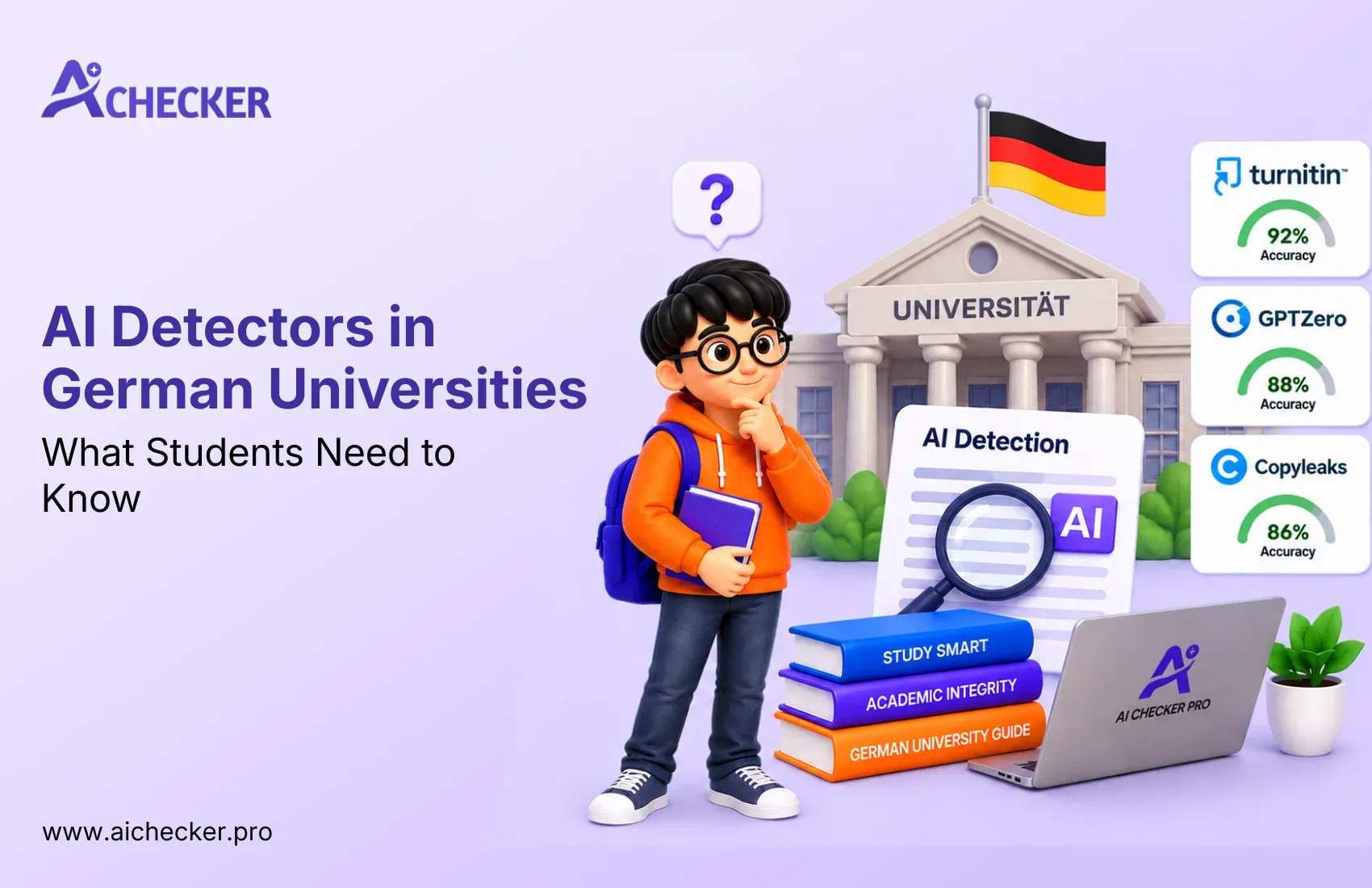
The top tools achieve 85–92% accuracy when testing AI-generated content. While that sounds satisfactory, it means roughly 10% of outcomes will be incorrect.
The biggest problems:
- False positives - Some tools flag well-written, formal human text as AI. This is a real issue for academic writers or non-native English speakers who write in structured, clear English.
- False negatives - Heavily paraphrased or edited AI content can slip through most detectors. This is probably the biggest challenge in 2026.
- AI evasion - There are now tools specifically designed to rewrite AI content so it evades detection. No detector is immune to this.
The takeaway? AI detectors are useful tools, but they shouldn't be the only thing you rely on. Use them as one piece of evidence, not the final word.
Who Should Use AI Detectors?
- Students: If you want to make sure your own writing doesn't accidentally get flagged yes, that happens running it through a detector before submission isn't a bad idea.
- Teachers and professors: These tools can help flag suspicious submissions for closer review. If you're evaluating options for your classroom, this comparison of the best AI detector for teachers breaks down which tools work best in academic settings. Just remember: a high AI score alone isn't proof of cheating.
- Content managers and editors: If you're working with freelancers or outsourced writers, regular checks help maintain quality standards and ensure you're getting what you paid for.
- Publishers and journalists: Accuracy and authenticity matter more than ever. AI detectors can be part of your editorial quality check.
- Businesses: From HR teams reviewing job applications to legal teams checking compliance documents, AI detection is slowly becoming part of standard workflows.
Tips to Use AI Detectors Effectively
A few things I learned from running hundreds of tests and if you want a more comprehensive breakdown, here are 10 tips to avoid AI detection that also shed light on how detectors behave from the other side:
- Don't rely on just one tool. Run suspicious content through two or three detectors. If they all agree, you can be more confident in the result.
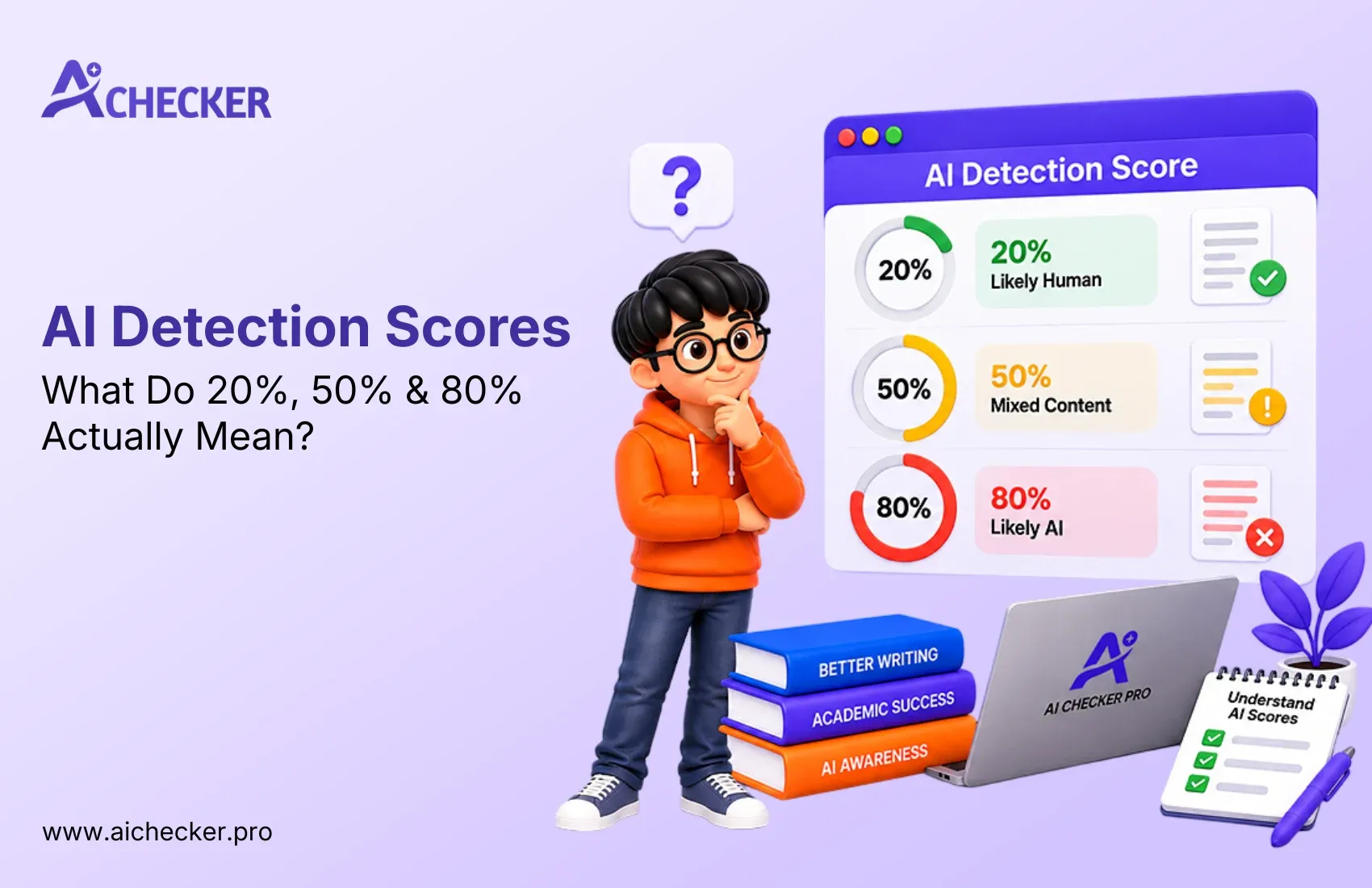
- Look at sentence-level scores, not just the overall number. A document might score 30% AI overall, but have three clearly AI-generated paragraphs mixed in.
- Consider context. A formal academic essay written by a non-native speaker might get flagged that doesn't automatically mean it's AI-written.
- Don't confront someone based solely on a detector score. These tools are not courts of law. Use them to inform a conversation, not replace one.
- Re-test after edits. If someone claims they edited AI content, run both versions to compare the shift in scores.
Conclusion
After testing more than 30 AI detection tools:
- For best overall accuracy, Originality.ai stands out especially for content teams and SEO agencies.
- For educators, GPTZero is a strong choice, built specifically with teachers in mind with clear sentence-level highlights.
- For a solid free option, Writer AI Detector is great for speed and simplicity, while Sapling provides more detailed insights without requiring payment.
- For institutions, Turnitin remains the gold standard in academic environments.
Ultimately, no AI detector is 100% accurate yet the technology is still catching up with rapidly improving AI writing tools. But when used thoughtfully and in combination, these tools give you the best possible chance of identifying AI-generated content in 2026.
Pick the one that fits your use case, test it with content you already know is AI or human, and calibrate your expectations from there. Still not sure which to choose? This guide to finding the right AI detector for your use case can help you decide.
Frequently Asked Questions (FAQs)
1. Can AI detectors detect ChatGPT-4o content accurately?
2. Are AI detectors free to use?
3. Can AI detectors be wrong?
4. Which AI detector is best for teachers and students?
5. Can AI-generated content be edited to bypass detectors?
6. What is the most accurate AI detector in 2026?
7. Do AI detectors work on non-English content?
8. How do AI detectors actually work?
9. Should I use multiple AI detectors at once?
10. Is using an AI detector enough to prove someone cheated?

Megan Harris
Content writer at @Aichecker
Get Started Free
Create a free account for advanced AI detection and scan history.
Trusted by thousands worldwide.
Recent Blog's
Discover how AI-powered content creation can elevate your website's reach and engage your audience like never before. Explore the real impact of AI on crafting content that connects.