10 Best AI Detection Tools for US Students in 2026
TABLE OF CONTENTS
Key Highlights
Why AI Detection Matters for US College Students Right Now
The 10 Best AI Detection Tools for Students in 2026
How These Tools Compare
No AI Detector Is 100% Accurate, and Here Is Why That Matters
How to Reduce the Risk of a False Positive
Using AI the Right Way as a Student
Free vs Paid AI Detectors for College Students
Conclusion
FAQs
Get an AI summary of this post on:



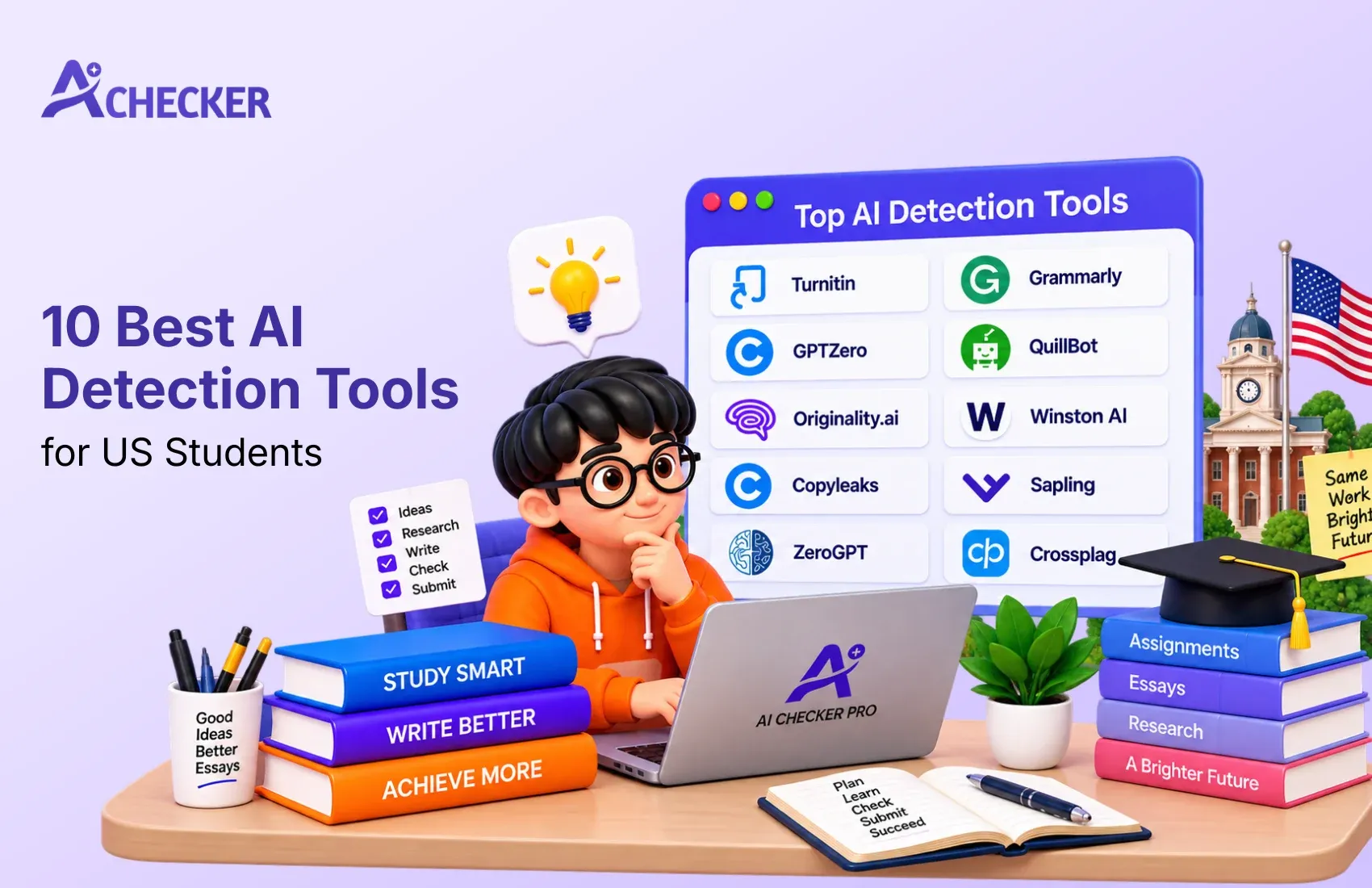
If you're a US student who wants to know which are the remaining AI detection tools that will work in 2026, here's the short version. There are two that most professors are already using: Turnitin and GPTZero, which you can't just overlook.
Originality.ai and Copyleaks are good at deep sentence-level checks. If you're looking for something that can review your writing before you publish it, and then edit the flagged areas as you go, AI Checker Pro is one of the simplest to operate, since it addresses detection and humanizing concurrently.
None of these tools is 100% accurate, and each can give false positive results, particularly with formal or non-native English writing. Make sure to read the entire breakdown before choosing one.
Not all of them are flawless, but the more robust ones will provide you with a percentage grade and sentence-level flags to truly see where the issues lie.
Key Highlights
- Turnitin remains the most widely used detector in US colleges, but it has known accuracy limits on edited or paraphrased text
- GPTZero is popular with teachers for its free tier and simple percentage score
- AI Checker Pro combines detection and humanizing, which saves students from switching between two separate tools
- Detection accuracy drops significantly once AI text has been paraphrased or humanized
- False positives happen more often with formal, repetitive, or non-native English writing styles
- No AI detector, including the ones ranked highest here, should be treated as 100% proof of anything
In the last year I've tried numerous AI detectors, and I can say that most of them aren't as effective as they claim on their marketing pages. Some flag perfectly human-written essays as "80% AI-generated" simply because they feel like the sentences are a bit formal. Some other paragraphs that seem clearly made by AI will get a low score.
Whether you're a student concerned about your GPA, academic integrity record, or simply seeking to verify that your own work is correct before you submit it, choosing the right AI detecting tool for students is more critical than you might think.
This guide breaks down the 10 best AI detectors for students in 2026, what each one is actually good at, where they fall short, and how to protect yourself from getting falsely flagged.
Get Lifetime Access with 60% OFF
Stop paying monthly subscriptions. Enjoy unlimited AI detection and humanizer access forever with future updates included.
- One-time payment
- Unlimited access forever
- All future updates included
Why AI Detection Matters for US College Students Right Now
There is a growing number of academic integrity policies that include AI-generated writing in most universities in the United States. Professors are using tools to detect in their grading platforms; some schools are embedding detection into their learning management systems.
Meanwhile, a certain number of large universities have also begun to reduce their reliance on a single detector, primarily due to the increasing number of complaints from students that the machine was giving false positive results. If you're curious how widespread this practice really is, it's worth reading whether colleges are actually using AI detectors as often as students assume.
If you want to be safe, this is what works in 2026. Recognize that these tools do not measure things such as who wrote the words, but rather indicate patterns, such as sentence burstiness, word predictability, and repetition.
This means when a student writes very clearly and consistently, they can score similarly to AI text, and when they use an AI checker for college students tool to self-check prior to submission, they are protecting themselves, not cheating.
The 10 Best AI Detection Tools for Students in 2026
1. AI Checker Pro
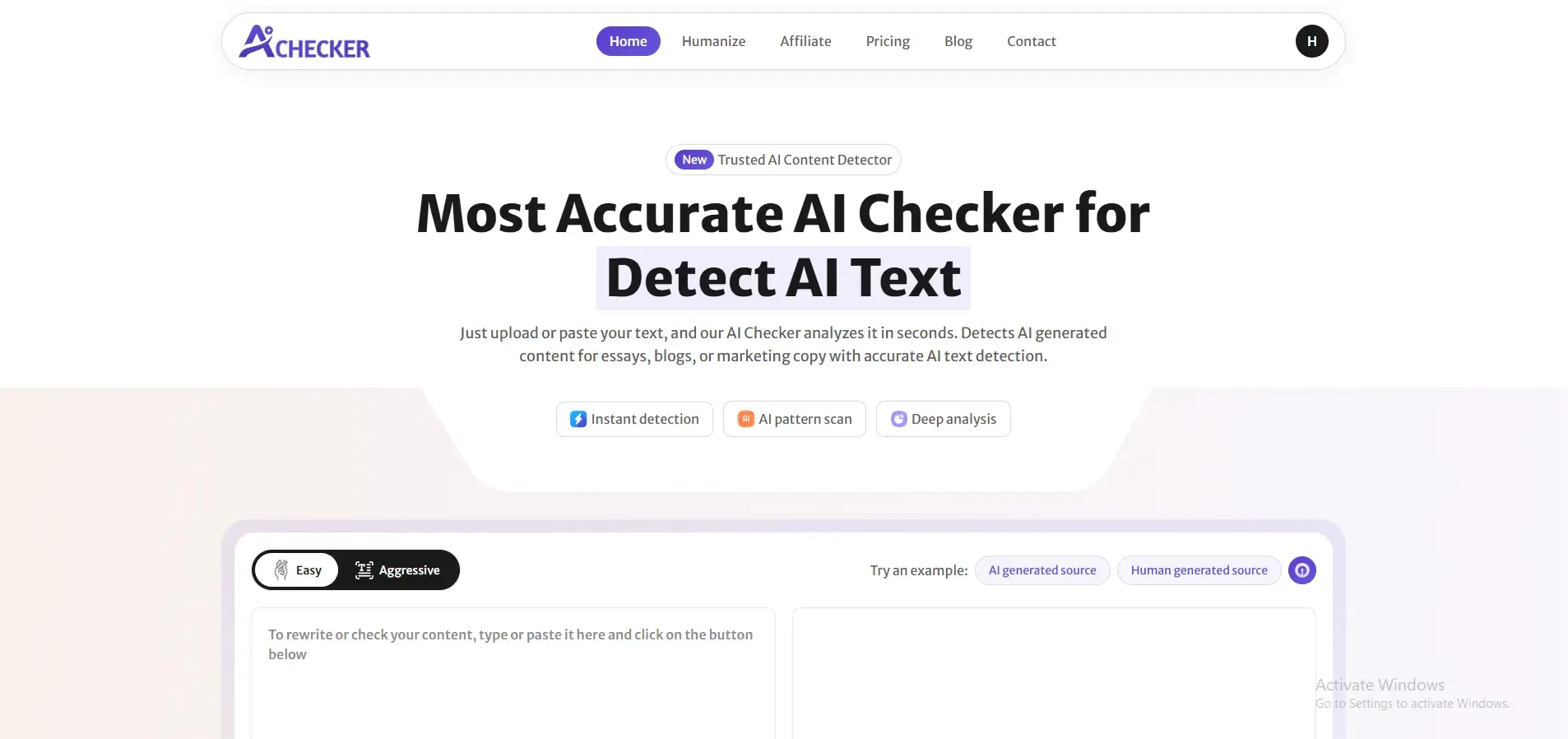
AI Checker Pro helps US college students quickly check their essays before submission. Its built-in AI humanizer helps improve flagged sections without rewriting the entire essay. It supports content from ChatGPT, GPT-4, GPT-5, Gemini, and Claude and is used by 100,000+ users. Sentence-level detection shows which parts of an essay may be flagged.
2. Turnitin
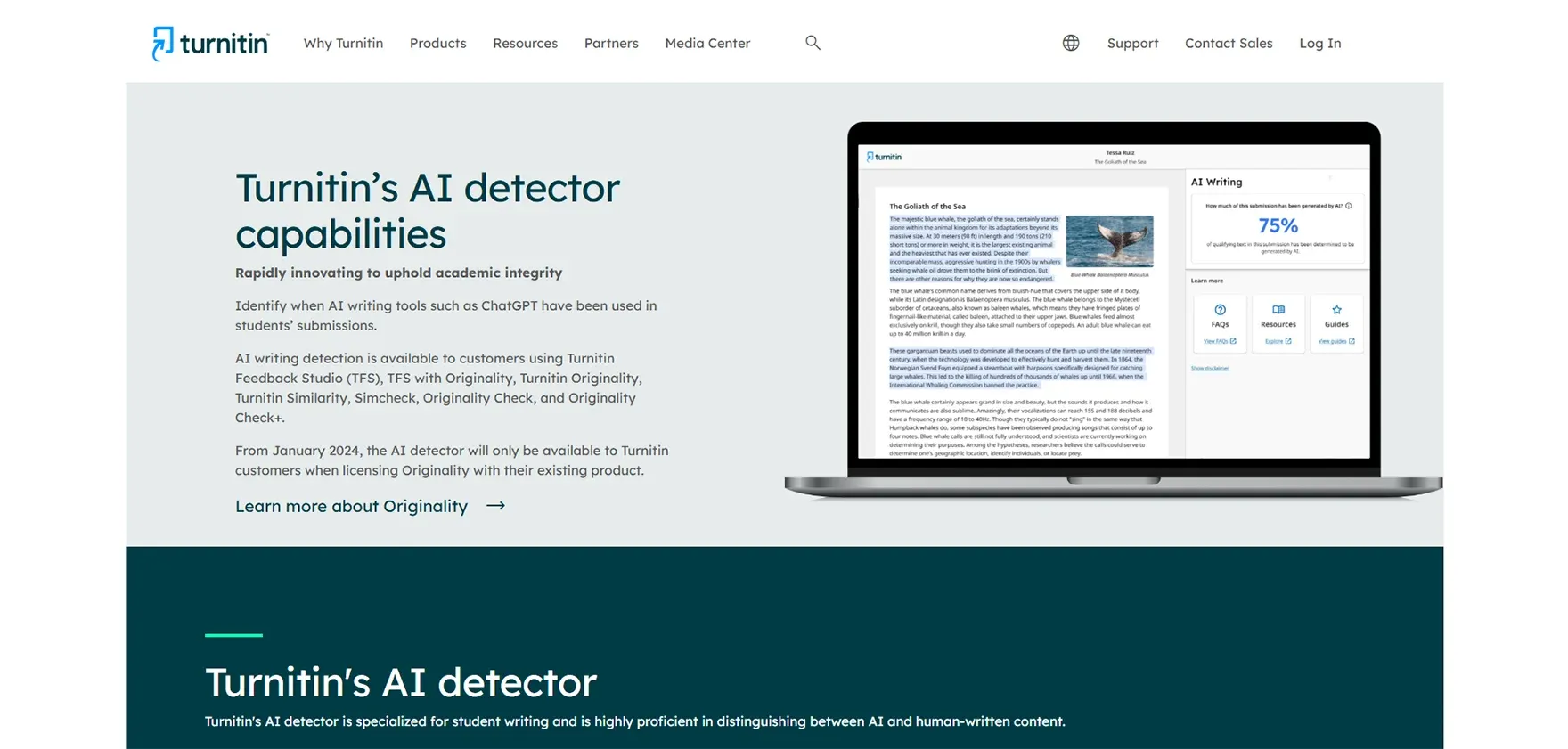
Turnitin is the tool most US professors already have access to through their school. It checks for plagiarism and AI content in the same scan, which makes it convenient for instructors. The downside is that Turnitin's AI detection score is not shown to students in most school setups, so you often will not know your score until your professor tells you. Turnitin has publicly acknowledged that its detector is not perfect and works best as one signal among several, not a final verdict. You can read more about what AI detector Turnitin actually uses if you want a deeper technical breakdown.
3. GPTZero
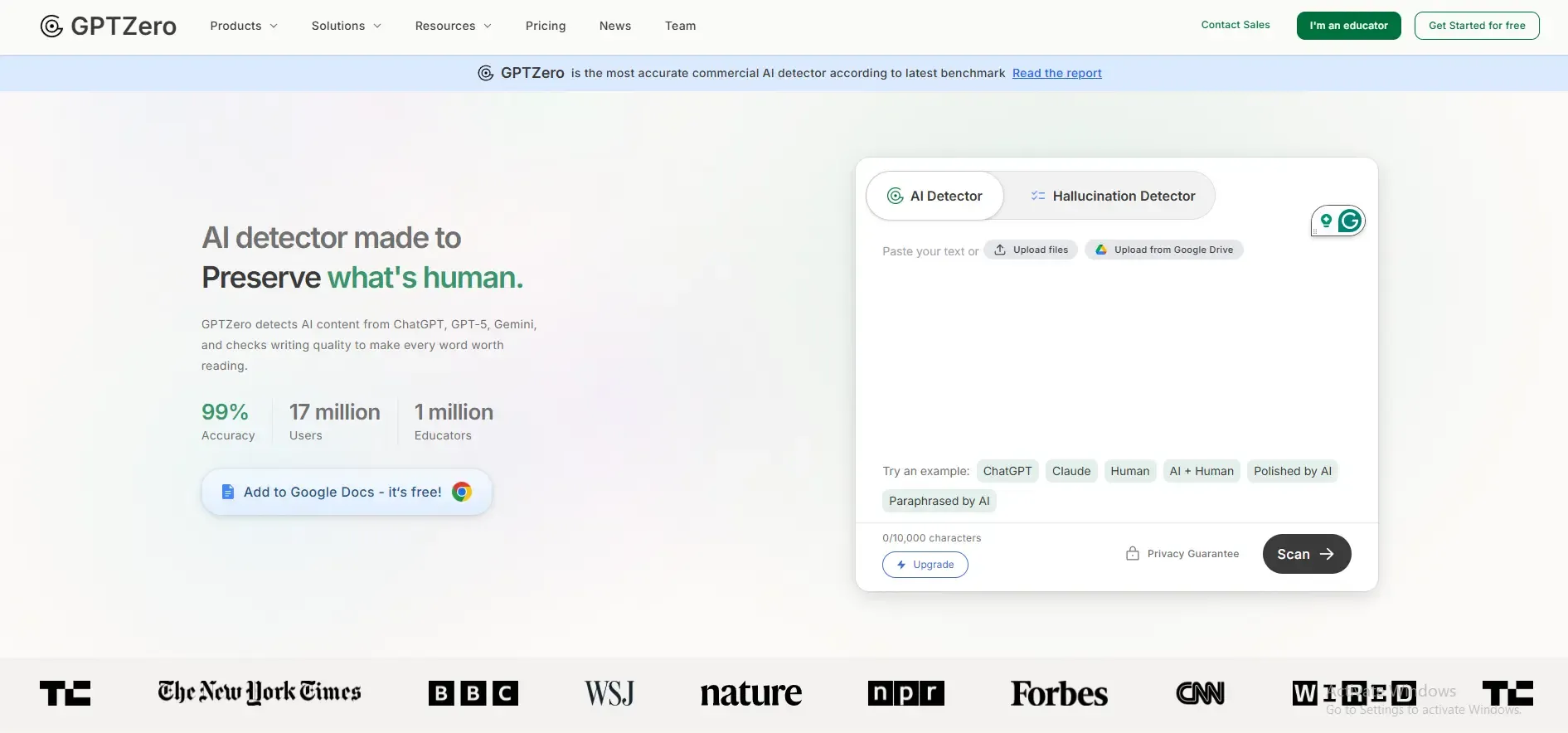
GPTZero was one of the first AI detectors built specifically for education, and it is still a favorite among teachers because of its free tier and clean interface. It gives a probability score and highlights specific sentences it thinks are AI-generated. When I ran this test last month on a mix of student essays, GPTZero was fairly consistent on raw ChatGPT output but got shakier once the text had been lightly edited. For a closer look at how it performed in our own testing, check out this GPTZero detector review.
4. Originality.ai
Link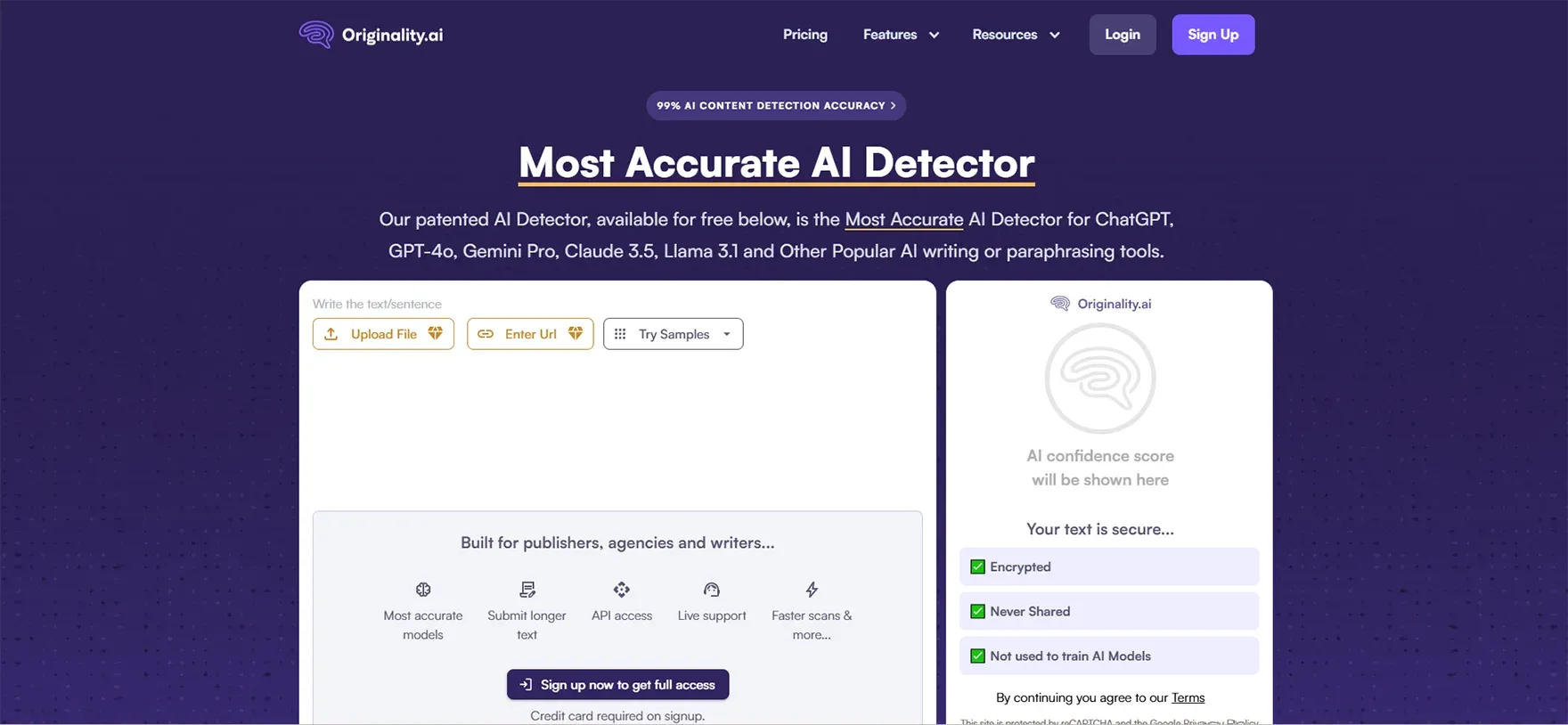 Originality.ai leans more toward bloggers and SEO writers, but plenty of grad students and thesis writers use it too because of its detailed sentence-level breakdown. It supports multiple AI models, including GPT-4, GPT-5, and Gemini, which makes it one of the more thorough AI detectors for college students working on longer papers. See our full Originality.ai review for more detail on its scoring system.
5. Copyleaks
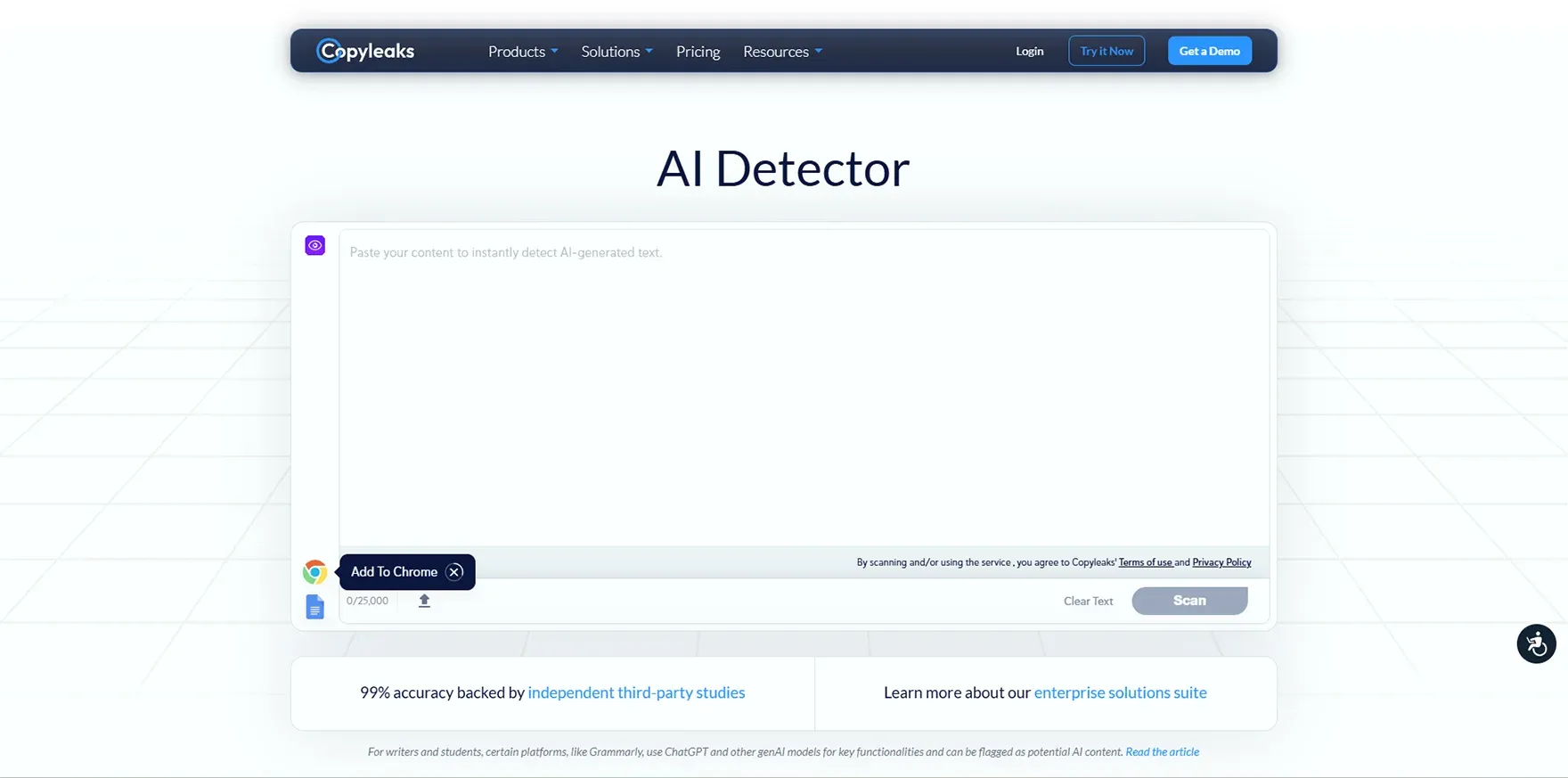
Copyleaks is popular in institutional settings because of its API and integration options. It offers both plagiarism and AI detection, and its accuracy on raw AI text is generally solid. Where it struggles, like most detectors on this list, is with paraphrased or humanized content, where scores can drop noticeably compared to unedited AI writing. Our Copyleaks AI detector review covers this in more depth.
6. Winston AI
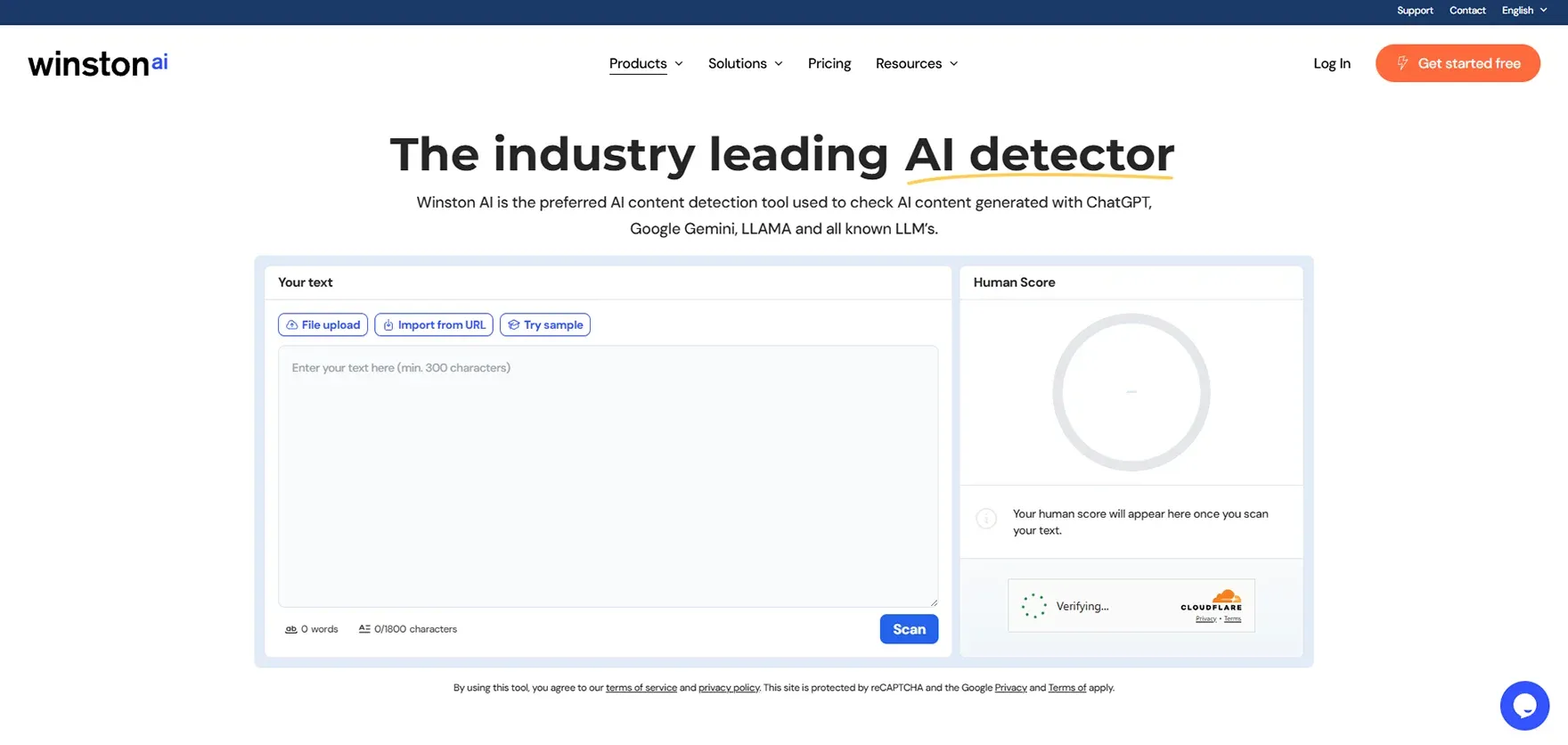
Winston AI markets itself toward educators and content teams. It provides a readable report with highlighted sections and a confidence score. Students who have used it say it works decently on longer-form writing but can be inconsistent on shorter assignments like discussion posts or short answer responses. You can compare its performance in our Winston AI review.
7. ZeroGPT
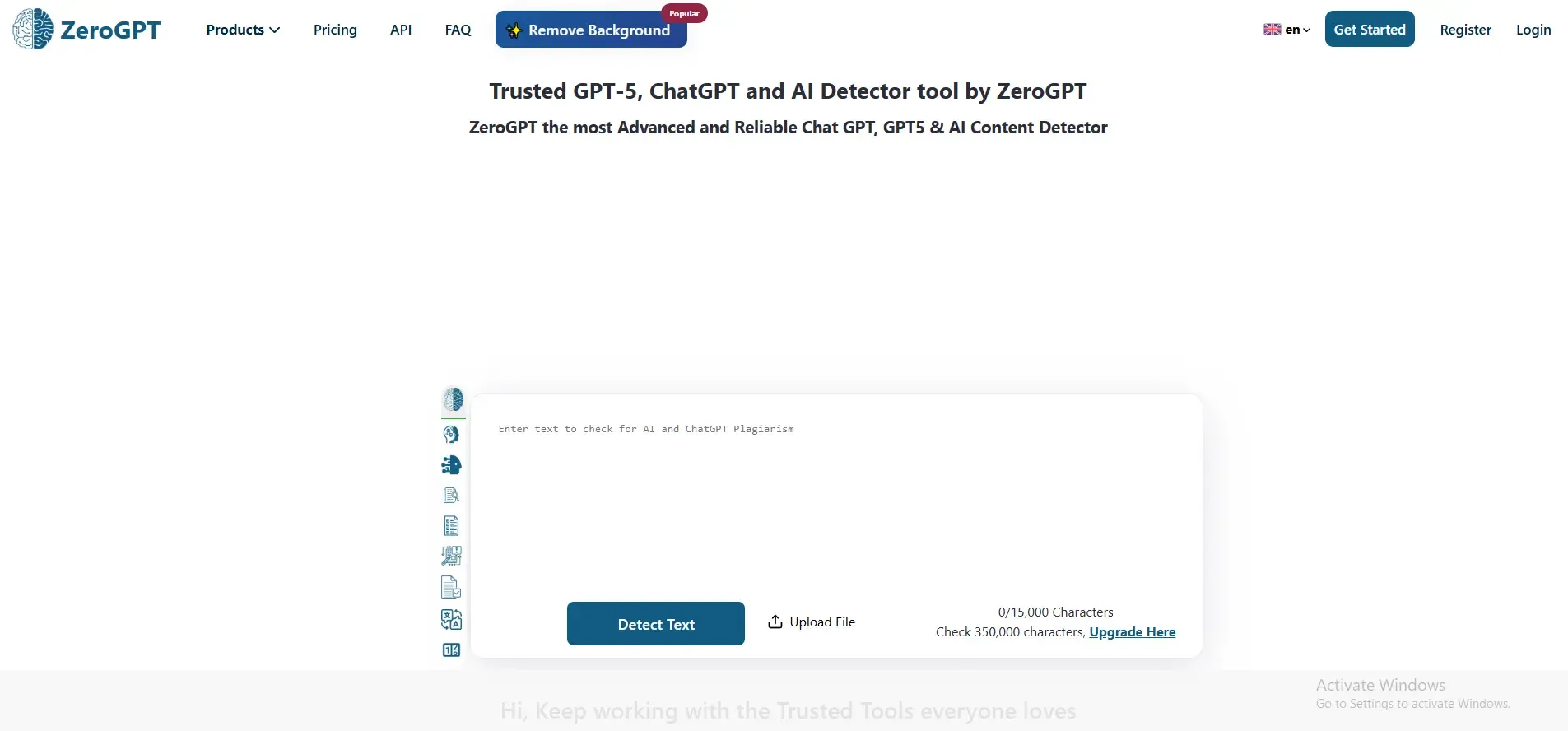
ZeroGPT is a free, no-login option that many students use for a quick first check. It is fast, but the results can swing quite a bit depending on writing style. Treat it as a rough first pass rather than something to rely on for a high-stakes paper. We break down its strengths and limits in our review of ZeroGPT.
8. Sapling AI Detector
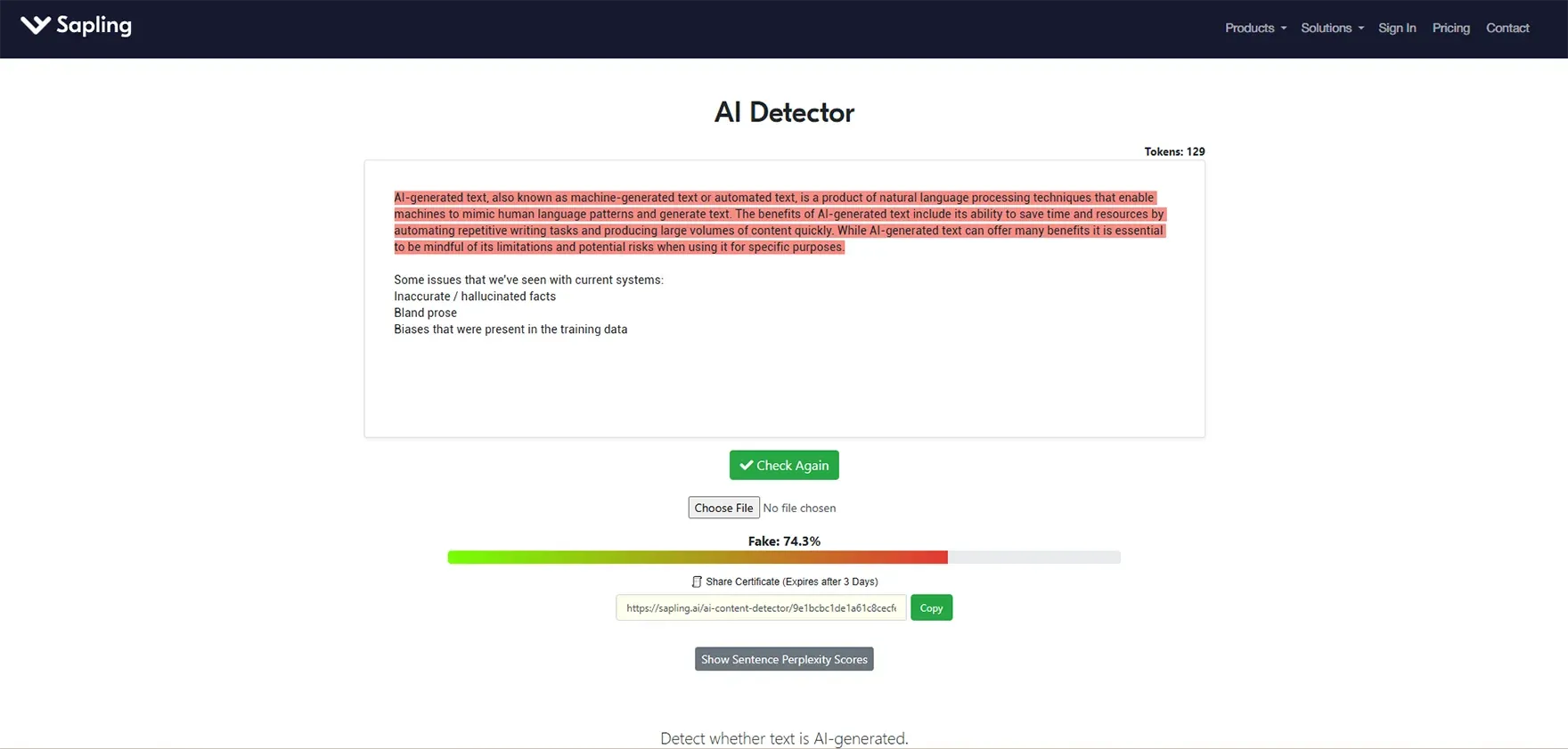
Sapling started as a writing assistant company and later added AI detection. It is simple and free for basic checks, which makes it a reasonable backup option, though it lacks the deeper sentence-level reporting that heavier tools like Originality.ai or AI Checker Pro provide. Read the full Sapling AI content detector review for more.
9. BrandWell AI Detector
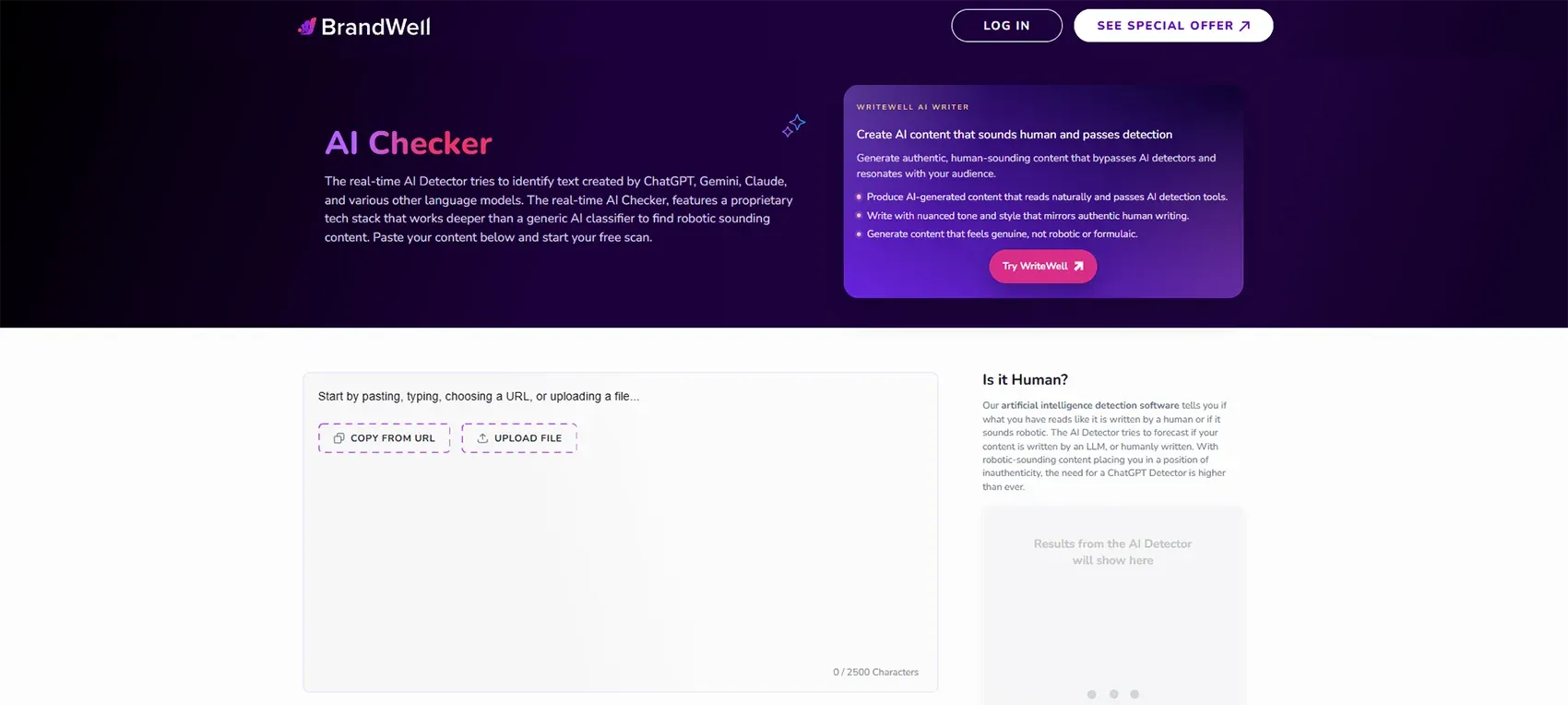
BrandWell AI Detector checks text to estimate whether it was written by AI or a human. You can paste text into the tool and review its results. Its Pro version also supports URL and file uploads, making it useful for checking essays, articles, and other content.
10. Crossplag

Crossplag combines plagiarism and AI detection in one dashboard, similar to Turnitin, but it is more accessible to individual students since you do not need a school account to use it. Accuracy is decent on raw AI text but, like the rest of this list, it is far less reliable once content has been edited or paraphrased. Our Crossplag AI detector review has the full breakdown.
How These Tools Compare
| Tool | Accuracy | Free Tier | Humanizer Included | Best For |
|---|---|---|---|---|
| AI Checker Pro | High on raw and lightly edited text | Yes, limited free checks | Yes, built-in | Students who want to detect and fix in one place |
| Turnitin | High on raw AI text, lower on edited text | No, school access only | No | Professors checking submitted assignments |
| GPTZero | Moderate to high | Yes, limited | No | Quick classroom-style checks |
| Originality.ai | High, detailed reporting | No | No | Long papers and thesis writing |
| Copyleaks | Moderate to high | Limited free scans | No | Institutions with API needs |
No AI Detector Is 100% Accurate, and Here Is Why That Matters
You'll find this truth if you carefully read the fine print of each tool, including AI Checker Pro. AI detectors are not reading your mind; instead, they look at the statistical patterns of your writing and see if they match a pattern that is known to be written by AI.
This indicates that there can be two things that go wrong. First of all, real AI can also get through the cracks, especially when it's been paraphrased and/or run through a tool to make it sound more human.
The accuracy begins to wobble a little when you edit the AI compared to the original, unedited text. Second, and most significantly, AI-human-written essays can be identified, particularly in very formal essays, ones with excessive repetition of ideas, or ones that were composed by a non-native speaker of English with a variety of "too clean" sentences. For a broader look at why this happens, see our guide on AI detector accuracy.
Ask yourself this. If it were to happen, would you be able to spot if your original essay was 70% AI? Most students will have no idea; it is good advice to keep a copy of the draft and revision history and perhaps even a video of the process of writing.
How to Reduce the Risk of a False Positive
- Keep your draft history in Google Docs or Word, so you have a paper trail showing your writing process
- Avoid over-polishing your grammar with a single AI pass right before submission, since that can accidentally create the exact patterns detectors flag
- Vary your sentence length naturally instead of writing everything in a uniform structure
- Run your own paper through an AI checker for students like AI Checker Pro before submitting, so you catch issues while you still have time to explain or revise
- If you use AI for brainstorming or outlining only, keep that separate from your final draft so your actual writing stays distinctly yours
If you've already been flagged incorrectly, our guide on AI Checker Pro false positives with human writing walks through what to do next.
Using AI the Right Way as a Student
Many students use AI for brainstorming, outlining, or grammar checks, which may be allowed under some university policies. However, submitting AI-generated text as your own work can violate academic rules. This is why the best AI detectors for students are becoming part of the writing process. Students and writers can also use tools like AI Checker Pro to check whether their genuine writing may sound too AI-like after heavy editing. To understand where the line typically falls at most schools, take a look at our overview of AI in academic writing.
Free vs Paid AI Detectors for College Students
The free tools, such as ZeroGPT and Sapling's basic checker, are good for a quick first scan, but these will often not have the level of detail available at the sentence level and can be inconsistent when needed, giving different results for the same essay in different scans.
A paid tool will likely be worth the investment if you have real relevance to work on it (such as a thesis chapter or final paper with significant marks that will be given). AI Checker Pro's pricing is designed for students, and you can compare plans directly. Our comparison of free versus paid AI checkers breaks down when each option makes sense.
Conclusion
The selection of the best AI detection software for US students depends on your specific needs. If your school has already adopted Turnitin, there's no way to escape, so it's important to understand its capabilities and limitations. AI Checker Pro is one of the more comprehensive tools on the market for 2026 that can review your own work before you submit it and provide suggestions for improvement without the need to rewrite your text. Keep in mind that none of the detectors, free or paid, is 100% accurate, and you should use them as a safety check, rather than as a final verdict on your work. For a wider look at how these tools stack up overall, see our roundup of the best AI detector tools.
FAQs
What AI detector do most US colleges use?
Is GPTZero used by US teachers?
Can AI detectors give false positives for US students?
What is the best free AI checker for US students?
Do US universities share AI detection scores with students?
Which AI detector works best for college essays in the US?
How do US professors detect AI-written assignments?
Are AI detectors accurate for non-native English speakers in the US?
What should US students do if wrongly flagged as AI?
Is it worth paying for an AI detector as a US student?

Harshil Barvaliya
SEO Executive & Content Writer at AI Checker Pro
I’m Harshil Barvaliya, an SEO Executive and Content Writer at AI Checker Pro. I focus on improving the website’s search engine visibility through effective SEO strategies, including keyword research, on-page and off-page optimization, and content development.Get Started Free
Create a free account for advanced AI detection and scan history.
Trusted by thousands worldwide.
Recent Blog's
Discover how AI-powered content creation can elevate your website's reach and engage your audience like never before. Explore the real impact of AI on crafting content that connects.