Crossplag AI Detector Review: Pros, Cons & Best Alternatives
TABLE OF CONTENTS
What Is Crossplag AI Content Detector?
How Accurate Is the Crossplag AI Detector?
Features of Crossplag AI Detector
How We Tested Crossplag AI Detector Accuracy
Test Results
Crossplag Pricing Overview
Pros and Cons of Crossplag
Real-World Business Example
Common Mistakes Businesses Make With AI Detectors
Best Crossplag Alternatives Compared
Is Crossplag Worth It for Your Business?
Conclusion
FAQs
Get an AI summary of this post on:





In a world of information overload, authenticity and originality are more critical than ever for businesses that must produce a lot of information. While AI content detection software, such as Crossplag, can identify AI-generated text, the next challenge is whether a team can trust a detection score when making editorial, hiring, or compliance decisions.
For professional users, there are still issues with accuracy, false positives, and detailed reporting, and this is where Crossplag comes in very handy to analyze content, accuracy, false positives, and detailed reporting.
In this review, we will discuss the features and accuracy of Crossplag, the pitfalls and drawbacks, and how it stacks up against other AI content detection tools for 2026.
We'll also explore alternatives such as AI Checker Pro, which is more focused on offering a more practical solution for businesses, writers, and educators who require reliable AI content verification without the time spent sifting through inaccurate outputs.

Tired of Guessing? Get Lifetime Access, 60% Off
Skip the subscription treadmill. One payment gets you unlimited AI detection and humanizing, plus every update we ship from here on.
- Pay once, use it forever
- No scan caps, no monthly limits
- Every future update, included
What Is Crossplag AI Content Detector?
Crossplag AI Content Detector is a browser extension capable of analyzing text content and providing a confidence score indicating the probability that it may be AI-generated. It was designed as a plagiarism tool and has since evolved into a tool for AI detection, making it suitable for content teams, editors, and teachers seeking a quick authenticity verification.
The platform was created to address a different issue than enterprise platforms designed specifically for AI detection: detecting plagiarized content from an existing webpage. That was built atop its AI-detection layer, which is important when considering its depth of engineering for this use case.
Key facts about the tool:
- Designed primarily for English-language content
- Offers a percentage-based "likelihood of AI" score
- Supports single-document scans up to a few thousand characters on the free tier
- States that submitted text is not stored after analysis
How Accurate Is the Crossplag AI Detector?
Crossplag was inaccurate in detecting AI content, specifically mixed and short texts. According to the results, it correctly identifies fully AI or fully human texts most of the time, with much lower accuracy for mixed samples, where confidence scores may be misleading.
It should be noted in this regard that the ability of text analytics tools to identify AI content is often overestimated. Many detection methods have been trained to recognize texts that imitate natural language, so there is no single confidence level that would be completely accurate in all cases, a theme explored further in this breakdown of how AI detectors actually work.
Here's what independent reviews and hands-on tests commonly report:
| Content Type | Reported Detection Reliability |
|---|---|
| Purely AI-generated text | Moderate to high, but not consistent across models |
| Purely human-written text | Generally reliable, though false positives are reported |
| Mixed human + AI content | Weak, confidence scores often understate AI presence |
| Heavily paraphrased AI text | Weak, paraphrasing tools reduce detectability |
| Short-form content (under 200 words) | Weak, limited text reduces model confidence |
Key Takeaway: No single AI detector (including Crossplag) should be used as the primary consideration when making a judgement that will impact a student, employee, or a freelancer. Most businesses report higher satisfaction with a combined approach, using detection scores as a primary filtering tool, and using human expertise to interpret scores, and, in some cases, double-checking them with another service.
For content agencies that have to work with hundreds of writers, this consideration is especially important, as the risk of falsely flagging a helpful resource as an AI writing tool means risking damage to their freelancing network. This is a concern we cover in more depth in our guide on how freelancers can make AI content look human.
Features of Crossplag AI Detector
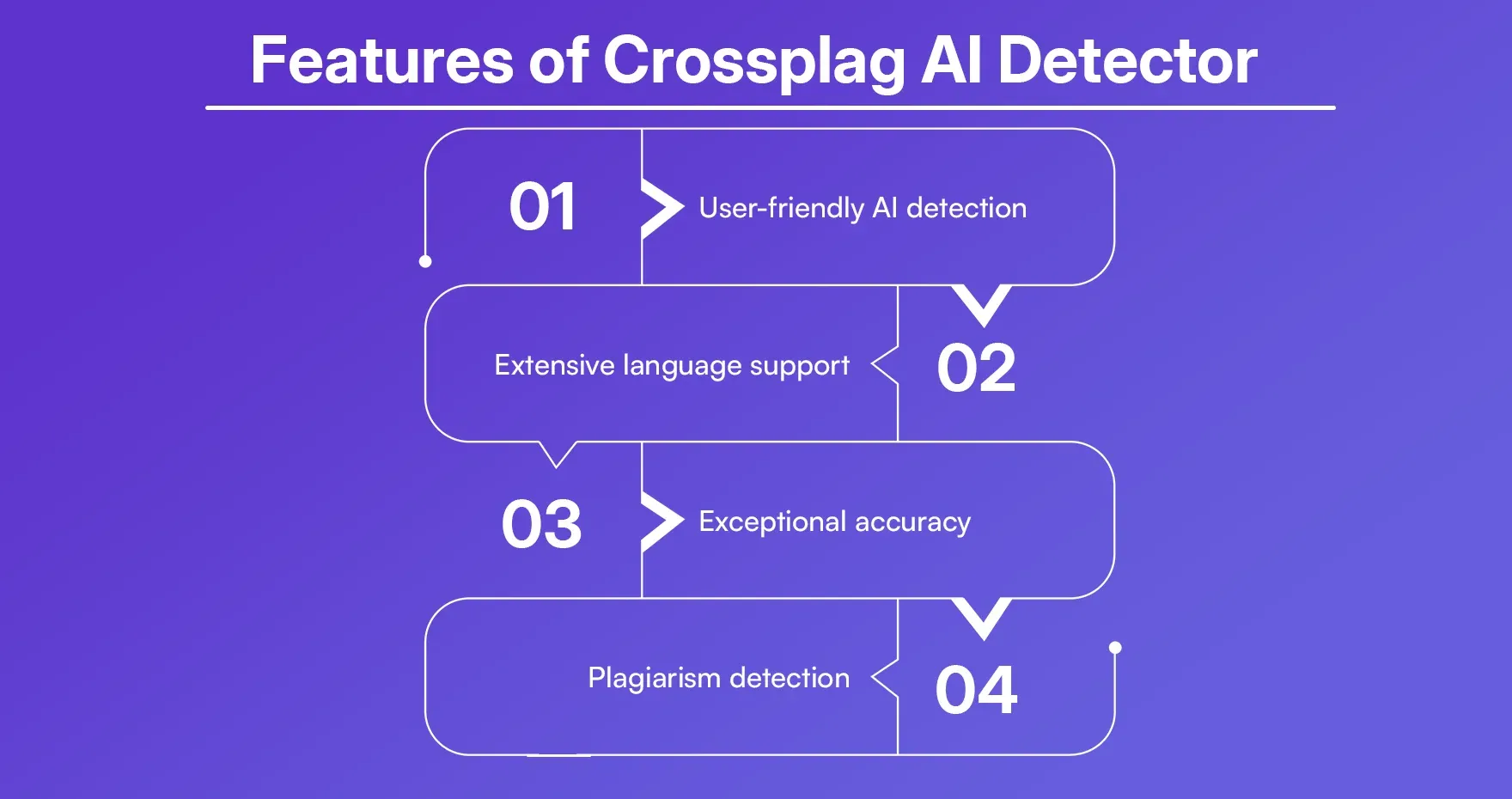
Crossplag AI Detector is intended to eliminate AI-written content and detect plagiarism in a convenient single platform. It is a perfect choice for those who prefer a user-friendly interface and do not require advanced functionality. For individuals and companies that want to obtain in-depth content analysis and rely on professional tools for detecting AI-generated texts, AI Checker Pro provides a better set of features.
1. Simple and Easy-to-Use Interface
Crossplag allows keeping the checking process simple and straightforward. You can easily paste your text for checking and get an instant result as the tool calculates the probability of your text being generated by AI in a matter of seconds.
However, AI Checker Pro takes you further in terms of providing a better user experience as you get a more detailed view on why your text may be considered AI generated, rather than just getting a score.
2. AI Content and Plagiarism Detection
One of the key benefits of Crossplag is that it combines AI detection and plagiarism check tools under one umbrella, which makes it great for general use. AI Checker Pro offers advanced AI detection features that allow users to conduct a more in-depth analysis of authenticity for business, research, and publishing needs.
3. Multi-Language Support
Crossplag enables to verify the content’s originality in over 100 languages for identifying plagiarism. It becomes handy for international companies to ensure that their translated AI created content is unique. To fulfill the advanced needs of the business, AI Checker Pro offers advanced content analysis and advanced AI detection tools to verify the text’s authenticity.
4. Machine Learning-Based Detection
Crossplag uses state-of-the-art machine learning algorithms based on the RoBERTa architecture to identify patterns characteristic of human writing. As a result, it can effectively detect text generated by AI to a considerable extent. However, the accuracy of detection may decrease when it comes to detecting human writing in texts that have been modified or reworded. AI Checker Pro tackles this issue by implementing cutting-edge AI detection technologies and providing more comprehensive information, thus reducing the likelihood of errors to a minimum.
5. Better Reporting and Business Workflows
For individual users, Crossplag offers a convenient solution for quickly checking content for authenticity. However, for content teams, agencies, and enterprises, it is often necessary to have a more comprehensive solution that would provide greater reliability and depth of checks, be integrated into the workflow, and be suitable for large-scale publishing. AI Checker Pro was created specifically for such users: it offers extended opportunities for analyzing texts, detecting similarities, and protecting content from copying.
How We Tested Crossplag AI Detector Accuracy
To understand whether Crossplag AI actually works or not, I performed a practical test using multiple AI detection tools. The goal of this test was to check whether content rewritten by Crossplag could bypass AI detection and appear more human-like.
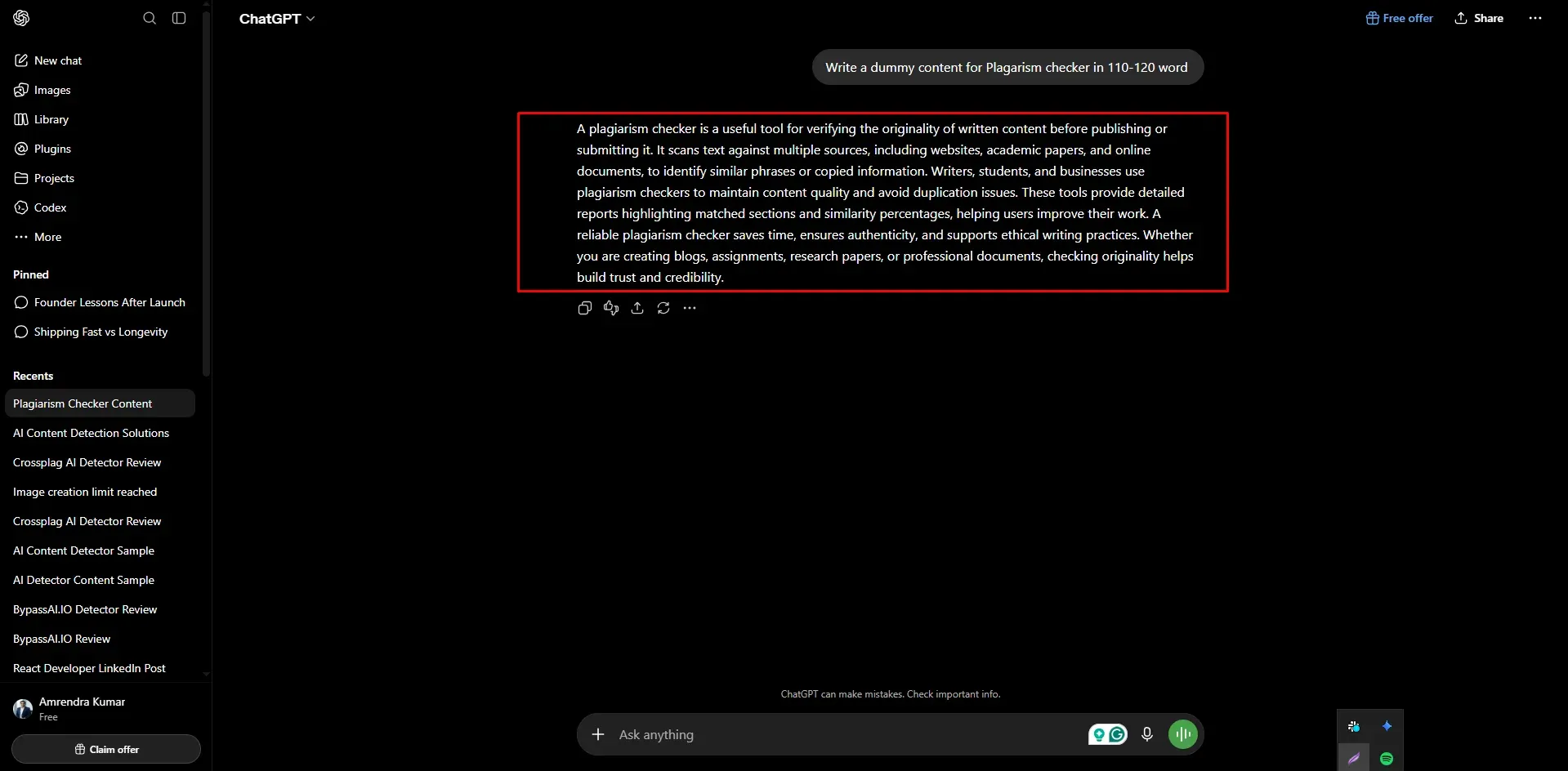
Step 1: Generate Content Using ChatGPT
First, I created a sample piece of content using ChatGPT. This allowed me to test whether Crossplag could transform typical AI-generated content into more natural, human-like writing.
The generated content was then used as the original sample for the next step.
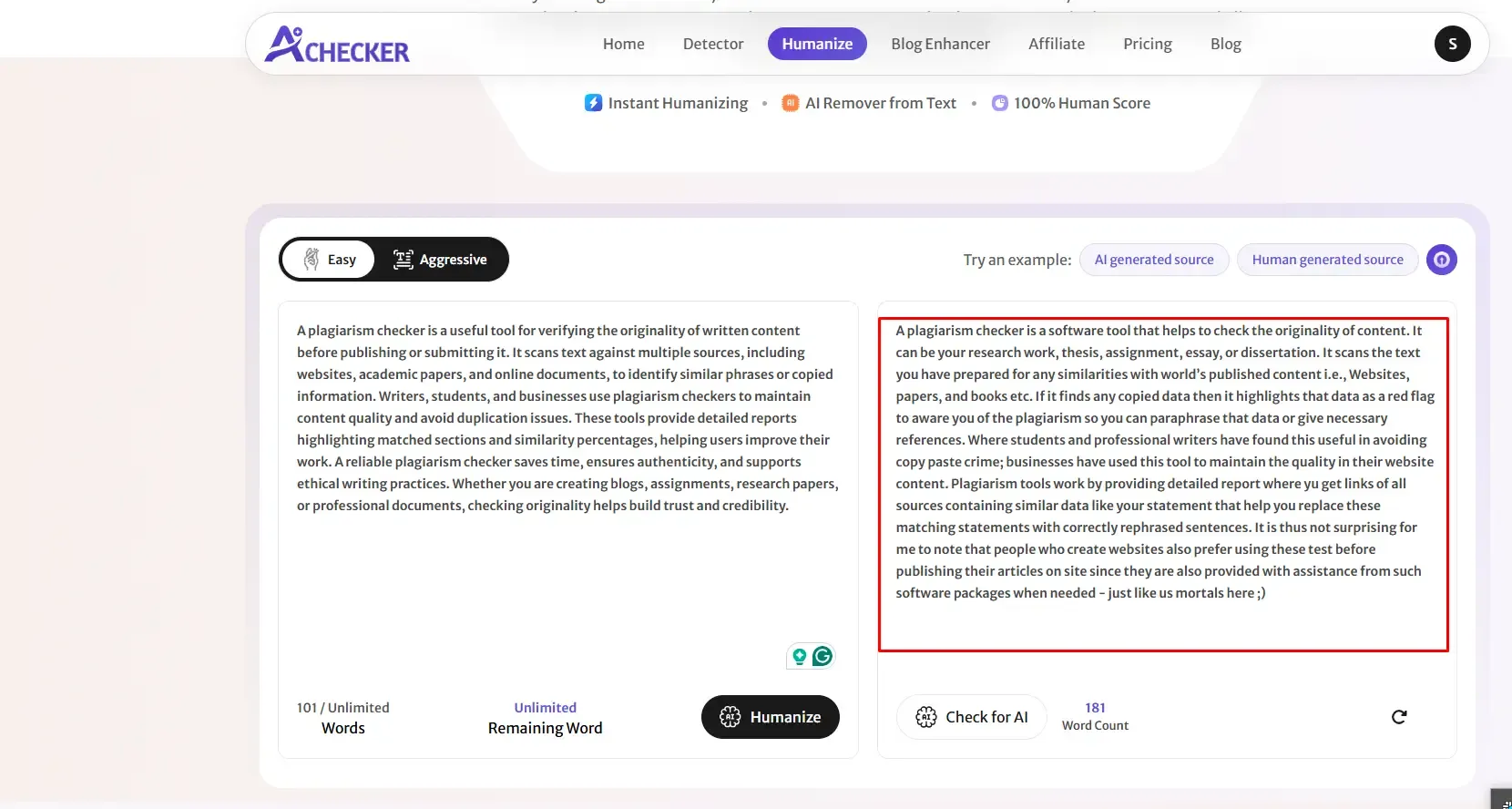
Step 2: Humanize the Content Using AI Checker Pro
After generating the content, I uploaded it to Crossplag AI to humanize the text.
The purpose of this step was to analyze how effectively Crossplag could improve the writing style, reduce AI patterns, and make the content appear more authentic and natural.
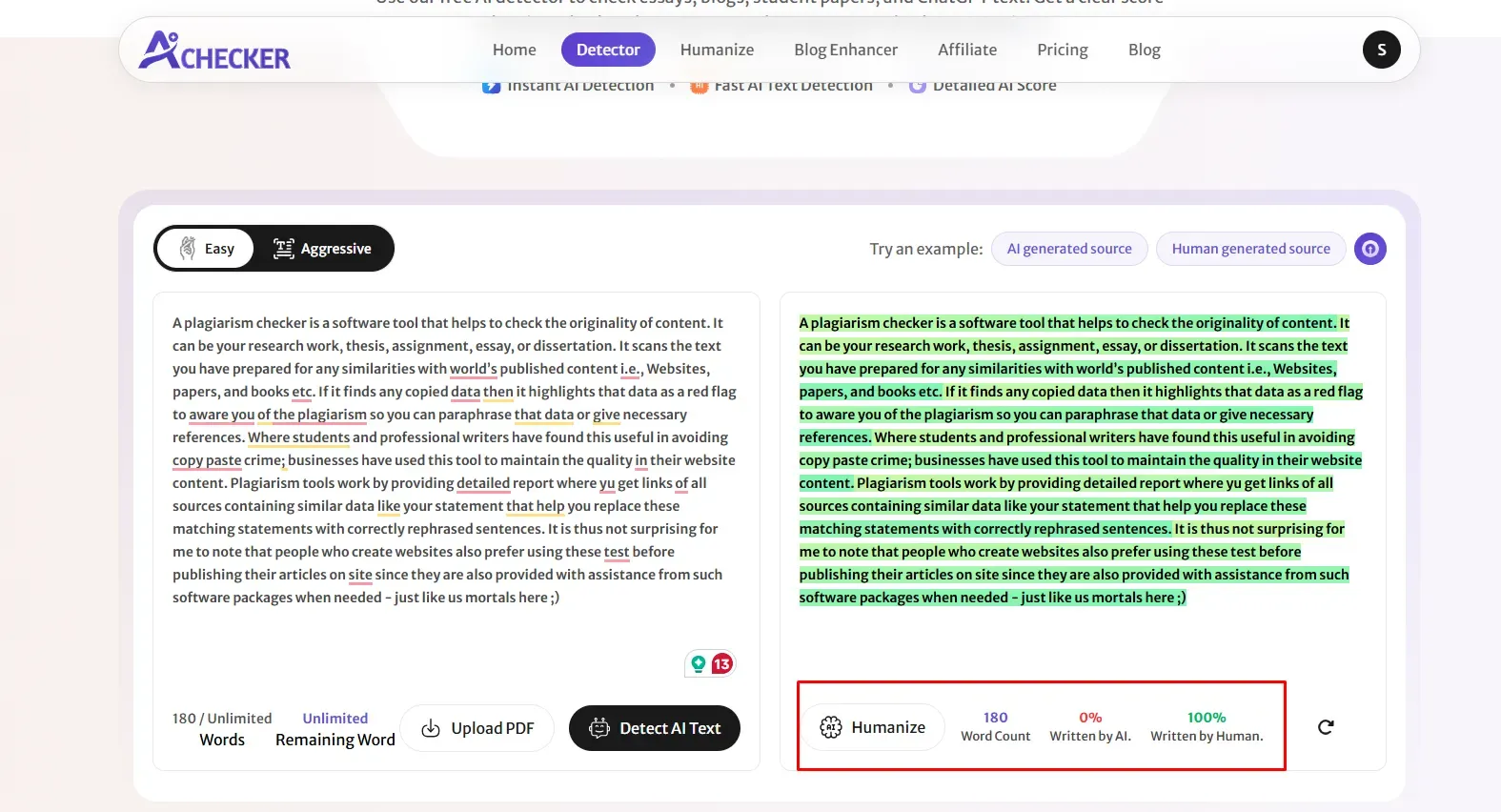
Step 3: Check the Humanized Content With AI Detection Tools
After processing the content through Crossplag AI, I tested the rewritten version using multiple AI detection tools. This helped compare different detection results and understand whether the humanization process was effective.
Test Results
1. AI Checker Pro
Next, I tested the same content using AI Checker Pro. The tool also detected the content as 100% human-written, showing that the rewritten content successfully passed another AI detection system. This suggests that AI Checker Pro can effectively modify AI-generated text and make it appear more authentic.
Result: 100% Humanized Content
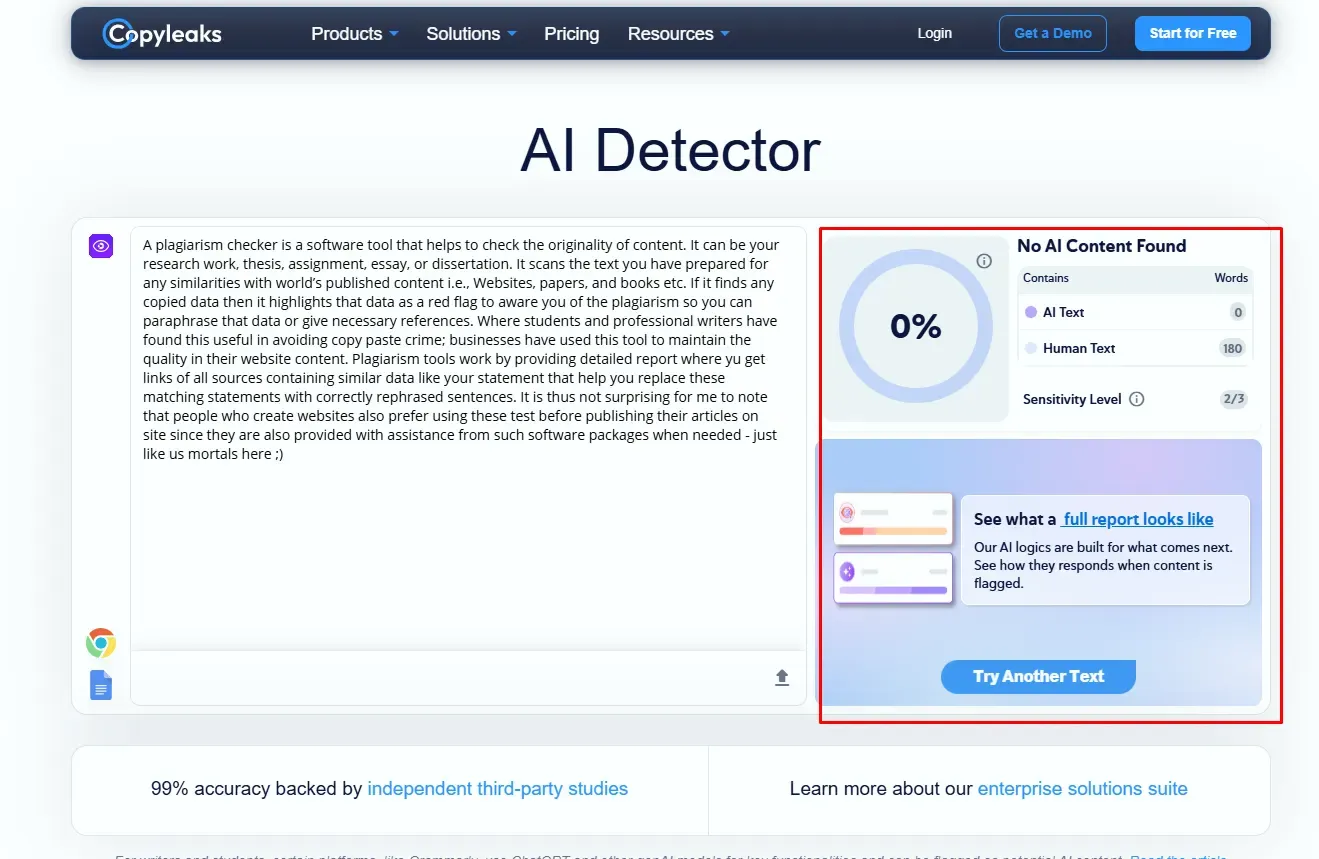
2. Copyleaks AI Detector
After that, I analyzed the content using Copyleaks. Unlike the previous tools, Copyleaks identified the content as AI-generated. This shows that different AI detectors may produce different results depending on their detection models and evaluation methods, something we compare directly in our Copyleaks vs AI Checker Pro breakdown.
Result: Detected as AI-Written Content
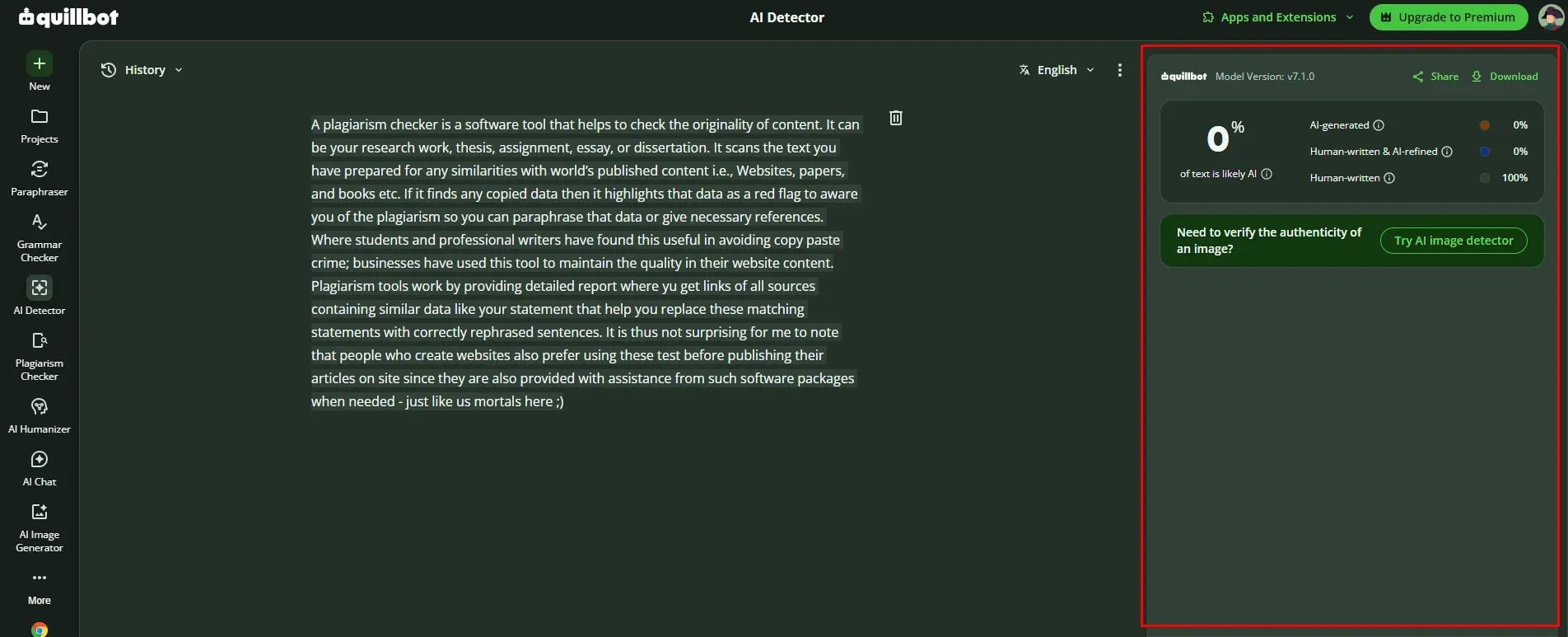
3. QuillBot AI Detector
I also tested the content using QuillBot AI Checker. The tool detected the rewritten content as 100% human-written, which again shows positive results for Crossplag's humanization process.
Result: 100% Humanized Content
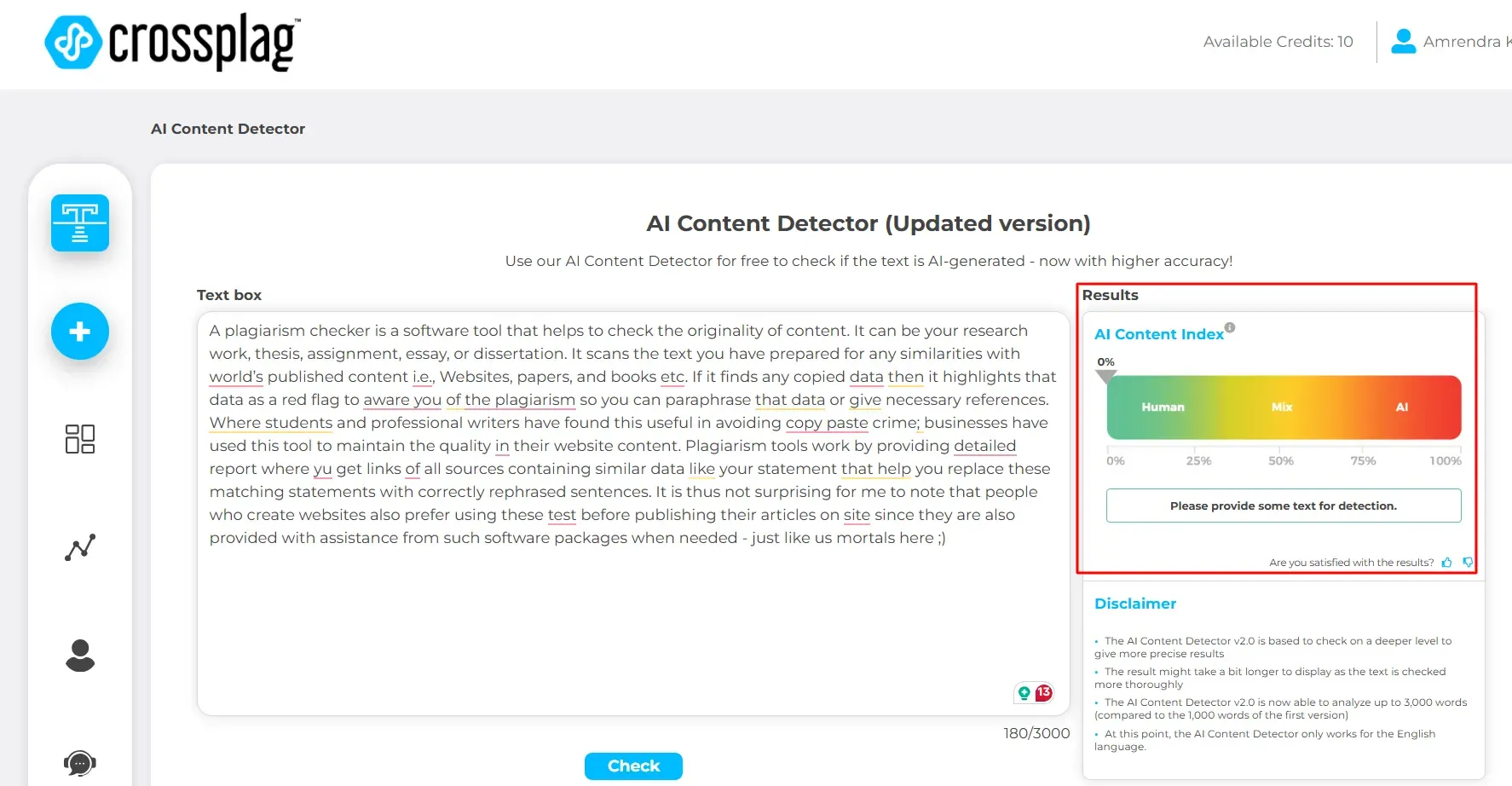
4. Crossplag AI Detector
Finally, I checked the content using Crossplag AI Detector. The results were inconsistent. In some tests, it identified the content as AI-generated, while in other cases, it marked the same content as human-written. This indicates that AI detection results can vary between platforms, and no single detector can guarantee perfect accuracy in every situation.
Result: Mixed Results (AI and Human Detection Variation)
Crossplag AI Detector Testing Results Overview
| Content Type | Expected Result | Crossplag Performance |
|---|---|---|
| Raw AI-generated content | High AI probability score | Better detection capability |
| Human-written content | Low AI probability score | Generally accurate, but false positives may occur |
| AI content with human editing | Medium or uncertain score | Detection becomes less reliable |
| Short-form content | Variable results | Lower confidence due to limited text samples |
| Paraphrased AI content | Reduced AI signals | More difficult to detect consistently |
Based on these tests, Crossplag performs better when analyzing clear AI-generated text but becomes less predictable when content includes human editing, paraphrasing, or shorter word counts. This highlights an important point: AI detector scores should be treated as indicators rather than absolute proof.
For businesses making decisions about content quality, hiring, or publishing standards, combining AI detection results with human review creates a more reliable verification process.
Crossplag Pricing Overview
Crossplag generally provides an unlimited free version with character restrictions and subscribes to a pay-as-you-go or subscription-based system. Since the company's pricing policy is regularly updated and not entirely transparent, you should check the official website to ensure there are no unexpected expenses.
| Plan | Best For | Typical Limitation |
|---|---|---|
| Free | Occasional, low-volume checks | Character/word cap per scan |
| Paid (credit-based) | Individuals scanning multiple documents | Credits consumed per scan |
| Institutional/Team | Schools, agencies, larger teams | Pricing often requires a quote |
Pros and Cons of Crossplag
A balanced look matters more than a sales pitch. Here's where Crossplag earns credit, and where it doesn't.
Pros:
- Simple, uncluttered interface that's easy to use without training
- Free tier available for quick, low-stakes checks
- States a clear no-storage privacy policy for scanned text
- Doubles as a traditional plagiarism checker, not just an AI detector
- Supports over 100 languages for plagiarism scanning specifically
Cons:
- AI detection accuracy drops noticeably on mixed or paraphrased content
- False positives on fully human-written text are a recurring complaint
- Pricing transparency varies by source, making it harder to budget
- English-only support for the AI detection layer specifically
- Not purpose-built for AI detection the way newer, specialized tools are
Real-World Business Example
Suppose we have a SaaS company that has a blog, with 5 contributing freelance writers. Every week, the content manager reviews the articles for publishing, making sure that the pieces adhere to a certain standard of authenticity and editing for the brand's voice.
But suppose that this manager uses an AI to detect possible AI-written content. If it flags a real human-written article as AI-generated, as is possible for some detectors (such as Crossplag), it could lead to a very uncomfortable conversation with one of the writers.
The solution, as many operations-focused managers and teams would suggest, would be to lean on the mixture of detection scores, writing samples from the writers, and direct conversation to judge whether to publish the article.
That is, in many ways, the ideal approach for building AI workflows that keep humans in the loop: not to act as a sole judge of something as complex as quality of writing, which requires human judgement and nuance.
Common Mistakes Businesses Make With AI Detectors
Teams new to AI content verification tend to repeat the same few mistakes:
- Treating a single score as proof. A 78% AI-likelihood score is a signal, not a verdict.
- Skipping a second-tool cross-check on high-stakes content, like a job application writing sample or an academic submission.
- Ignoring text length. Short passages under roughly 200 words reduce most detectors' confidence significantly.
- Not accounting for editing history. Content that's been through multiple human edits after AI drafting can register very differently than raw AI output.
- Overlooking the tool's language scope. Non-English content run through an English-trained detector produces unreliable results.
Expert tip: If your business publishes at volume, standardize a simple internal policy, for example, any content scoring above a set threshold gets a second human read before it's rejected or flagged. This alone eliminates most of the reputational risk that comes from over-trusting a single automated score.
Best Crossplag Alternatives Compared
If the importance is placed on reliability and avoidance of false-positive results rather than a free option, there are several other services to consider in addition to Crossplag. The decision depends on whether one needs academic-level checking, marketing text analysis, or processing of large volumes of text at once.
| Tool | Strongest Use Case | Notable Difference vs. Crossplag |
|---|---|---|
| Originality.ai | Publishers and content agencies | Built specifically for AI detection with plagiarism as a secondary layer |
| GPTZero | Educators and academic institutions | Strong academic focus and classroom integrations |
| Copyleaks | Enterprise compliance teams | Broader enterprise integrations and API access |
| Winston AI | Marketing and content teams | Emphasis on reducing false positives on edited content |
Readers weighing these options against each other may also find it useful to see this side-by-side comparison of the best AI content detectors for a deeper look at how each one stacks up.
Is Crossplag Worth It for Your Business?
Using Crossplag as a low commitment option is fine if you're just getting started, but a business that deals with high volumes or high-value content will benefit from a more focused tool. If you're serious about maintaining verifiable authenticity, it's wise to test your content against one or more of the competing platforms before choosing one.
If you have a process that relies on verification, moderation, or AI publishing pipelines, you can create a more focused solution. AI Checker Pro can help you design a custom workflow that leverages detection, moderation, and approval tools to build a more comprehensive system than any single platform offers, an approach we outline in our piece on businesses using AI detection and humanization together.
Conclusion
Crossplag AI Detector can be beneficial for users who require a rapid assessment of whether a piece of content might be AI-generated. It is easy to use, freely available, and doubles as a plagiarism detector, which makes it suitable for simple verification jobs. For businesses with high-volume content, though, it's important to note that the accuracy of AI detection may differ when dealing with edited, paraphrased, and hybrid (human-AI) text.
The primary difficulty with any AI detector is the risk of false alarms and preserving trust in content choices. For professional content teams, publishers, and agencies, a more comprehensive solution that integrates AI detection, human checks, and workflow automation can prove more effective.
AI Checker Pro can enhance this content verification process by offering more comprehensive analysis and facilitating more accurate checks of authenticity, thereby strengthening the security of the content. By offering more in-depth analysis and more reliable checks of authenticity, AI Checker Pro can help businesses build a stronger content verification process.
FAQs
What is Crossplag AI detector used for?
Is Crossplag AI content detector accurate?
Does Crossplag detect ChatGPT content?
Is the Crossplag AI detector free to use?
Can Crossplag AI detector give false positives?
Is Crossplag good for checking student essays?
What's a good Crossplag alternative?
Does Crossplag store the text you scan?
Can AI detectors like Crossplag be fooled by paraphrasing?
Should businesses rely only on Crossplag for content checks?

Harshil Barvaliya
SEO Executive & Content Writer at AI Checker Pro
I’m Harshil Barvaliya, an SEO Executive and Content Writer at AI Checker Pro. I focus on improving the website’s search engine visibility through effective SEO strategies, including keyword research, on-page and off-page optimization, and content development.Get Started Free
Create a free account for advanced AI detection and scan history.
Trusted by thousands worldwide.
Recent Blog's
Discover how AI-powered content creation can elevate your website's reach and engage your audience like never before. Explore the real impact of AI on crafting content that connects.