Is Using AI Cheating in School? What Depends on the Rules
TABLE OF CONTENTS
Key Highlights
Introduction
Why the Answer Changes From Class to Class
When Using AI Is Considered Cheating
AI Plagiarism vs Cheating: What Is the Difference?
Is ChatGPT Cheating in School? Homework, Research, and Exams
What Are the Rules for Using AI in School?
How AI Detection in Schools Really Works
How to Use AI Without Crossing the Line
Conclusion
FAQs
Get an AI summary of this post on:


Is using AI cheating in school? It depends on your instructors' and school's policy. Using AI is cheating if it goes against your assignment guidelines, replaces your brain, or is done sneakily behind your instructor's back.
Otherwise, it is perfectly acceptable to use as long as it is disclosed and used as an aide, not a ghostwriter. Check your syllabus first, and second, ask before you do it if it is not clear.
Key Highlights
- The rules decide the answer, not the tool itself, so asking is using AI cheating really means asking what your policy says
- Hidden AI use is where most students get into trouble
- Brainstorming and grammar checks are usually allowed; full essay writing usually is not
- AI detectors are not 100% accurate, and false positives happen to honest students
- Drafts, notes, and version history are your best proof of original work
- When a policy is unclear, ask your instructor in writing
Introduction
Every semester I hear the same question from students: Is using AI cheating? I get confused every time. One professor bans ChatGPT completely; the next one tells you to keep researching with it.
Is using AI cheating? It depends on the specific policies of your institution. Using an AI is cheating if your instructor bans its use, if you submit work that you know has been generated by AI in good faith, or if you knowingly conceal evidence of its use.
Using an AI is not cheating if its use is permitted and you follow the policies of your institution. In this guide, I will describe what constitutes cheating when asked is using an AI is cheating and how to avoid it in 2026.
Why the Answer Changes From Class to Class
Let me try to explain this to you in a simpler way. AI, like any tool, is not cheating per se. A calculator is sometimes allowed and sometimes not, depending on the class. Same for AI
When students ask me if using AI is cheating in school, I always ask them to check their syllabus first, as it probably states exactly that. And that is actually the entire point of this entire debate: using AI for cheating has no black-and-white answer.
Here is why the answer changes so much:
- Some instructors want to test your raw writing skill, so any AI help defeats the purpose
- Some instructors teach AI skills and expect you to use them
- Some departments, like computer science or journalism, have their own rules
- Many schools still have no clear school AI usage policy, so each teacher decides
So AI academic integrity is not one universal rule. It is a local rule, and inside a class your instructor usually has the final say. That is why AI use in education looks so messy right now.
When Using AI Is Considered Cheating
Let's first look at the obvious cases. The question is whether using AI is cheating in these cases. The use of AI is cheating in school when the rules prohibit it. It can also be cheating in a few cases where the rules are not clear.
- Your syllabus says no AI, and you use it anyway
- You paste a prompt, copy the output, and turn it in as your own writing
- You use AI during a closed-book exam or quiz
- You hide AI use when the assignment asks you to disclose it
- You use AI to invent sources, quotes, or data
- You let AI do the exact thinking the assignment was built to test
That last point matters most. The goal of most homework is learning, not producing text. If AI does the learning part for you, that is where AI academic dishonesty begins.
Is Using AI to Write Essays Cheating?
In most classes, is using AI to write essays cheating? Well, if you turned in the paper that was completely generated by an AI with your name on it then yes. An AI-generated essay with your name on it is the perfect example of AI cheating in schools.
Heavy editing won't save you if their policy states that any AI-generated work is strictly prohibited. If you asked me whether I'm using AI to cheat in a class that doesn't allow AI, I would say, of course not.
Imagine an average student at a large state school in the United States who writes a five-paragraph essay the night before it's due with AI help.
If every sentence is perfectly edited, it is still unauthorized work for a class that forbids the use of AI.
Get Lifetime Access with 60% OFF
Stop paying monthly subscriptions. Enjoy unlimited AI detection and humanizer access forever with future updates included.
- One-time payment
- Unlimited access forever
- All future updates included
Now the good news. So is using AI cheating if it just explains concepts and checks commas? Well, in most classes, probably not. Can you use AI to do schoolwork and not be cheating? In many scenarios, yes.
- Brainstorming topics and outlines, if your instructor allows it
- Explaining a hard concept in plain words, as a tutor would
- Making practice quizzes from your own notes
- Checking spelling and grammar
- Formatting citations, then verifying every one yourself
Is using an AI to correct grammar cheating? Generally, no. Spell check and other tools have been around for a while. Rewriting paragraphs using an AI, however, is a different case, so be sure to check your school's policies.
Is using ChatGPT to research a topic cheating? As long as you're using it to generate topics or find sources, it shouldn't be an issue. You should double-check any citations it gives, however, since it has been known to make them up. Turning in made-up citations is a breach of academic integrity no matter what.
AI Plagiarism vs Cheating: What Is the Difference?
A lot of students conflate these two ideas; here's a quick breakdown. People often wonder: Is AI-generated content plagiarism?
Plagiarism is when you present another's words or ideas as your own. AI text does not have clear authorship, which some say makes it not a textbook case of plagiarism.
In many cases, however, schools are now considering unpermitted AI text under plagiarism or unauthorized assistance anyway. It's more about what it does than the name it's given, and the whole is often tangled up in the AI cheating debate.
- Plagiarism: using someone else's work without credit
- Cheating: breaking assignment rules to gain an unfair advantage
- AI academic dishonesty: submitting AI output as your own or ignoring an AI rule
The AI plagiarism vs. cheating debate is interesting, but the penalties are often the same: a zero on the assignment, a failing grade, or a formal integrity hearing.
Is ChatGPT Cheating in School? Homework, Research, and Exams
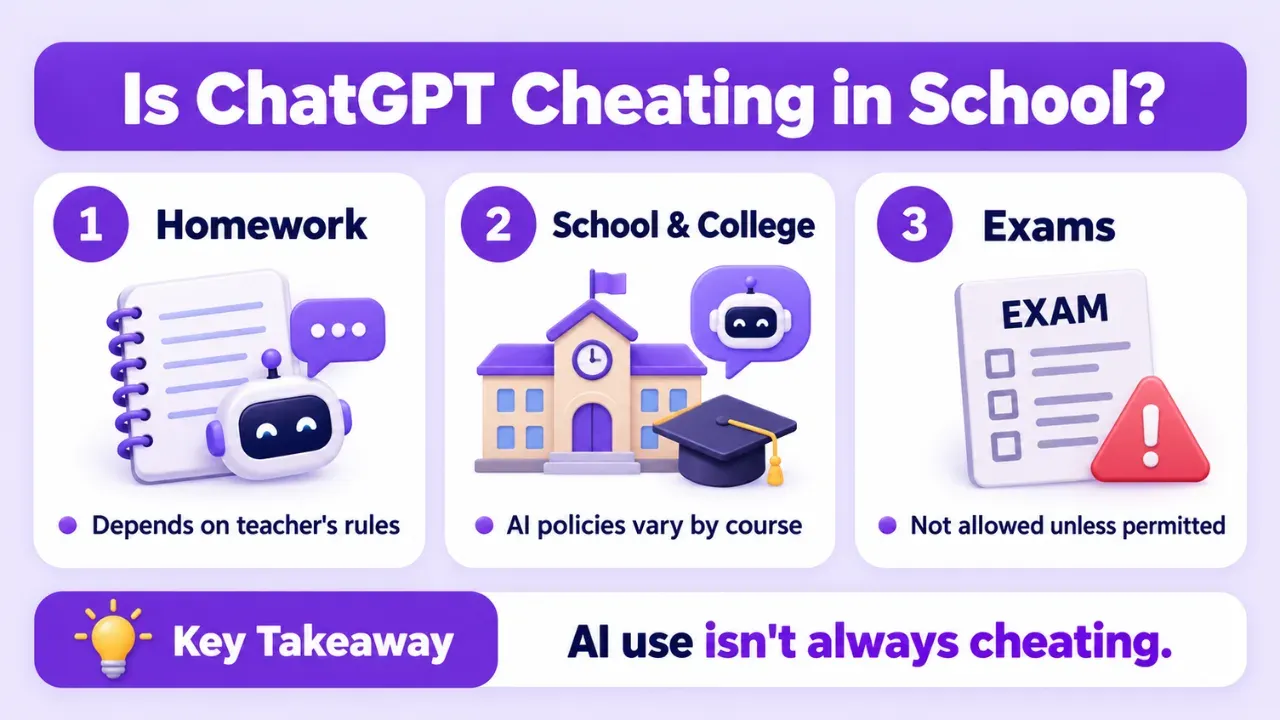
Let me answer the most common variations of is using AI cheating one by one. A student who's typing in is using ChatGPT cheating " or " Google " is probably looking for a quick yes or no, but the truth isn't so simple.
Homework
Is using ChatGPT to do your homework cheating? It depends on if your teacher allows it or not.
I know it's hard to determine whether it's cheating or not, so I'll give you the most basic test I use on myself to see if I was cheating on something I've done in the past. If you could not explain each answer you got from a chat without having the chat open and showing the grader, then you were probably cheating.
Is it considered cheating to use AI to do your homework if you ask it to explain to you what the concept is? Most teachers would say no because simply asking a chatbot to explain a concept to you is more like tutoring than using a cheat sheet.
And is it cheating to use an AI for assignments you can do at home? It depends if a policy or the instructions say it is or isn't allowed.
School and College
Many students wonder if ChatGPT cheating in school is a yes-or-no type of question. And while there is no definite answer, the situation is similar in college. Can students use ChatGPT in college? It depends on the class and professor. While some writing seminars might disallow its use of it, a business course could require using it for a project.
Exams
Exams are the easiest call. Use of AI in a test is cheating. Unless the instructor specifically states otherwise, use of AI during a test is cheating. That is also when is use of AI is considered cheating the clearest.
What Are the Rules for Using AI in School?
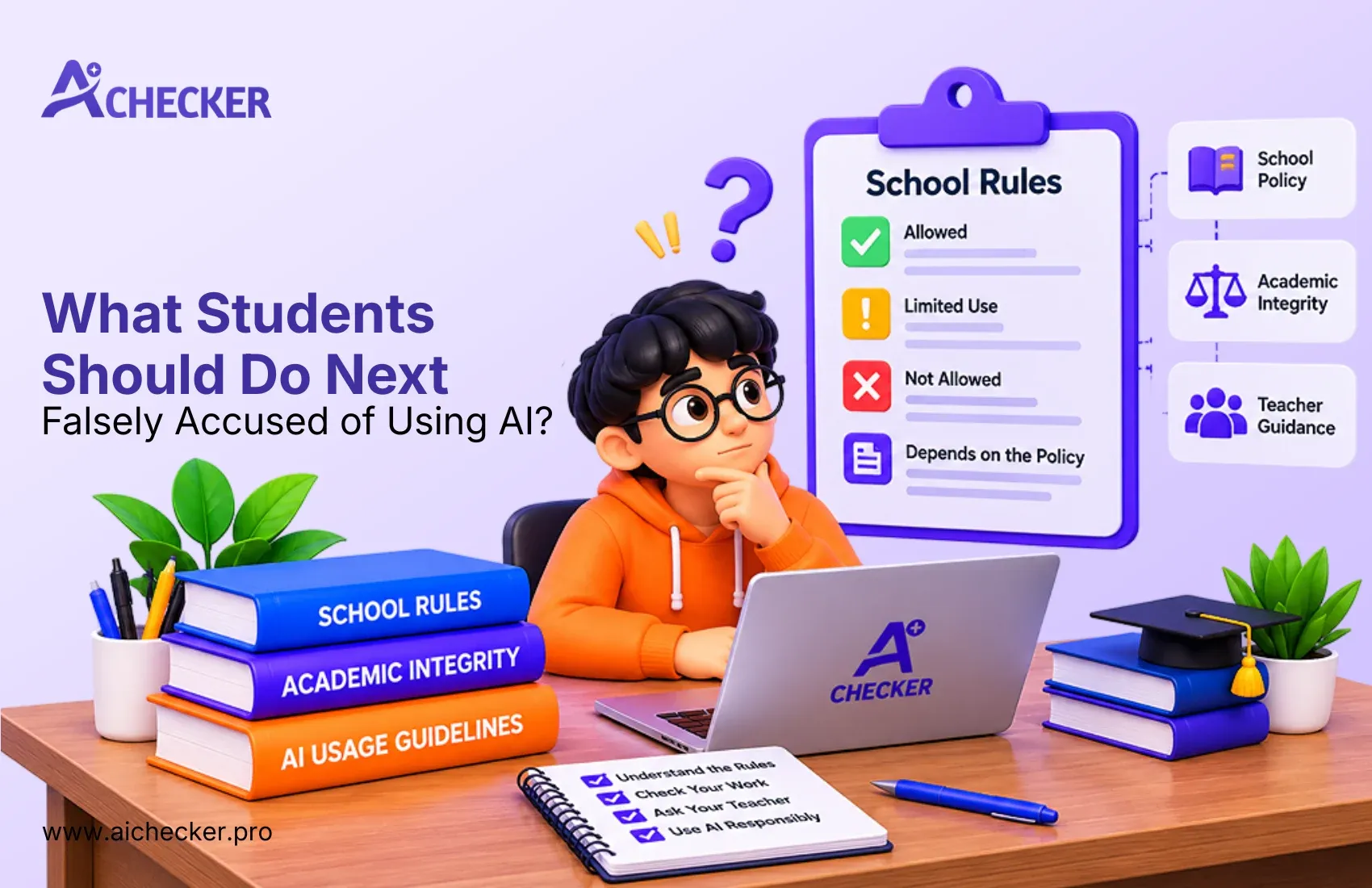
If you are asking what the rules are for using AI in school, here are the three policy types I see most often. Whenever you wonder if using AI is cheating, check which type applies to you:
- No AI allowed: any use counts as a violation
- Limited use: AI is allowed for brainstorming or editing, with disclosure
- Open use: AI is allowed, but you must cite it and stay responsible for the final work
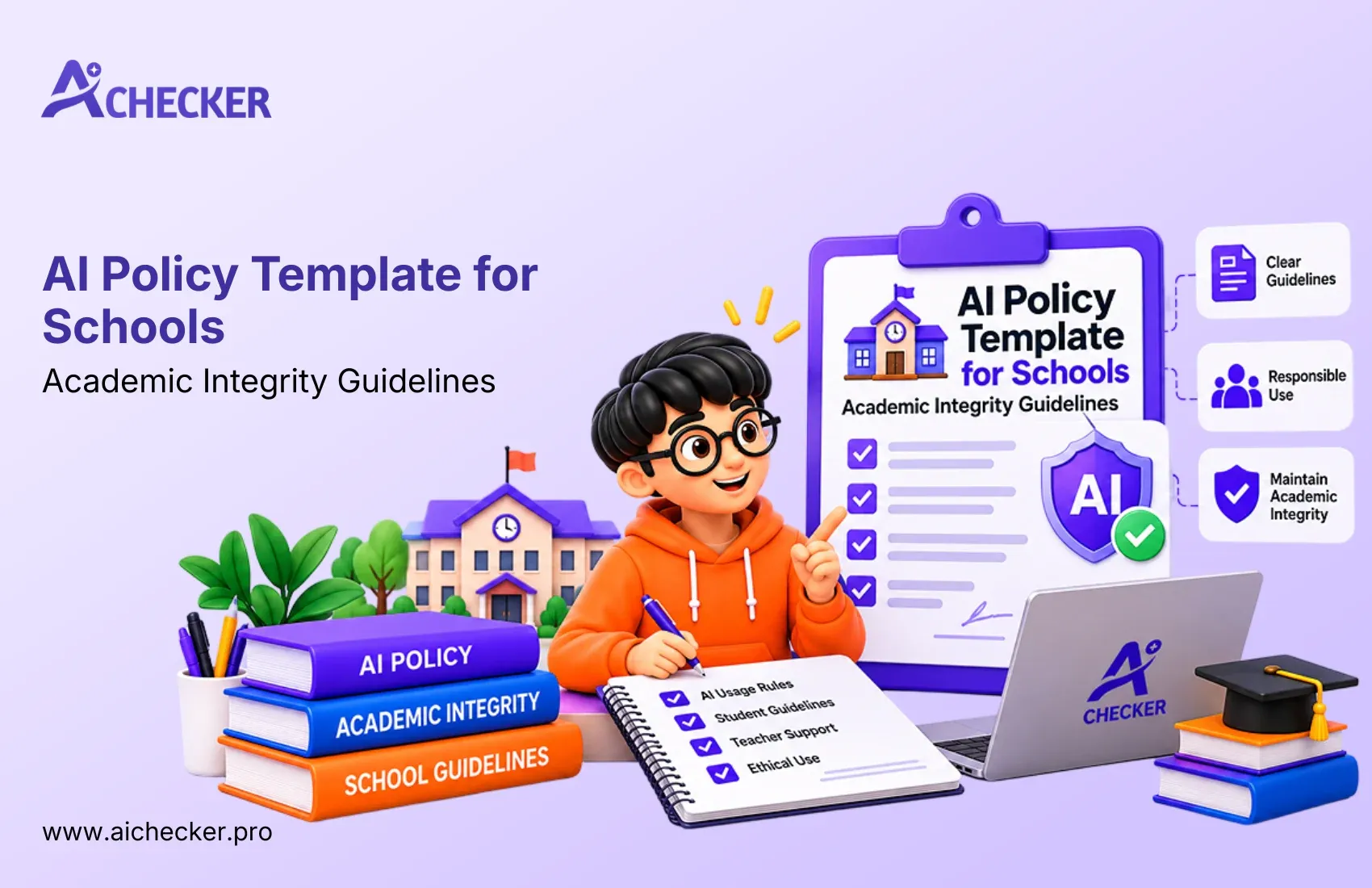
Because a school AI usage policy may be in the syllabus, a department handbook, or a student code of conduct, check all three. Good AI rules for students will include these four: what is allowed, what is banned, how to disclose, and what happens if you break the rules.
If you wonder whether students use AI for assignments in a class with no policy, ask in writing. A short email will protect you, and it will confirm whether using AI is cheating for that class in writing. Something like: Am I allowed to use AI for outlining and grammar if I disclose it?
How AI Detection in Schools Really Works
I have tested numerous AI detectors, and most are not reliable enough to be used as the sole metric for determining AI use.
When I ran some sample essays through multiple detectors last month, results varied across the board, as one paragraph might appear to be written by a human on one site while appearing to be AI-written on another.
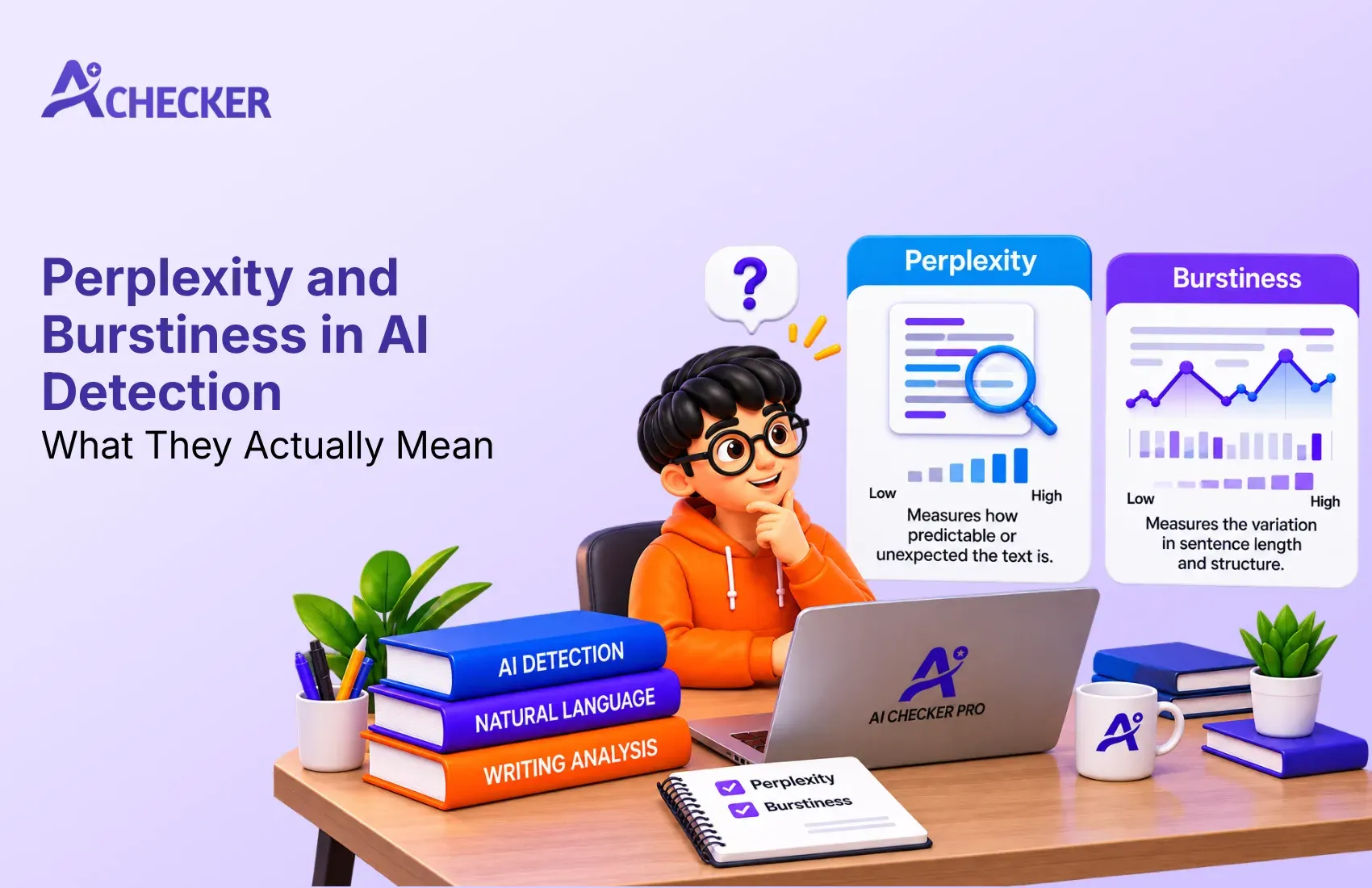
This is the issue with most AI detectors and how they relate to the classroom: detectors such as Turnitin and GPTZero operate on algorithms that detect patterns in word choice and sentence structure that are common in AI writing, and provide more weight to text that has an extremely consistent spacing or cadence.
They provide a likely probability in most cases, not an absolute certainty, and students' concerns that using AI writing will be determined by a single score provided by an algorithm are understandable.
Before you trust any tool to decide is using AI cheating, here is a simple comparison based on general knowledge and my own testing:
| Tool | Accuracy | Free Tier | Humanizer Included | Best For |
|---|---|---|---|---|
| AI Checker Pro | Sentence-level detection that works with ChatGPT, GPT -4, GPT 5, Gemini, and Claude | Free option available; see pricing | Yes | Students, bloggers, and teachers who want to check and fix text |
| Turnitin | Strong on raw AI text, but not perfect | No, used through schools | No | Institutions checking submissions |
| GPTZero | Good on raw AI text, mixed results on edited text | Limited free use | No | Quick checks by teachers |
| Originality.ai | Popular with publishers, can flag human text | Paid | No | Agencies and content teams |
No Detector Is 100% Accurate
This is one of the parts that many people do not understand. No AI detector is perfect, not even Turnitin, GPTZero, Originality, and Copyleaks. Each tool has its errors that lead to false positives and false negatives. So if your work is evaluated only by an AI detector, there is a possibility of getting false results.
- False positives: honest, human-written work gets flagged as AI. This happens more with formal writing and with non native English writers. A widely discussed Stanford study raised this concern.
- False negatives: AI text slips through, especially once it has been paraphrased or heavily edited by hand.
- Accuracy drops: detection is noticeably weaker on paraphrased or humanized AI content than on raw AI output.
Several major universities have curtailed their reliance on a single detection tool for this very reason. A flag should act as an opening to a conversation, not a conclusion, since a score cannot prove that AI cheating actually took place.
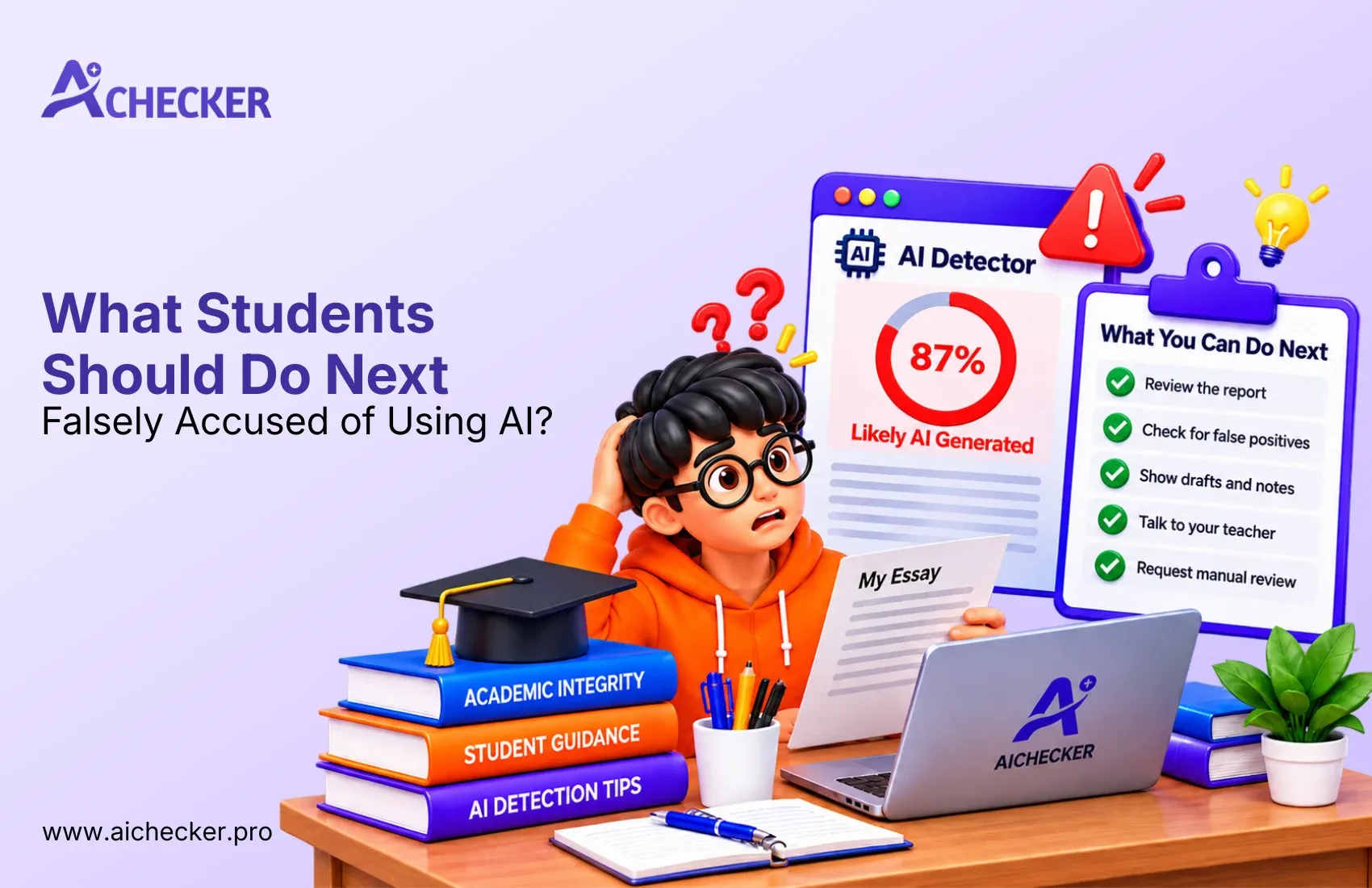
What To Do If You Are Falsely Flagged
If you wrote it yourself and still got accused, calm down. Remember that is using AI cheating is a human choice, not a technological one.
- Collect your Google Docs version history, your outline, your notes, and your sources.
- Offer to explain your position in person.
- Run your text through an AI checker pro to see which sentences are likely to be flagged, then you can discuss those with your professor.
- You can always try the AI detector for students beforehand.
How to Use AI Without Crossing the Line
This is the practical part. Here is what actually works in 2026 for responsible AI use for students. To stay on the safe side of using AI for cheating, follow these steps:
- Read the syllabus and the school policy before you open any AI tool
- Ask your instructor if anything is unclear
- Use AI for support tasks like outlining, studying, and grammar, not for final answers
- Disclose your use in a short note when required
- Keep your drafts and chat history as a record
- Write the final version in your own voice
That is the heart of the ethical use of AI in education, and that is the best answer to is using AI cheating for most students. AI should help you think better, not think for you.
For the use of AI in academic writing, I like to have a very simple rule of thumb: you can use AI to improve your work, but the ideas and the argument must be yours.
If AI helped you write a first draft and your school allows it, rewriting it in your own words matters. Rather than having to rewrite it manually for hours, many users now rely on AI Checker Pro to be able to find the most robotic sentences and smooth out their meanings with the included humanizer.
I have personally seen bloggers and students clean up stiff, machine-sounding drafts in this way. AI Checker Pro is used by 100K+ users and is easy to use, which helps when you are short on time.
Conclusion
So, is the usage of AI cheating? Well, that depends on the rules. Cheating with AI occurs when it is forbidden, concealed, or substituted for your own work, and it is okay when allowed and disclosed.
Review the policy, ask questions beforehand, save your drafts, and remember there is no perfect AI detector to ensure the security of your content.
You must continue asking: Is the use of AI cheating for each class? Because the answer may differ depending on the rules, and if you're uncertain if your writing is up to par, take a quick scan with AI Checker Pro to be certain before you send it in.
FAQs
Is using AI cheating?
Is using AI cheating in school?
Is using ChatGPT for homework cheating?
Is using AI to write essays cheating?
Is using AI to check grammar cheating?
Can students use ChatGPT in college?
Is AI generated content plagiarism?
What are the rules for using AI in school?
Is using ChatGPT for research cheating?
What should I do if I am falsely flagged for using AI?

Harshil Barvaliya
SEO Executive & Content Writer at AI Checker Pro
I’m Harshil Barvaliya, an SEO Executive and Content Writer at AI Checker Pro. I focus on improving the website’s search engine visibility through effective SEO strategies, including keyword research, on-page and off-page optimization, and content development.Get Started Free
Create a free account for advanced AI detection and scan history.
Trusted by thousands worldwide.
Recent Blog's
Discover how AI-powered content creation can elevate your website's reach and engage your audience like never before. Explore the real impact of AI on crafting content that connects.