AI Detectors in 2026: What Changed Since GPT-5 and Gemini 3 Launched
TABLE OF CONTENTS
Why AI Detectors Had to Catch Up in 2026
How GPT-5 Changed the Detection Game
Gemini 3 and the New Detection Challenge
What the Data Actually Shows About AI Detection Accuracy
Best AI Detector 2026: What I Found After Testing
How AI Content Detector Tools Actually Work Now
How to Detect ChatGPT Content and Humanized Text
AI Detectors for Educators and Publishers
AI Plagiarism Checker vs AI Detector: What Is the Difference
What Actually Works in 2026
Conclusion
FAQs
Get an AI summary of this post on:




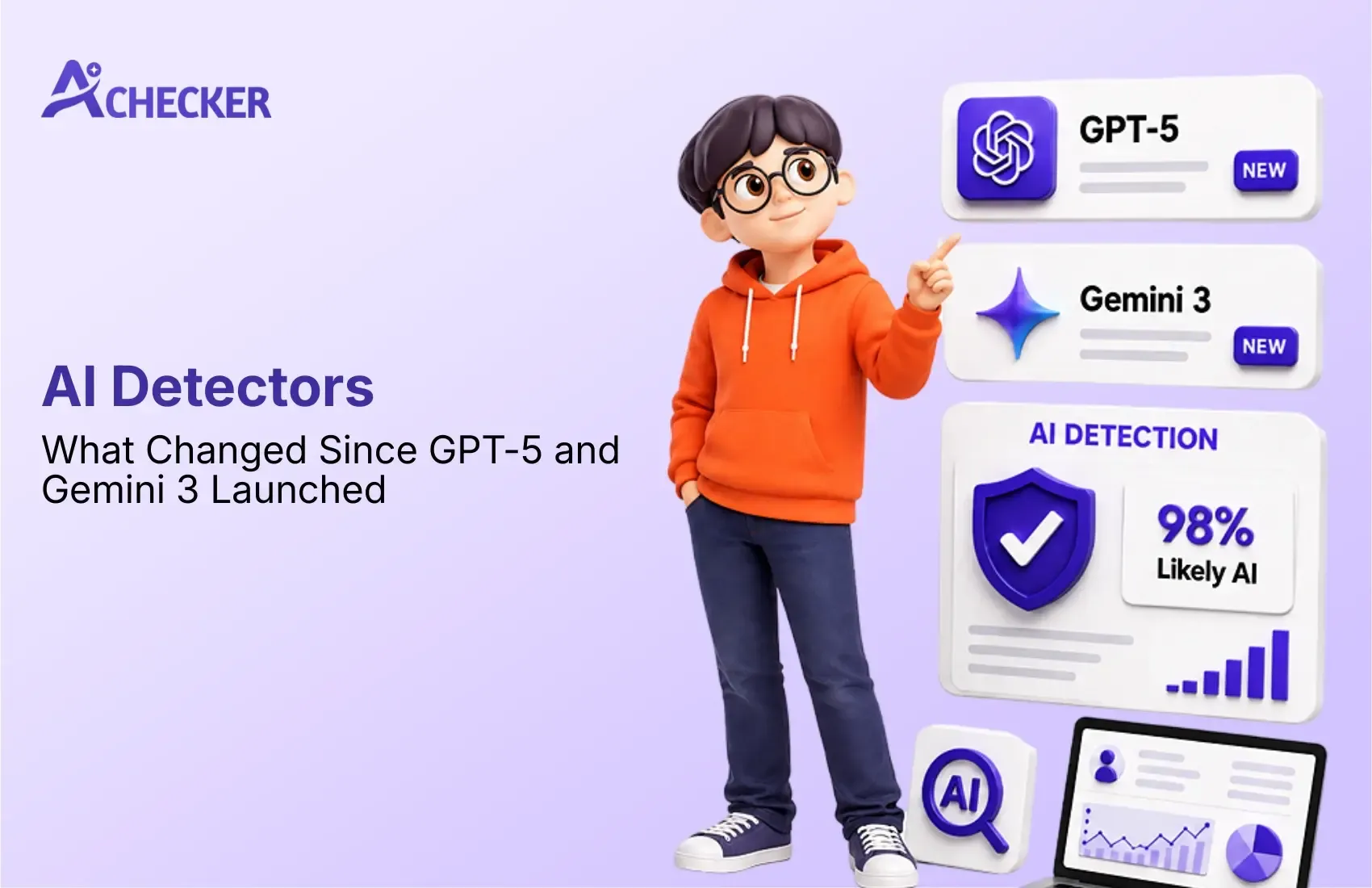
I've tested a lot of AI detectors, and honestly, most of them are not as accurate as they claim to be. This felt true back in 2024, and it still feels true now, especially with AI detectors 2026 models having to deal with GPT-5 and Gemini 3 output. The tools you used last year to check a paper or a blog post are just not built for what these newer models can write today.
If you're a student worried about Turnitin, a teacher grading papers, or a blogger trying to protect your Google rankings, then yeah, this matters to you directly.
Let me explain what actually changed, what the data shows, and what works in 2026.
Why AI Detectors Had to Catch Up in 2026
When GPT-5 rolled out, it did not just write better sentences. It wrote sentences that broke the old detection formulas, in a way that was kinda obvious after a while. Most AI detection tools were originally trained to spot patterns from GPT-3.5 and GPT-4, models with predictable word choices and a very rigid sentence rhythm.
GPT-5 writes with more natural variation. It throws in short and long sentences the way a real person does, not like some mechanical metronome. Gemini 3, which Google released in November 2025, and then followed up with Gemini 3.1 Pro and Gemini 3.5 Flash through the first half of 2026, created a similar mess.
Both models made the older detectors feel outdated, not over years but within months.
Here is the straight answer for 2026 if you actually want one: no single AI detector is perfect, but some are way more reliable than others, and knowing the difference can help you avoid a false accusation, or worse, a missed AI-generated submission.
How GPT-5 Changed the Detection Game
A GPT-5 AI detector needs to look past simple word prediction patterns. Independent testing this year found that GPTZero hit around 90 percent detection on raw GPT-5-generated text, which is solid, but that number drops fast once the text gets edited or run through a paraphrasing tool. You can read more in this breakdown of whether GPT-5 content is detectable.
This is the part students do not always understand. Writing something with GPT-5 and then changing a few words yourself is not the same as writing it from scratch. Detectors still pick up on:
- Repetitive sentence openers
- Overly balanced paragraph structure
- Low sentence-to-sentence variation in word choice
- Predictable transition phrases
A professor at a mid-size US university told me that she catches more suspicious submissions because of formatting habits rather than from any one AI score. Students who lean on GPT-5 for whole essays often keep the same paragraph cadence across the entire paper, like it's sort of templated, over and over. That steady pattern is pretty much what an AI detector for GPT-5 is trained to spot.
Gemini 3 and the New Detection Challenge
Gemini 3 AI detector accuracy is honestly a mixed bag right now, I mean it kinda depends on who is running it.
Gemini 3 launched with this massive context window and stronger reasoning, and then Gemini 3.5 Flash rolled out in May 2026 with even better agentic writing ability. So you end up with longer, more coherent output that reads less like a rigid template and more like someone actually thinking through an argument, kinda messy but in a good way.
Gemini AI detection is still catching up because most public detectors were kind of benchmarked mainly against ChatGPT output.
If a blogger asks Gemini to write a product review, some detectors flag it correctly. Others miss it completely, especially once the writer goes in and tweaks a couple sentences by hand. It's like the "fingerprints" get smudged.
Have you noticed that some tools seem confident about GPT content but a bit shaky on Gemini content? That is not just your imagination. It is a real gap in how these detectors were trained, and it shows up fast, something covered further in this look at which AI detection model you should actually use.
What the Data Actually Shows About AI Detection Accuracy
I want to be honest here, instead of just repeating marketing claims. AI detection accuracy numbers you see on a vendor homepage are almost always tested under nice conditions, meaning clean, unedited AI text against clean human writing. But real classrooms and real content teams, they don't work that way, at least not the way those tests imply.
One independent test ran 50 samples through Turnitin, GPTZero, Copyleaks, ZeroGPT, and Originality.ai. Turnitin correctly flagged 9 out of 10 purely AI-generated texts, though it also scored three human-written academic samples above 20 percent on its AI indicator. One formal literature review from a chemistry journal hit 38 percent, and yes, it was written entirely by a person.
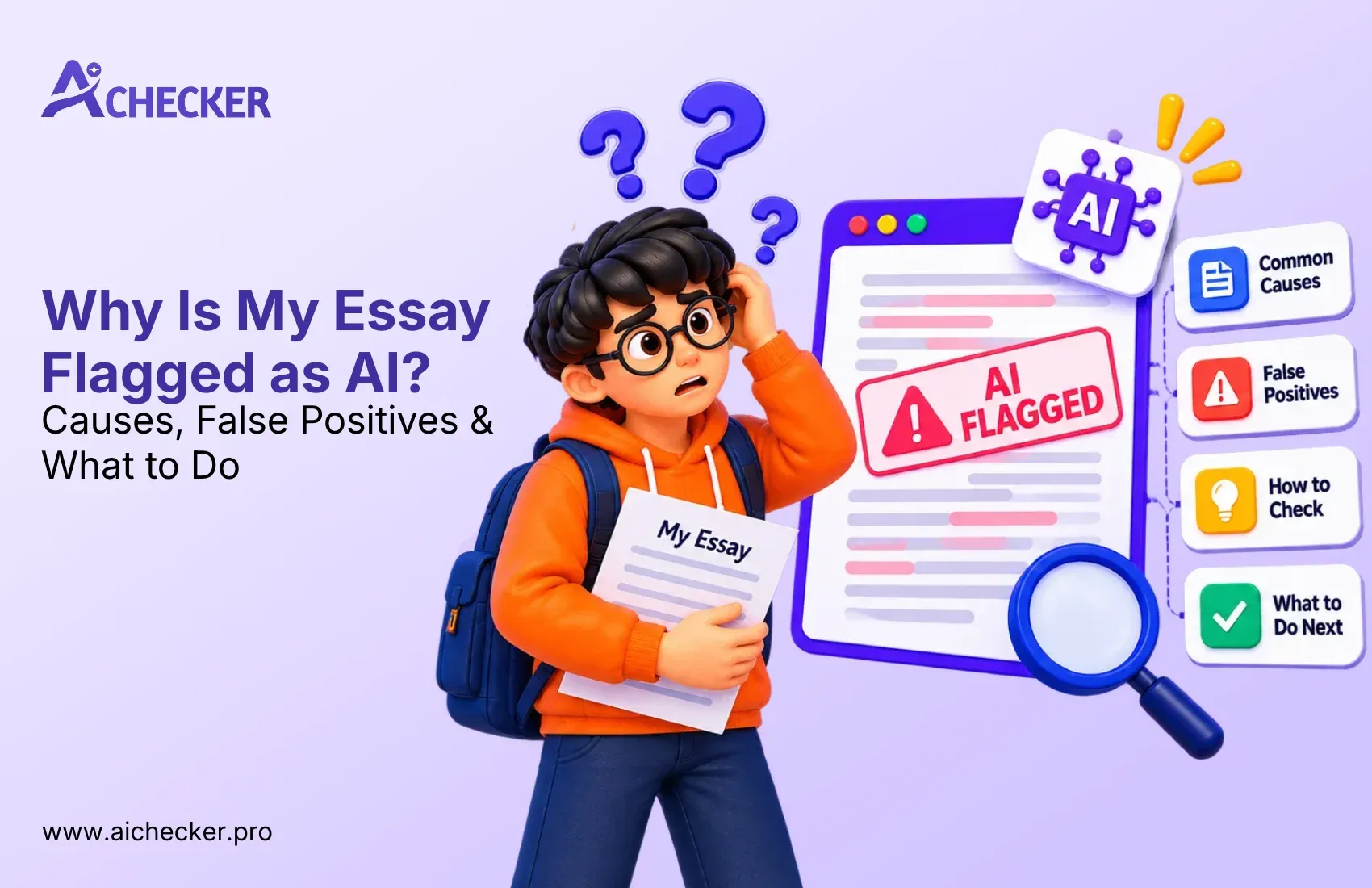
That's the part nobody talks about enough. False positives are just as real a problem as missed detections, and they tend to hit non native English speakers, plus formal academic writers, the hardest. This is one of several AI detection problems that vendors rarely mention.
There's also a separate study where seven detectors were tested against adversarial techniques. They reported a baseline accuracy around 39.5 percent; then it dropped to 17.4 percent once simple paraphrasing was applied. In plain language, a lot of these tools are easier to steer around than their websites make it sound.
Best AI Detector 2026: What I Found After Testing
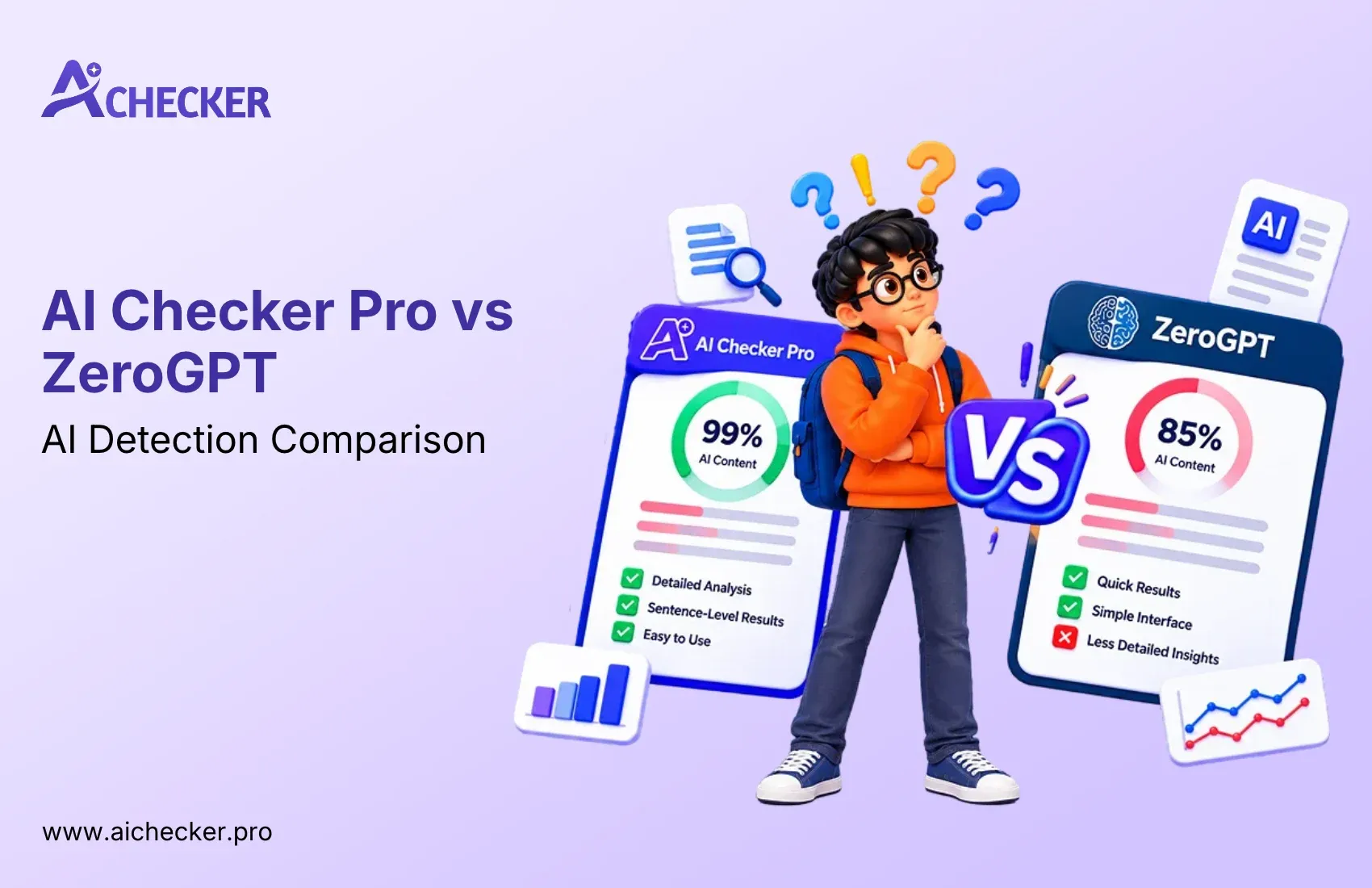
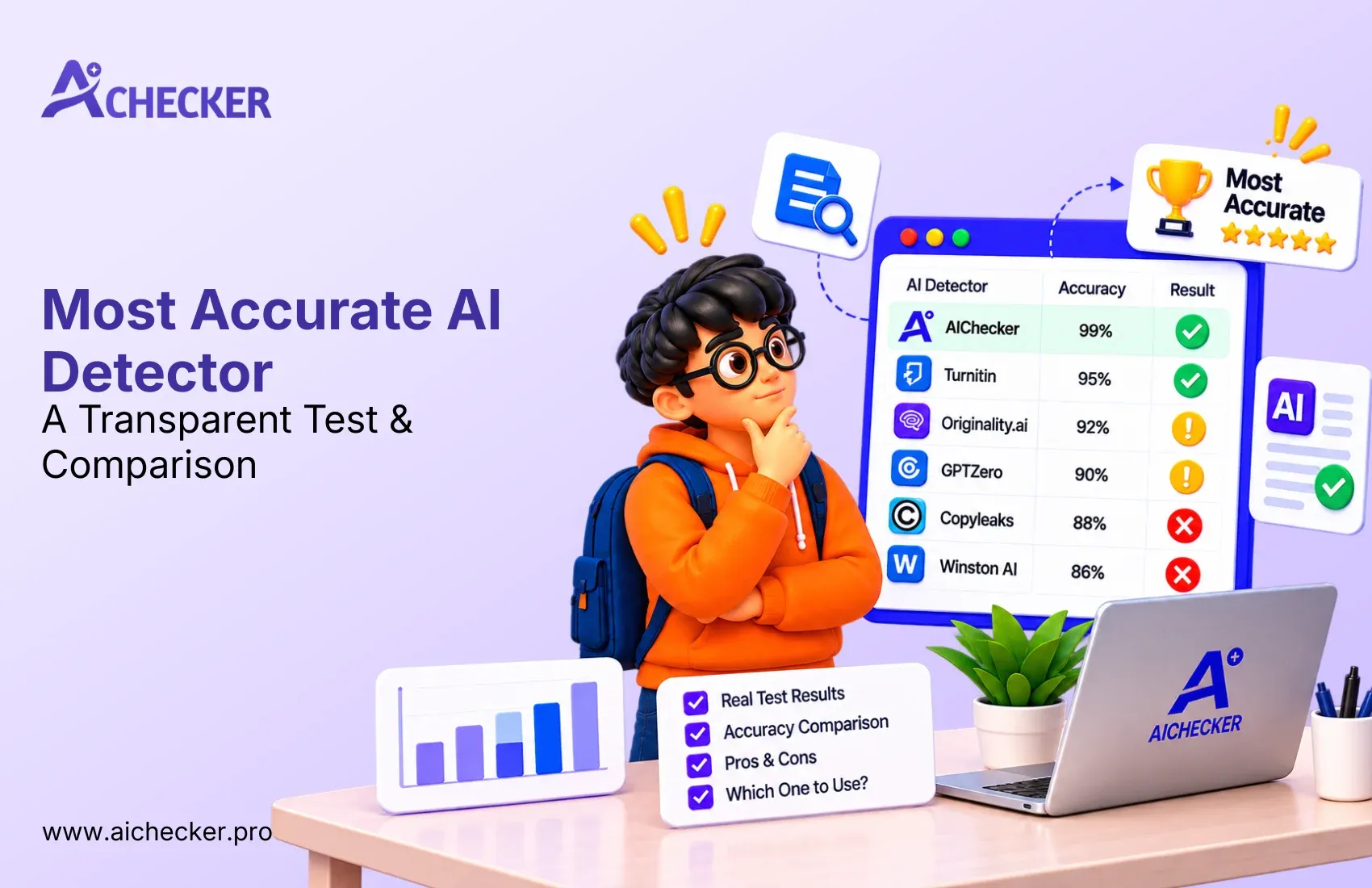
After testing the leading AI detectors against GPT-5, Gemini 3, Claude, and human-edited content, one conclusion stood out: AI Checker Pro delivered the most consistent results overall. While every tool has strengths, AI Checker Pro combines high detection accuracy, sentence-level analysis, and practical features that many competitors still lack.
1. AI Checker Pro
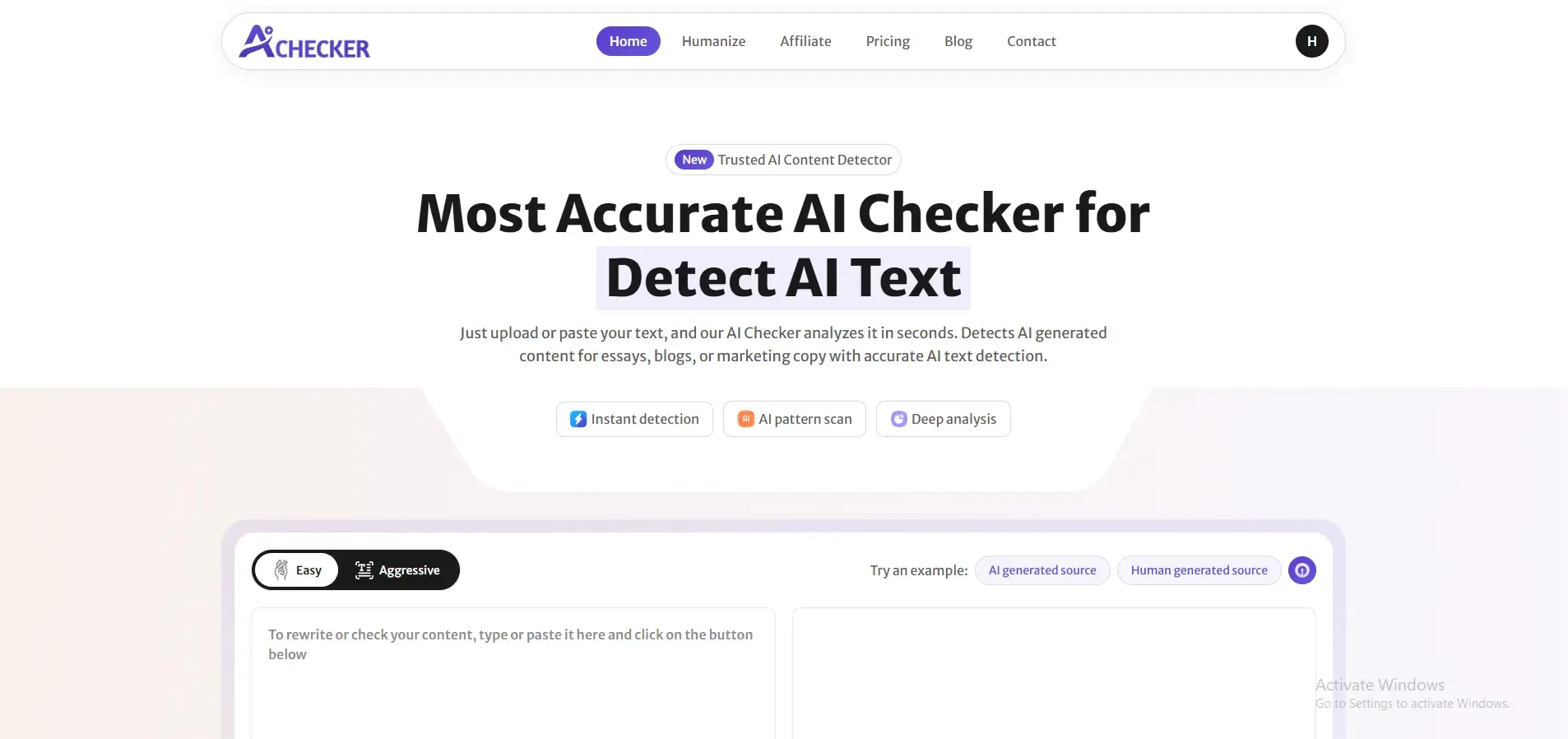
AI Checker Pro is built for the latest generation of AI models, including ChatGPT, GPT-5, Gemini, Claude, and Grok. Instead of providing only a document-level score, it analyzes content sentence by sentence, making it easier to identify mixed AI and human-written text. It also includes AI humanizer insights, SEO-focused analysis, and detailed detection reports, making it a strong choice for publishers, agencies, educators, and businesses.
Best For
- SEO professionals
- Content publishers
- Marketing agencies
- Educators
- Businesses checking AI-generated content
Pros
- Excellent detection across GPT-5, Gemini, Claude, and ChatGPT
- Sentence-level AI detection
- AI humanization and content quality insights
- SEO-friendly analysis
- Supports text and PDF uploads
- Clean, easy-to-use interface
Cons
- Advanced reports require a paid plan
- API access is limited compared to some enterprise tools
Pricing
- Free plan available
- Premium plans with additional scans, reports, and advanced features
2. GPTZero
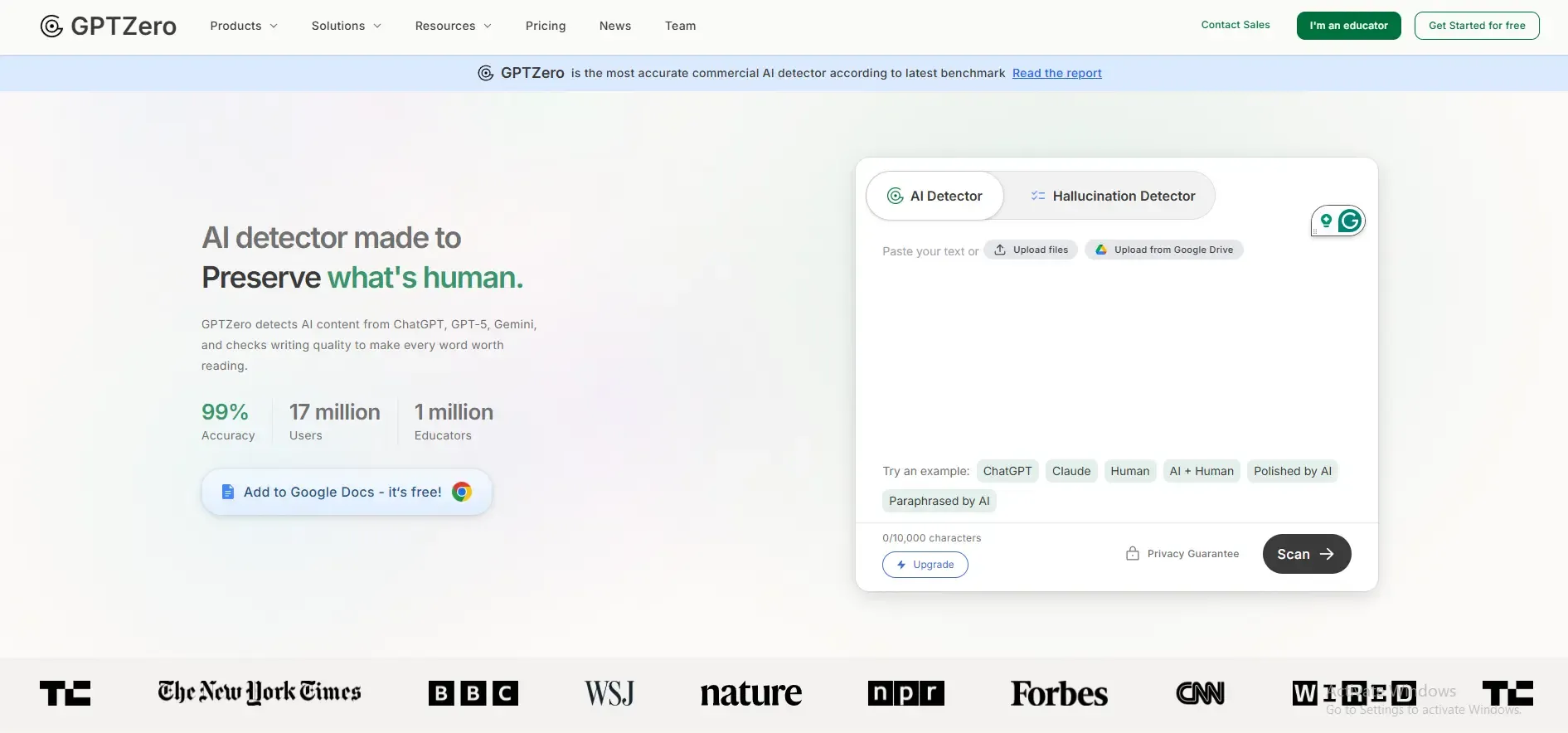
GPTZero remains one of the most recognized AI detectors in education. It performs well on straightforward AI-generated text and offers a generous free version, although its accuracy can decrease after heavy editing or paraphrasing, as this GPTZero review explains in more detail.
Best For
- Students
- Teachers
- Individual users
Pros
- Easy to use
- Free tier available
- Good academic reputation
Cons
- Less reliable on heavily edited AI content
- Limited advanced reporting
Pricing
- Free plan available
- Paid plans for higher limits
3. Turnitin
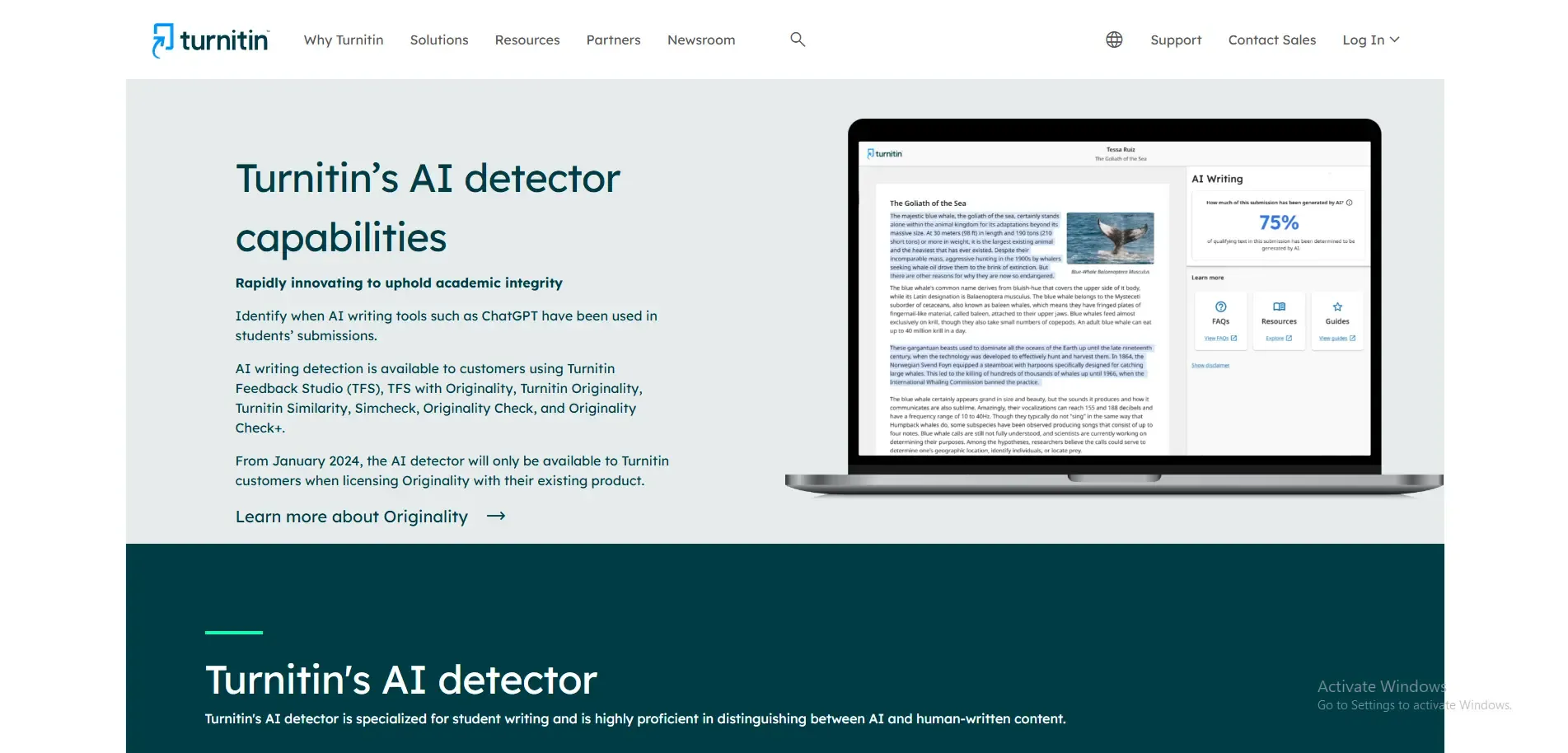
Turnitin continues to be the gold standard for universities and schools. Its AI detection is tightly integrated into academic workflows and generally produces fewer false positives. However, individual users cannot easily purchase access. See this comparison of Turnitin vs AI Checker for the full picture.
Best For
- Universities
- Schools
- Academic institutions
Pros
- Trusted by educational institutions
- Low false-positive rate
- Strong plagiarism detection
Cons
- Not available for most individual users
- Institution-only access
Pricing
- Custom institutional licensing
4. Copyleaks
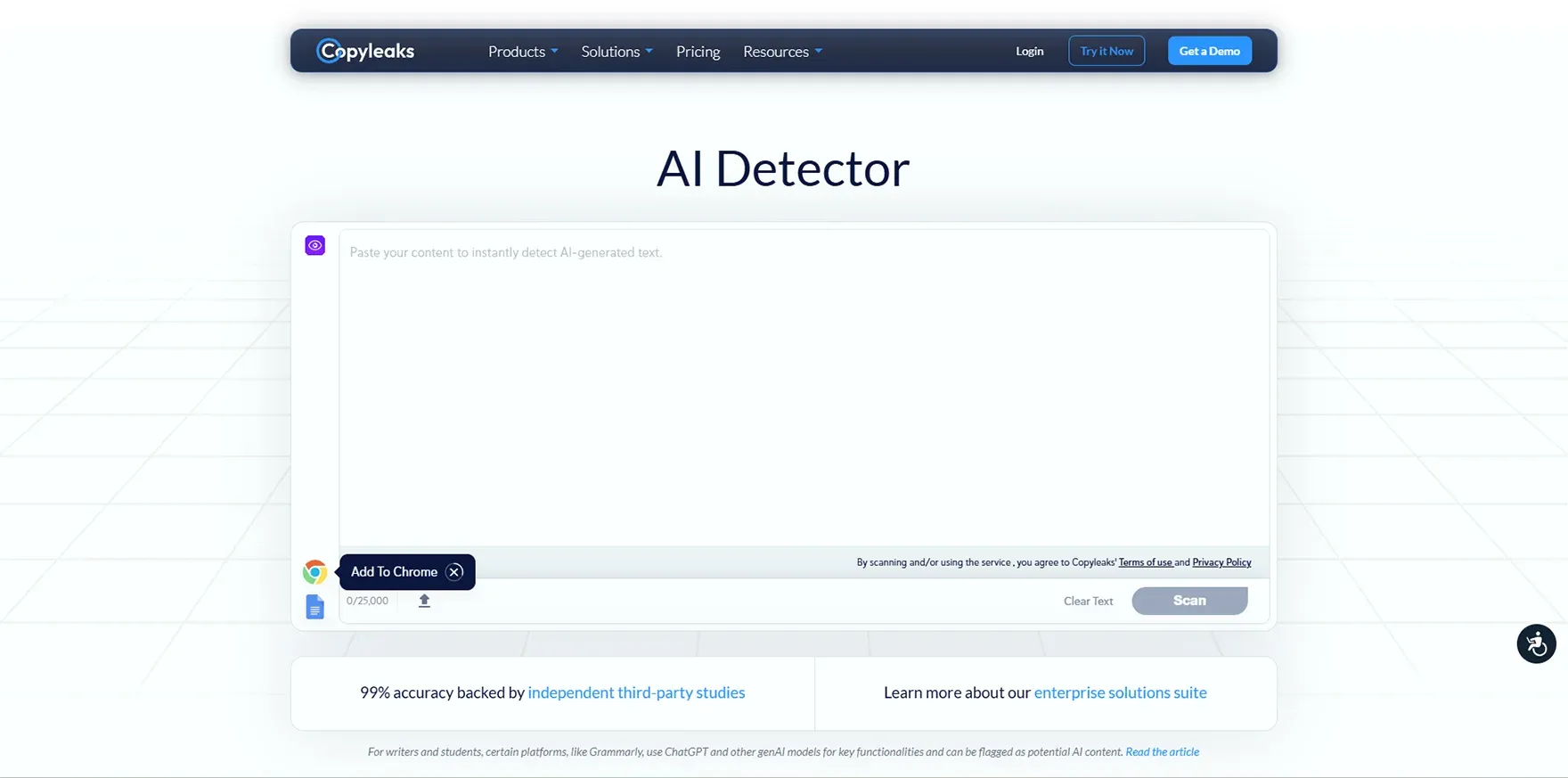
Copyleaks is a strong enterprise AI detector with excellent LMS integrations. It supports multiple AI models and is commonly used by businesses and educational organizations managing large volumes of documents, though it's worth asking is Copyleaks AI detector accurate before relying on it exclusively.
Best For
- Enterprises
- Schools
- Corporate compliance teams
Pros
- Multi-model AI detection
- API integrations
- Enterprise-ready
Cons
- Interface feels more enterprise-focused
- Premium pricing
Pricing
- Credit-based paid plans
5. Originality.ai
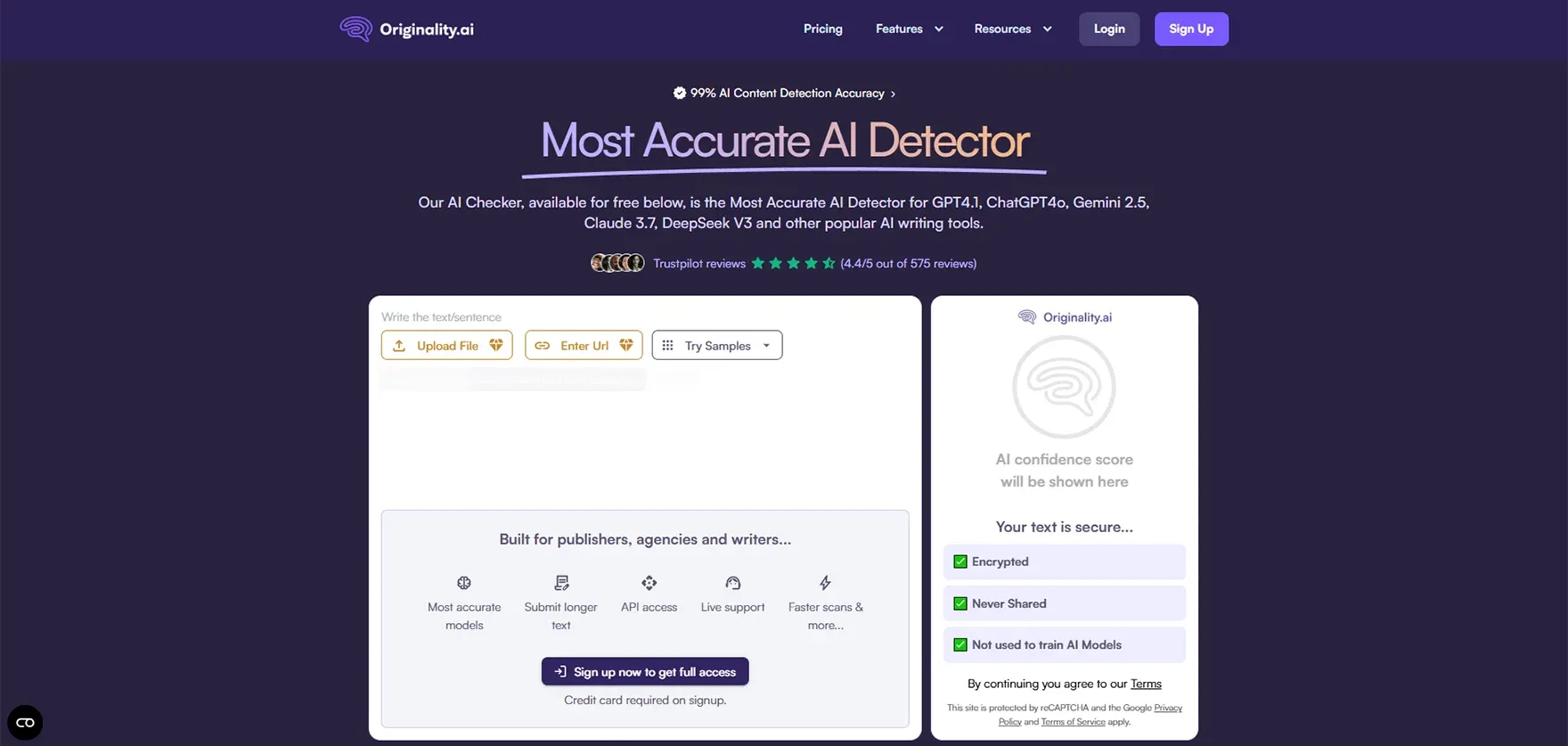
Originality.ai is widely used by SEO agencies, publishers, and website owners. It combines AI detection with plagiarism checking and site scanning, making it particularly useful for content operations, and this Originality.ai review digs into the specifics.
Best For
- SEO agencies
- Website owners
- Content marketing teams
Pros
- Website scanning
- Team collaboration
- Strong publishing workflow
Cons
- Paid-only service
- Higher cost for large teams
Pricing
- Pay-as-you-go and subscription plans
6. ZeroGPT
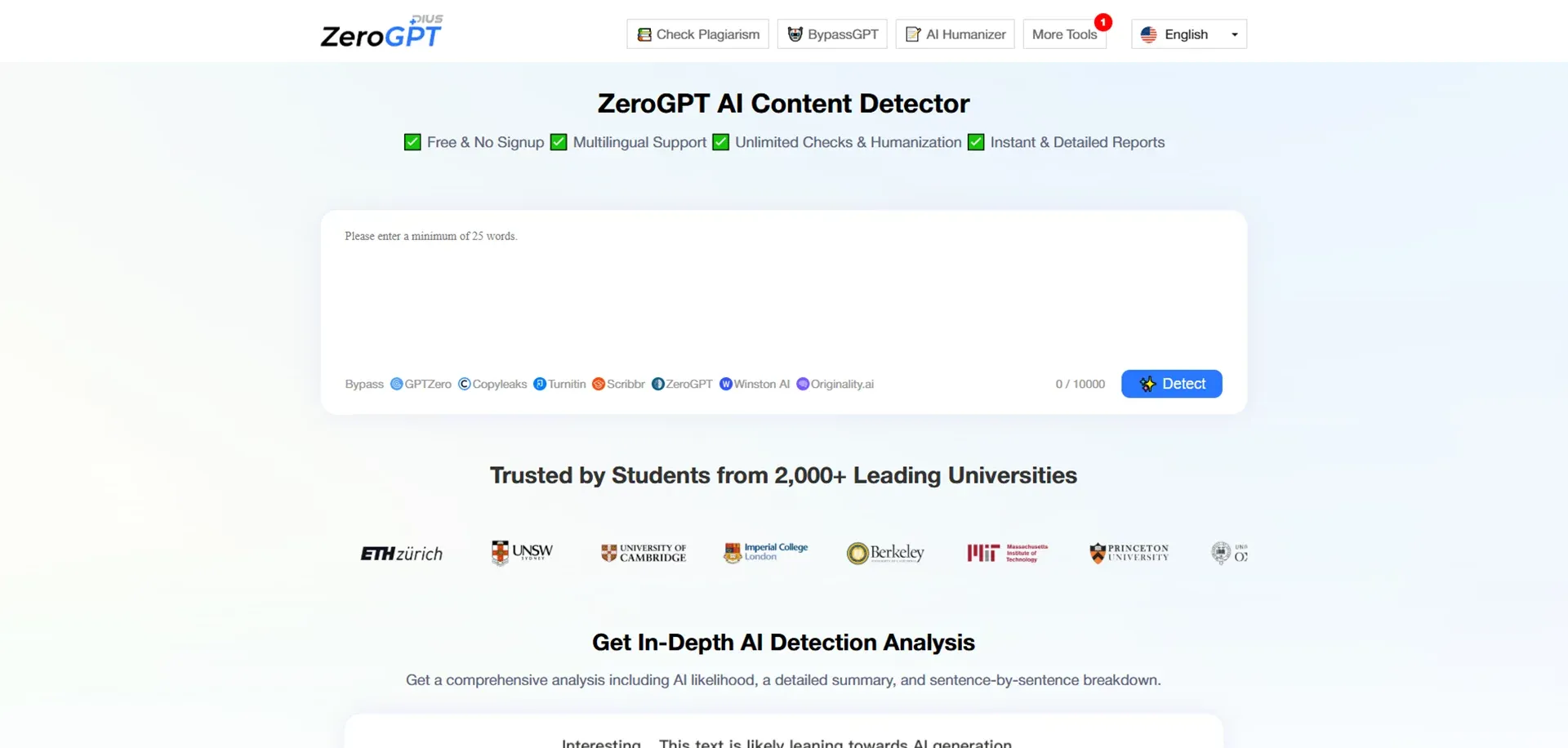
ZeroGPT is one of the most popular free AI detectors and is useful for quick checks. However, during testing it produced more false positives than premium alternatives, especially on human-edited content, a pattern also noted in this ZeroGPT review.
Best For
- Casual users
- Quick AI detection
Pros
- Free to use
- Fast scanning
- Simple interface
Cons
- Higher false-positive rate
- Limited reporting features
Pricing
- Free plan
- Premium subscription available
Get Lifetime Access with 60% OFF
Stop paying monthly subscriptions. Enjoy unlimited AI detection and humanizer access forever with future updates included.
- One-time payment
- Unlimited access forever
- All future updates included
How AI Content Detector Tools Actually Work Now
An AI content detector in 2026 usually blends a few different signals instead of relying on just one. The main ones are:
- Perplexity, which measures how predictable each word choice is
- Burstiness, which looks at how much sentence length and complexity vary
- Neural classifiers trained on large samples of both human and AI writing
- Watermark detection, used mainly on newer models that embed hidden signals
AI writing detection has gotten more layered, I guess, because one single method is too easy to game. A tool that only checks perplexity can get fooled by some simple rephrase pass, you know, like it was not really there but close enough.
Then a tool that only checks sentence rhythm misses that kind of thing where text looks human but was written by AI first, and then heavily edited by a person. Putting together signals is what separates a decent detector from a weak one, honestly.
I have personally seen bloggers clean their content using AI Checker Pro after an initial draft came back flagged, mainly because it points out which particular sentences are triggering the score instead of just handing you one vague percent, something this guide on AI content checkers for bloggers explains well.
How to Detect ChatGPT Content and Humanized Text
If you want to detect ChatGPT content that has already been run through a humanizer, you need to look beyond the headline AI score. Humanized text often still has:
- Unnaturally even paragraph lengths
- A lack of small personal details or specific examples
- Transitions that feel slightly too smooth
- Missing minor grammar quirks that real humans naturally include
Tools like AI Checker Pro can help you spot AI content more accurately at the sentence level, instead of just handing you one blanket score for the whole document. This matters because most flagged papers or blog posts are not 100 percent AI, like really not.
They are often a blend, maybe 30 or 40 percent AI-generated, with the remainder reworked by hand, and a sentence-by-sentence view catches that small nuance that one single overall rating misses.
AI Detectors for Educators and Publishers
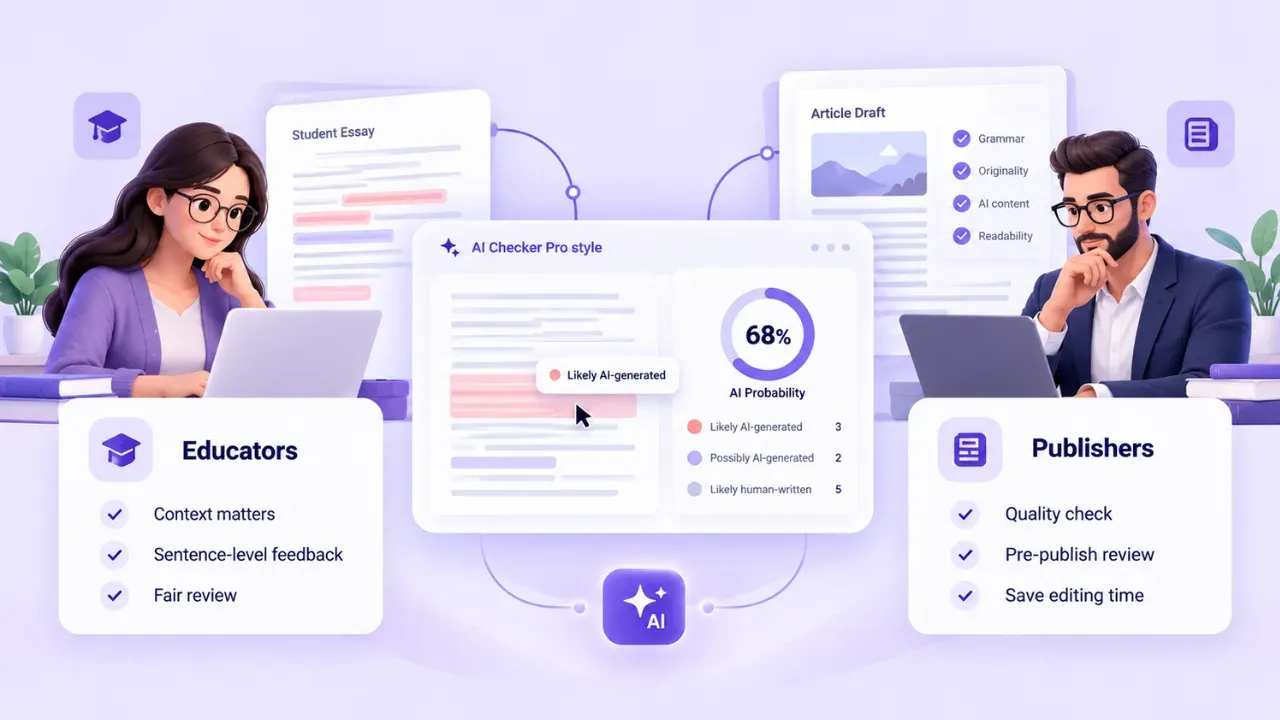 For educators, an AI detector should really do more than just spit out a percentage, because teachers need context, like the actual why. For instance, was this paragraph flagged due to AI patterns, or was the student an ESL writer whose formal English just reads a bit more even, and almost samey? That difference matters; it helps prevent unfair accusations and keeps things grounded in reality.
Now if you're talking about AI detection for publishers, the priority shifts. Publishers and content agencies often care more about Google worries than "academic honesty" wording. Google has said again and again that it doesn't penalize content purely because it is AI-generated, a point covered in more detail in this piece on whether Google penalizes AI content.
What Google does respond to is low-quality content, the kind that is unhelpful, thin, or plain not doing its job regardless of how it was written. Still, most agencies run articles through a detector before publishing, just to be safe, since client contracts are increasingly asking for it.
Also, instead of rewriting everything by hand, a lot of people now lean on AI Checker Pro to highlight risky parts before they hit publish, so they save hours instead of constantly second-guessing every paragraph.
AI Plagiarism Checker vs AI Detector: What Is the Difference
People mix these up constantly, like, all the time. An AI plagiarism checker compares your text against existing published content to spot copied material. An AI detector for students, on the other hand, looks at writing patterns to guess whether the text was made by a model such as GPT-5 or Gemini.
So you can end up writing something 100 percent original, but it still gets flagged as AI, and also you can copy something word for word that passes an AI detector but, then again, it fails a plagiarism check. Students especially need to grasp this difference, for real.
A paper can be plagiarism-free but still get flagged for AI patterns, and those are two completely separate issues with two completely different fixes.
What Actually Works in 2026
After analyzing various types of text (academic papers, blog articles, and marketing copy), here is the honest opinion of an AI content detector tester. There is no such tool that detects all cases of machine-assisted writing, and depending solely on the output score of a single AI content detector will be incorrect both for teachers who check student papers and for bloggers who need to make sure their content does not contain AI-written parts.
AI Checker Pro has been used by over 100,000 people and allows you to check and humanize text in one tool.
Conclusion
AI detectors in 2026 have gotten noticeably better since GPT-5 and Gemini 3 launched, but honestly it still isn't perfect. False positives stay a real risk, humanized writing can slip past those weaker tools, and there isn't any single checker that catches everything across every model, not even close.
The safest path is to use more than one checker, review things at the sentence level instead of just trusting one score, and pick tools made for the current generation of models rather than relying on older ones.
Whether you're a student, a teacher, a blogger, or an agency, figuring out how these systems actually function protects you way more than blindly believing a percentage that shows up on a screen.
FAQs
What is the best free ai detector in 2026?
Can an ai text detector catch GPT-5 content?
Is there a reliable chatgpt detector for teachers?
Does humanize ai text actually bypass detectors?
What is the most accurate ai detection tool for Gemini 3?
Why do ai detectors give false positives?
Is an ai checker free to use?
Does Google penalize content flagged by an ai detector? No.
What is the difference between an ai detector and a plagiarism checker?
How can I humanize ai content without getting flagged?

Harshil Barvaliya
SEO Executive & Content Writer at AI Checker Pro
I’m Harshil Barvaliya, an SEO Executive and Content Writer at AI Checker Pro. I focus on improving the website’s search engine visibility through effective SEO strategies, including keyword research, on-page and off-page optimization, and content development.Get Started Free
Create a free account for advanced AI detection and scan history.
Trusted by thousands worldwide.
Recent Blog's
Discover how AI-powered content creation can elevate your website's reach and engage your audience like never before. Explore the real impact of AI on crafting content that connects.