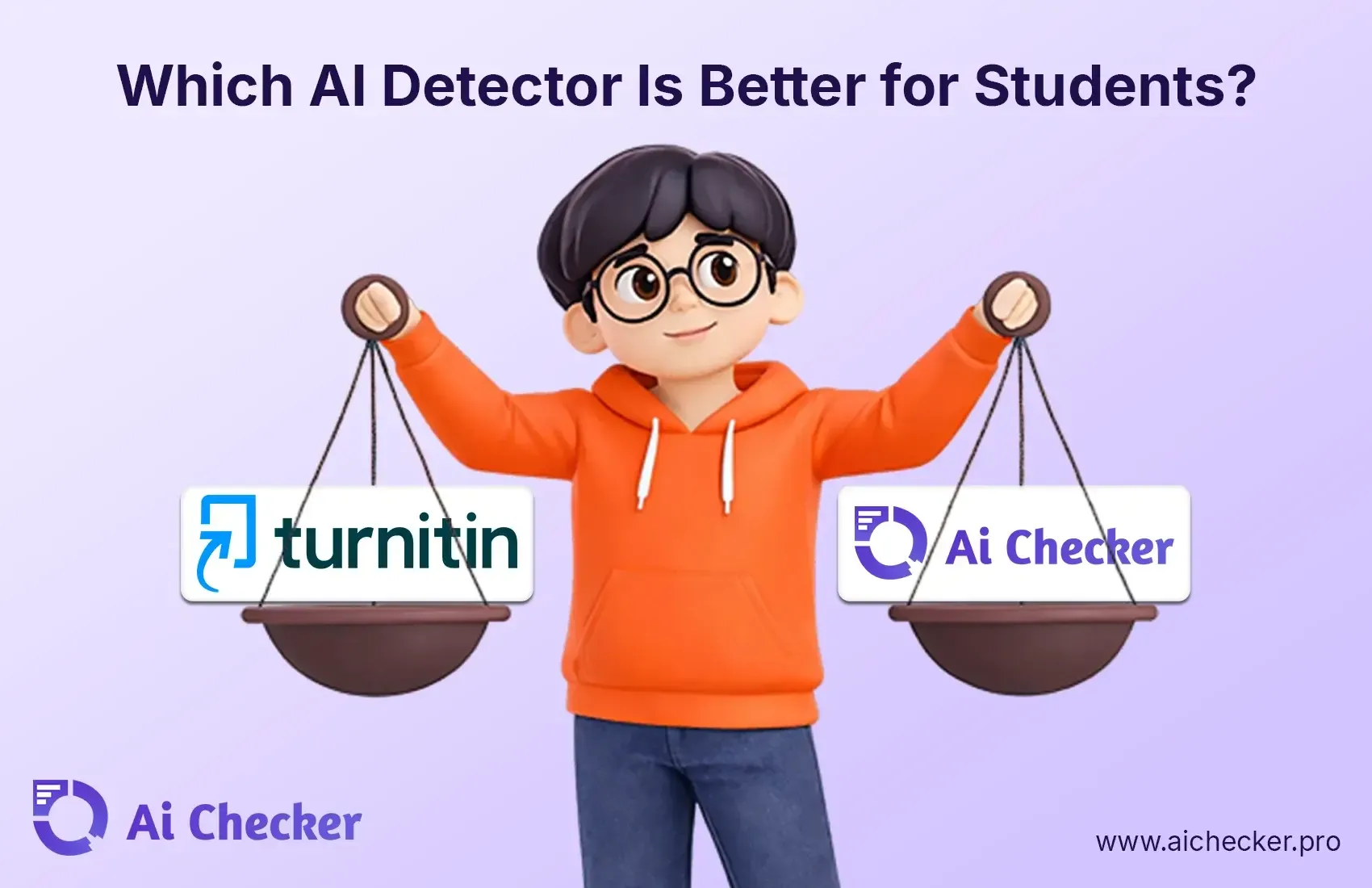
Turnitin vs AI Checker: Which AI Detector Is Better for Students?
TABLE OF CONTENTS
What Is Turnitin and How Does Its AI Detection Work?
What Is an AI Checker and How Does It Work?
Turnitin vs AI Checker: Feature-by-Feature Comparison
Accuracy Test: Which Tool Actually Catches AI Writing?
Which AI Detector Should You Use? (Decision Guide)
Conclusion
Get an AI summary of this post on:


The professor informed you that all their work requires AI detection software for assessment. Your heart sinks a little, right? You used ChatGPT for brainstorming purposes, but did not really use it for writing. You did not use it, but now you fear your writing might get detected. The anxiety remains.
I have experienced the same situation as you. The existing confusion about AI detector tools, including Turnitin and AI Checker, creates more problems. People show many different views about the subject, while most publications either simplify everything or present excessive technical information.
I will explain everything to you using simple language and direct communication. The article will show you who wins between Turnitin and AI Checker, which tool provides better results, and which tool will work best for your needs. Let's get into it.
What Is Turnitin and How Does Its AI Detection Work?
If you have been a student for more than a semester, you have probably heard of Turnitin. For many years, the software has existed as a plagiarism detection tool. The company introduced artificial intelligence detection features to its software, which resulted in major changes to its operations.
How Turnitin Detects AI Writing
The Turnitin system employs its unique detection system, which uses extensive academic text archives as its training database. The submission process for papers now includes two functions that extend beyond detecting plagiarism. The system detects specific text patterns that belong to AI-generated content through its evaluation of three textual features, which include sentence predictability, word choice, and structural uniformity.
The outcome generates a numerical score that represents the percentage of the document for the professor. The system reveals to your professor that "47% of this document may have been written by AI." Turnitin claims it can detect AI-written content from tools like GPT-3, GPT-4, and ChatGPT specifically.
The system identifies the minute model identification marks, which remain undetected by human observers.
The statement appears impressive based on my personal experience. It provides accurate information for most situations. The upcoming important restrictions will be explained to you shortly.
Who Can Access Turnitin?
The main problem that most people ignore leads to one conclusion — you need to stop at this point.
Turnitin exists as a tool that educational institutions use to check for plagiarism. Schools, universities, and colleges require institutional subscriptions for access to the program. The professor uses the tool, which the university funds, but you cannot access Turnitin because it requires an institutional account to use.
This creates a major restriction because you want to check your own work before your professor evaluates it. The gap requires AI Checker tools, which exist to provide a solution.
What Is an AI Checker and How Does It Work?
The AI Checker interface at AIChecker.pro provides students, writers, teachers, and all other users with a tool that detects whether content originated from a human creator or an artificial intelligence engine.
How AIChecker.pro Detects AI Content
Our model uses both human-written content and AI-generated content to develop an understanding of how different writing styles produce unique, recognizable patterns. The system evaluates three primary components according to its basic functionality.
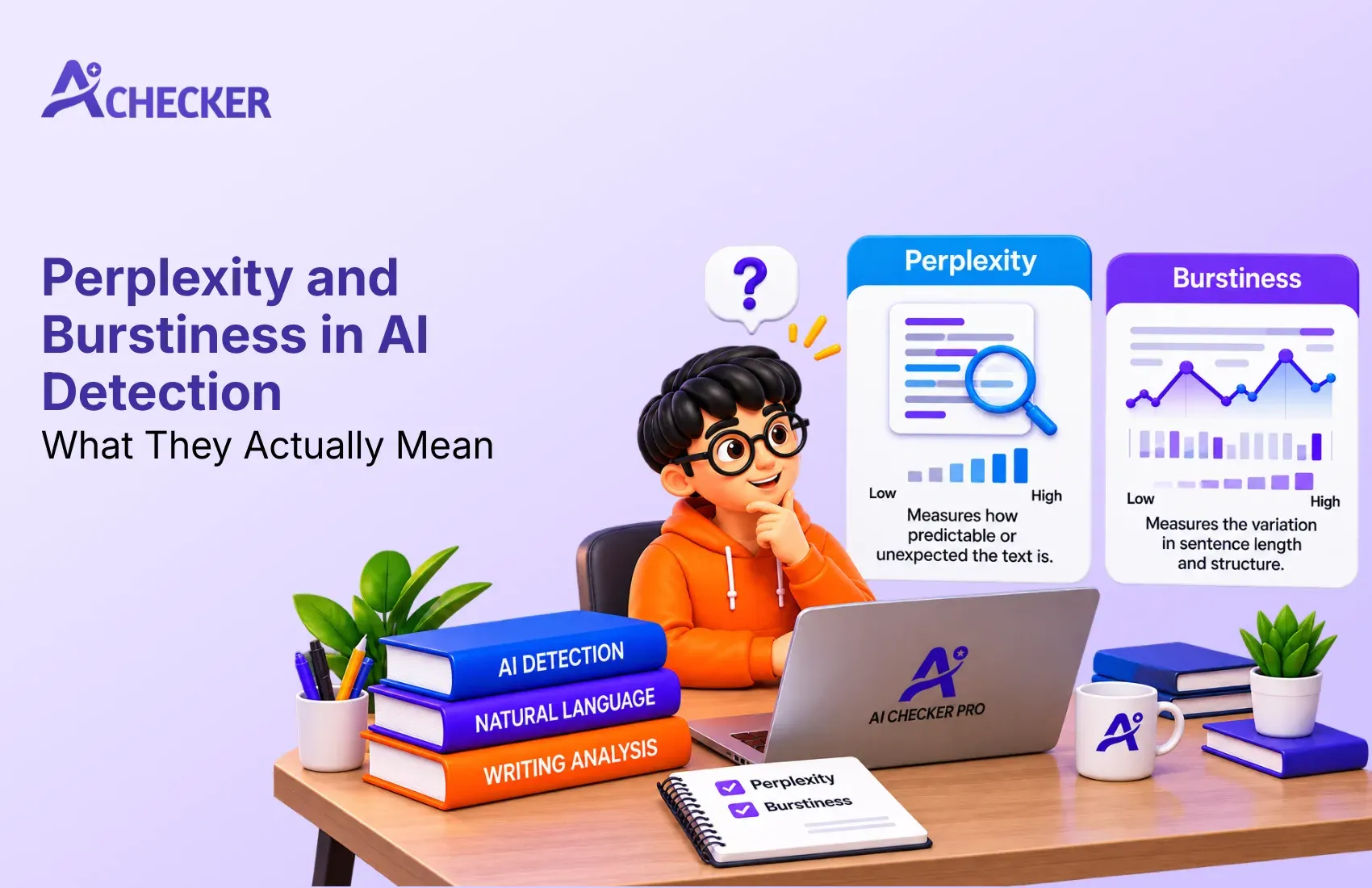
First, perplexity: how "surprising" or unpredictable the text is. Human writers select words that people do not expect them to use. AI systems use the most likely word option because it exists as the safest choice according to their programming. The presence of low perplexity results in machine-generated content identification.
Second, burstiness: how much the sentence length varies. People produce speech that combines brief sentences with multiple punctuation marks and extended sentences. AI-generated text maintains an unusual constant pace throughout its entire structure.
The model identifies patterns through its learning process, which focuses on outputs from ChatGPT, GPT-4, Gemini, Claude, and other leading AI tools. If you want to understand how AI detectors actually work under the hood, the logic behind perplexity and burstiness is a great place to start.
AIChecker.pro serves as one of the most flexible AI detection tools that currently operates on the internet.
Who Can Use an AI Checker?
The AI Checker tool functions as an open-access resource because it does not require users to have an institutional account. Users can access the service without having to wait for their educational institution to provide them with paid access. Users can start using the service after creating a free account on the website.
The service provides a free tier for users to access. The tool enables users to check their content without any costs, which makes it one of the most accessible AI checker tools available today. The ability to check assignments before submission provides students on limited funds with essential support to meet their academic needs.
Turnitin vs AI Checker: Feature-by-Feature Comparison
The two items will be compared through a side-by-side presentation. The majority of people find this task challenging, so I will demonstrate the solution through a straightforward comparison.
| Feature | Turnitin | AI Checker |
|---|---|---|
| Access | Institutions only | Anyone (free signup) |
| Free to use | No (school pays) | Yes (free tier available) |
| Detects ChatGPT | Yes | Yes |
| Detects GPT-4 | Yes | Yes |
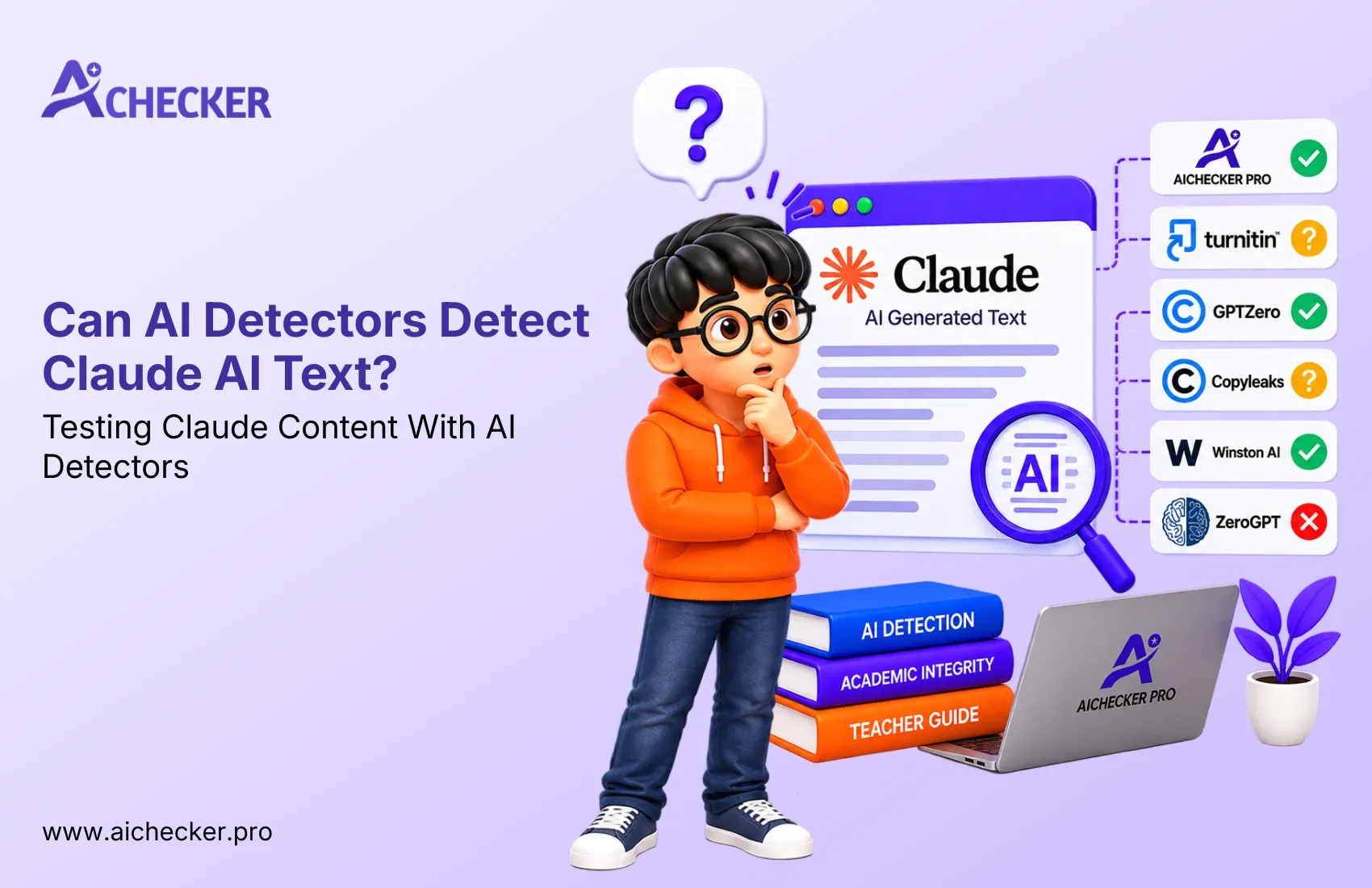
| Detects Gemini/Claude | Limited | Yes |
| Plagiarism detection | Yes | No |
| AI percentage score | Yes | Yes |
| Use before submission | No | Yes |
| Individual student access | No | Yes |
| Best for | Educators/Institutions | Students/Writers |
The table above tells a clear story. Turnitin wins on plagiarism detection and institutional credibility. But AI Checker provides better accessibility and independent use compared to all other solutions.
The main difference between AI detectors lies in their intended user base because of their specific designs. Turnitin is built for institutions that want to police submissions.
AI Checker exists for people who wish to assess and develop their writing abilities. That is a fundamentally different purpose, and knowing that distinction helps you pick the right tool. You can also read this comparison of the best AI detectors to see how other tools stack up alongside these two.
AI Checker's accessibility makes it the best AI detector for students who need to use an AI detection tool.
Accuracy Test: Which Tool Actually Catches AI Writing?
The information you want to know most exists at this specific part of the document. Which ChatGPT detector is actually better at catching AI content? I ran a test on both tools to share real results with you.
Our Test Methodology
The paragraph explained climate change through standard academic writing, which contained approximately 150 words without any effort to create more human-like expressions.
Test Results
The paragraph received a 91% AI-written rating from Turnitin, which demonstrates that Turnitin's system accurately detects basic ChatGPT outputs used in academic work. AIChecker.pro detected the paragraph as 88% AI-generated content, which it identified as originating from GPT-4. Turnitin cannot provide this additional information about which model produced the content.
The two tools showed excellent performance. The 3% difference between them falls within standard measurement variability, which means it should not be considered evidence that one system outperforms the other. If you want a deeper look at how accurate AI content checkers really are, there is more to it than just a single percentage score.
What About False Positives?
Students experience one of their greatest fears, which exists as a valid concern. A false positive is when an AI detection tool flags human-written content as AI-generated. The situation occurs because more people actually experience this than they choose to acknowledge.
Both Turnitin and AI Checker can produce false positives. This situation arises when people create extremely formal documents that use predefined templates, or write scientific or legal documents according to their established rules.
If your human-written work ever gets flagged as AI, here is what you should do. First, do not panic. Second, keep your drafts, notes, and research saved so you can demonstrate your writing process.
You need to test your work through AIChecker.pro because it helps you avoid unexpected outcomes. The ability to know your score before submission gives you an actual advantage because it allows you to make necessary changes. It is also worth knowing practical tips to avoid AI detection in your writing so you can fix flagged sections before they become a problem.
Which AI Detector Should You Use? (Decision Guide)
I will explain this matter to you through direct words.
Teachers who work at schools should use Turnitin because their schools provide them with access to the tool. The system provides the highest quality plagiarism detection together with AI identification, which delivers results through its unified reporting system.
Students should use AI Checker to evaluate their work before they submit their assignments. The service provides free access to all users who do not need to create an institutional account, and they can use it to analyze content from all major AI models. If you want to understand what AI detectors universities are actually using, that context helps you prepare even better.
Educators who need an additional evaluation of uncertain situations should use both tools. The combination of Turnitin and self-checking tools provides students at schools that use Turnitin with their best option for checking their work.
Smart preparation for your submission requires you to run your draft through AIChecker.pro.
Conclusion
Turnitin operates as a powerful AI detection solution that requires users to access it through educational institutions. Students lack independent access to the system, which they need for their academic work.
The solution to this problem exists in AI Checker. The program offers free access to all users while it supports students who want to check their work before submission.
The two tools exist for different functions. Both systems can make errors. However, understanding when to apply each tool will provide you with an advantage over users who struggle to navigate the system. If you are also curious about how to humanize AI content to reduce your AI score before submitting, that is a useful next step worth looking into.
Do you want to verify your content immediately? Create an account at AIChecker.pro to access AI Checker without charge. You need less than 30 seconds to complete the process, which will protect you from facing an awkward discussion with your professor.
1. What is the difference between Turnitin and an AI checker?
2. Is Turnitin an AI detector or just a plagiarism checker?
3. Can students use Turnitin to check their own work?
4. What is the best free AI detector for students?
5. How does an AI checker detect ChatGPT writing?
6. Can AI detectors give false positives on human writing?
7. Is AIChecker.pro accurate compared to Turnitin?
8. Which AI detector works without an account or institution?
9. Does Turnitin detect Gemini or Claude AI writing?
10. What does an AI percentage score mean in AI detection?
11. Should teachers use Turnitin or an AI checker?
12. How can I avoid getting flagged by an AI writing detector?
13. Can AI checkers tell which AI tool wrote the content?
14. Is there a completely free AI detector that actually works?
15. Why do students need an AI detection tool before submitting work?

Harshil Barvaliya
SEO Executive & Content Writer at AI Checker Pro
I’m Harshil Barvaliya, an SEO Executive and Content Writer at AI Checker Pro. I focus on improving the website’s search engine visibility through effective SEO strategies, including keyword research, on-page and off-page optimization, and content development.Get Started Free
Create a free account for advanced AI detection and scan history.
Trusted by thousands worldwide.
Recent Blog's
Discover how AI-powered content creation can elevate your website's reach and engage your audience like never before. Explore the real impact of AI on crafting content that connects.