AI Detector & AI Checker Tools Every Educator Needs in 2026
TABLE OF CONTENTS
Why AI Detection Actually Matters Now
The Core Problem: AI Has Gotten Very Good at Sounding Human
How AI Detection Tools Actually Work in 2026
The Honest Limitations You Should Know
Step-by-Step: How to Build an AI Integrity Workflow for Your Classroom
Best AI Detection Tools for Educators in 2026
Common Mistakes Educators Make with AI Detection
Pro Tips for Educators Serious About Academic Integrity
What's Coming Next: AI Detection Trends for 2026-2027
Conclusion
FAQs
Get an AI summary of this post on:





Teachers who have taught during the last two years usually ask themselves this question:
"Did my student actually write this?"
More than half of US college professors suspected at least one student of using AI-generated work, according to a 2026 survey, which showed that 73 percent of professors held this belief. The development of AI writing tools has reached a new level of excellence, which enables better results. The development of detection tools has achieved the same level of progress. This guide provides complete information about AI detection methods that will exist in 2026 by showing which methods succeed and which fail, and by demonstrating how AI Checker Pro platforms assist educators in maintaining their educational advantage.
Why AI Detection Actually Matters Now
The actual purpose of our discussion lies beyond the need to discipline students. The assessment aims to measure students' actual knowledge. Students who use artificial intelligence for research paper writing have defeated the educational process because they cannot create original content through their educational experience.
AI detection tools give educators a starting point for that conversation. The problem most faculty members encounter is that detection tools have different levels of effectiveness. Some tools flag human writing perfectly as AI. The system fails to identify obvious AI output that should be detected.
False accusations lead to trust breakdowns, while missed cases create academic integrity violations that produce serious consequences. The current date shows that understanding tool operation together with their actual performance limits has become crucial for 2026.
The Core Problem: AI Has Gotten Very Good at Sounding Human
The text generated by artificial intelligence in 2023 maintained a specific emotional quality. The content presents transitional elements that appear rigid while supporting paragraphs with unsatisfactory depth. The text shows artificial balance through paragraph lengths that exist in a complete range of lengths.
Students have discovered three methods to bypass AI detection. They rewrite AI drafts and combine their own words with AI content, and they use paraphrasing tools to create human-like output. You can read more about how students use AI detectors and humanizers to understand the full picture.
The situation has developed into a detection arms race. The effective tools for the detection process use techniques that analyze elements beyond basic pattern recognition.
How AI Detection Tools Actually Work in 2026
Understanding the technology helps you use it more intelligently.
1. Perplexity and Burstiness Analysis
The first detection tools used perplexity measurement to assess random word selection patterns. People display unpredictable behavior patterns that differ from the way machines operate.
The measurement of burstiness determines how much sentence lengths vary between different sentences. Humans naturally write in bursts of short, punchy sentences followed by long explanatory ones. AI systems maintain a consistent operating pattern.
The current situation allows people to manipulate these signals despite their ongoing importance. Understanding how AI detectors work accurately helps educators make smarter decisions when reviewing flagged submissions.
2. Semantic Consistency Scoring
Newer tools analyze whether ideas develop the way a human thinker would develop them. Human writing has a kind of intellectual "fingerprint" which shows through its various ways of expressing ideas, its changes in focus, and its authors' personal views. The complete structure of AI writing exists as the system generates its content, yet the output lacks the authentic thought process which human writers display.
3. Watermarking and Provenance Tracking
Some AI companies have begun to implement invisible watermarks as permanent markers, which they use to track content generated by their systems. Tools that support watermark detection can verify whether a document originated from a specific AI model, though this only works if the student used a watermark-supporting platform.
4. Stylometric Comparison
The most sophisticated approach: comparing a submitted document against a student's known writing samples. The observation exists, which requires investigation when a student who writes choppy, informal essays presents an exceptionally structured 2500-word analysis.
AI Checker Pro supports multi-signal analysis combining perplexity scoring, semantic drift detection, and stylometric comparison in a single workflow. The combined method successfully decreases incorrect identifications through its multiple testing elements.
The Honest Limitations You Should Know
No tool is perfect. Any educator relying solely on an AI detector to make disciplinary decisions is making a mistake.
Here is what detection tools get wrong:
| Limitation | Why It Happens |
|---|---|
| False positives on ESL students | Non-native speakers often write in structured, predictable patterns that resemble AI output |
| False positive in technical writing | Highly structured academic genres (lab reports, legal memos) score "AI-like" even when human-written |
| Misses heavy editing of AI drafts | If a student rewrites AI output substantially, detectors often miss it |
| Model-specific blind spots | Tools trained on GPT patterns may miss output from newer or less common models |
| Paraphrasing tool bypass | Tools like QuillBot can scramble AI text enough to defeat many detectors |
To get a clearer picture of where detection tools fall short, it helps to review AI detector accuracy data before building your classroom policy around any single score.
The takeaway: use detection output as evidence to open a conversation, not as a verdict.
Step-by-Step: How to Build an AI Integrity Workflow for Your Classroom
You can use this practical procedure throughout your current semester.
Step 1: Set a Clear AI Policy In Writing
The school needs to establish its rules about acceptable behaviors before students begin to learn about proper conduct. The majority of universities currently maintain institutional AI regulations but individual professors' policies continue to show significant discrepancies.
Provide precise details that are needed to achieve your goal. "No AI tools" is less useful than "All written work must be your own original composition. AI may be used for research assistance but not for drafting or editing submitted text."
Step 2: Collect Baseline Writing Samples
The students must produce an informal writing assignment at school, which requires them to create a short reflection, a reading response, or any other work that shows their writing skills in the absence of AI tools. Save it.
The material establishes your base writing style standards, which will help you identify major differences in submitted work through analysis of its tone, vocabulary, and structural elements.
Step 3: Use a Multi-Signal Detection Tool
Run submitted work through a reliable platform. AI Checker Pro provides a complete detection signal breakdown which shows both percentage results and the exact signals that activated detection results. The established background information plays an essential role in determining equitable evaluation results. For a detailed breakdown, check out this AI Checker Pro review to see exactly how the platform works in a real educational setting.
Step 4: Flag, Don't Accuse
When a submission shows high AI detection chances, treat that result as a warning instead of a confirmed outcome. Follow up with a brief conversation: "Walk me through your research process for this paper."
A student who wrote it can usually answer that question. A student who didn't will often struggle to explain their own arguments.
Step 5: Document Everything
You must maintain records of your detection results, all conversations that followed, and your final decisions. The documentation will safeguard both you and the student during academic integrity review processes.
Best AI Detection Tools for Educators in 2026
Here is a practical overview of what is currently available:
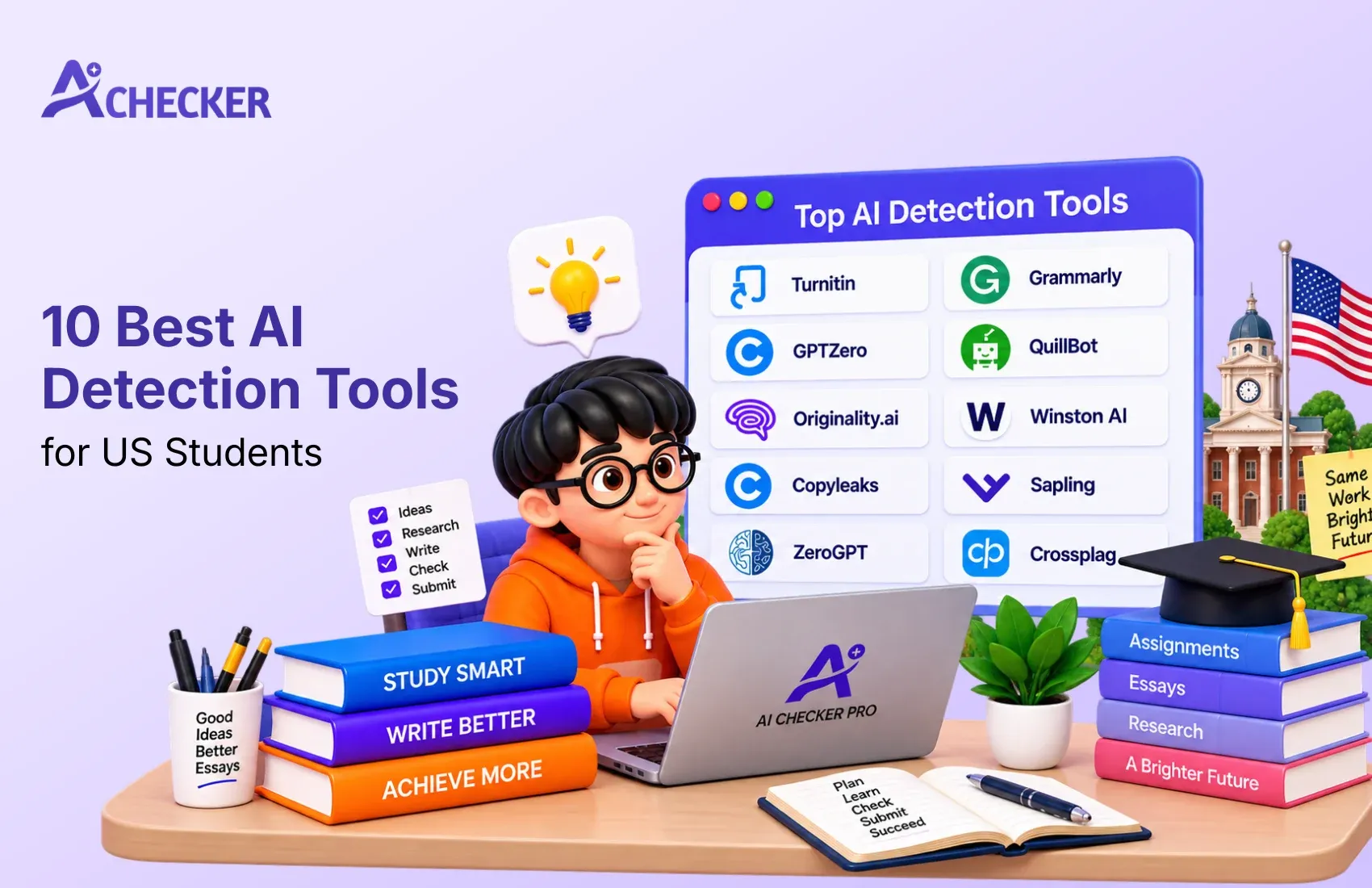
| Tool | Best For | Key Strength | Limitation |
|---|---|---|---|
| AI Checker Pro | Educators and institutions | Multi-signal analysis, low false positive rate | Requires account setup |
| Turnitin AI Detector | LMS-integrated workflows | Deep integration with Canvas/Blackboard | Expensive for independent educators |
| GPTZero | Quick individual checks | Easy to use, free tier available | Single-signal, higher false positive rate |
| Copyleaks AI Detector | Multilingual classrooms | Supports 30+ languages | Inconsistent on newer AI models |
| Winston AI | Document-heavy use cases | PDF/DOCX upload, good for batch processing | Limited stylometric features |
If you are trying to decide between platforms, this Turnitin vs AI Checker Pro comparison breaks down the key differences for educators who want more than a basic percentage score.
AI Checker Pro proves beneficial for educators who seek assessment methods that extend beyond single percentage scores to educational institutions that treat false accusation cases as severe violations.
Common Mistakes Educators Make with AI Detection
Mistake 1: Treating the Score as Final
A 94% AI probability score is not proof of anything. The score serves as a signal. Every detection tool has a margin of error, which becomes important when a student's academic record is being assessed.
Mistake 2: Only Checking Final Submissions
AI use often shows up earlier in the writing process. Your learning management system should provide access to work through review drafts, outlines, and revision histories. A sudden jump from a rough outline to a polished essay is itself a red flag.
Mistake 3: Ignoring Context
A first-year student writing at a graduate level is a different signal than a graduate student writing at a first-year level. AI detection tools don't know your students. You do.
Mistake 4: Using One Tool for Everything
Different tools contain different detection systems that operate based on distinct training datasets. You should consult a second tool when your first tool detects suspicious content that your first tool cleared. Tool results that show agreement between testing methods provide more reliable information than results from single tests. A side-by-side look at AI Checker Pro vs GPTZero can help you decide which combination works best for your workflow.
Mistake 5: Skipping the Conversation
The most important aspect of the process occurs through detection score results, which lead to follow-up discussions. The process comes with educational benefits which create equitable opportunities for all people. The process provides more information than any algorithm can deliver.
Pro Tips for Educators Serious About Academic Integrity
You can use writing tasks assigned during class as your primary evaluation system, which provides you with accurate materials for comparison.
Instructors should make process-based assignments for students to complete. The system cannot be deceived through AI when students present research journals and annotated bibliographies, and revision memos, because these documents require sustained intellectual development.
Request source materials that need explanation through student annotations. The system creates fictional citations that students use to reference their sources. The requirement for students to provide annotations for all referenced sources functions as an efficient method to control source usage.
You need to maintain your detection abilities at their current level. You should periodically test your detection system with authentic human-written documents that you already know. The scores become clear to you through this method of evaluation. Reviewing how colleges detect AI in essays gives you a useful external benchmark to compare against your own classroom process.
Establish a network of professional connections. The faculty members need to work together on their shared professional challenges. Sharing detection workflows and policy language with colleagues in your department reduces duplication and builds institutional consistency.
What's Coming Next: AI Detection Trends for 2026-2027
The technology shows rapid progress at present. The following developments require your attention.
Some LMS providers monitor student keystroke patterns and editing activities. The system aims to identify whether students submit their work through copy-paste or through their own writing process.
AI corporations face mounting demands to establish common watermarking standards. The proposed system would enable organizations to verify AI origins with exceptional accuracy through its widespread implementation.
AI systems now assist with AI detection tasks. The most effective AI detection systems now operate as AI systems because they use advanced classification models that acquire knowledge from extensive datasets of actual human writing and AI-generated content. The models achieve better performance through training on increasingly larger datasets.
Students now use artificial intelligence to create presentations and images and code, which leads to the development of new detection tools that analyze content beyond just text. Expect students to receive access to unified platforms that monitor AI usage for all their assignments. Educators who want to stay ahead should also understand how AI humanizer tools are being used by students to rewrite and disguise AI-generated content before submission.
Conclusion
In 2026, AI detection tools show substantial improvements over their performance from two years earlier. The systems now achieve better accuracy because they explain their reasoning more clearly, and they successfully decrease false positive results. AI Checker Pro and similar platforms offer educators detailed actionable information that goes beyond simple numerical values.
The objective established from the beginning aimed to protect academic integrity as students develop their educational progress.
The best approach for using detection technology should establish an environment that prevents students from cheating by designing assignments that students find interesting through their learning processes and which allows students to develop skills that AI cannot replicate in a classroom setting.
The system achieves its objectives through detection tools. The system depends on human assessment to function effectively.
FAQs
1. What is an AI detector and how does it work?
2. Is there a reliable free AI detector I can use right now?
3. Can a ChatGPT detector catch all AI-written text?
4. What is the difference between an AI text detector and a plagiarism checker?
5. How do AI humanizer tools affect AI detection results?
6. Can an AI writing detector wrongly flag a student's original work?
7. What makes AI Checker Pro better than other AI detection tools?
8. How can I convert AI text to human text without getting detected?
9. What are the best AI detection tools for checking student essays?
10. Will AI detection tools improve in the next year or two?

Harshil Barvaliya
SEO Executive & Content Writer at AI Checker Pro
I’m Harshil Barvaliya, an SEO Executive and Content Writer at AI Checker Pro. I focus on improving the website’s search engine visibility through effective SEO strategies, including keyword research, on-page and off-page optimization, and content development.Get Started Free
Create a free account for advanced AI detection and scan history.
Trusted by thousands worldwide.
Recent Blog's
Discover how AI-powered content creation can elevate your website's reach and engage your audience like never before. Explore the real impact of AI on crafting content that connects.