Top AI Detection & Humanizer Tools for Academic Writing in US Universities
TABLE OF CONTENTS
Why Universities Are Using AI Detectors in 2026
Which AI Detection Tools Do Universities Use?
How Does AI Detection Actually Work?
Why Free AI Detectors Can Still Be Accurate
How to Use a Free AI Checker Before Submitting Your Essay
What Is a Safe AI Detection Score for University Submissions?
What Is an AI Humanizer and Do You Need One?
How AI Humanizer Tools Work
Common Mistakes Students Make With AI Detection
Conclusion
FAQs
Get an AI summary of this post on:





The late-night work on your essay kept you awake until the early morning hours. Your brainstorming process utilized ChatGPT as a resource, yet you dedicated your time to actual work. The document received your changes, which included your original content to create your personalized version. If you want to stay ahead, learning how to detect and humanize AI content with AIChecker is one of the smartest moves you can make right now.
The truth is, universities from Stanford to Columbia are now actively scanning student submissions using a free AI detector or paid institutional tools. It is not a rumor. It is now standard practice, just like plagiarism checkers.
The good news? You have the ability to assess your own performance before other people evaluate it. This article demonstrates the complete process of using a free AI checker. It also describes what occurs when your text receives a flag and provides solutions through an integrated AI humanizer. The entire process exists as a complementary service.
Why Universities Are Using AI Detectors in 2026
The practice of submitting an AI-supported essay as an assignment became ambiguous, yet today it has become a definite rule. Most universities have clear policies around it. Some universities completely prohibit all forms of AI technology usage. Others permit their usage but require all users to disclose their intention to use it.
Many students fail to realize how seriously their academic institutions approach this matter. The purpose of this system extends beyond identifying academic dishonesty. Universities need to verify whether their students succeed in acquiring knowledge.
This issue has expanded its reach at an increasing pace. To understand the full picture, it helps to read about the role of AI in protecting academic integrity and why institutions are moving so quickly on this.
The system needs to process every submitted document because it uses automatic scanning for verification. It will not give you any advance notice. It will provide you with results instead of warnings.
The first step requires understanding this landscape. The second step is performing the necessary actions to resolve it before it creates problems for you.
Which AI Detection Tools Do Universities Use?
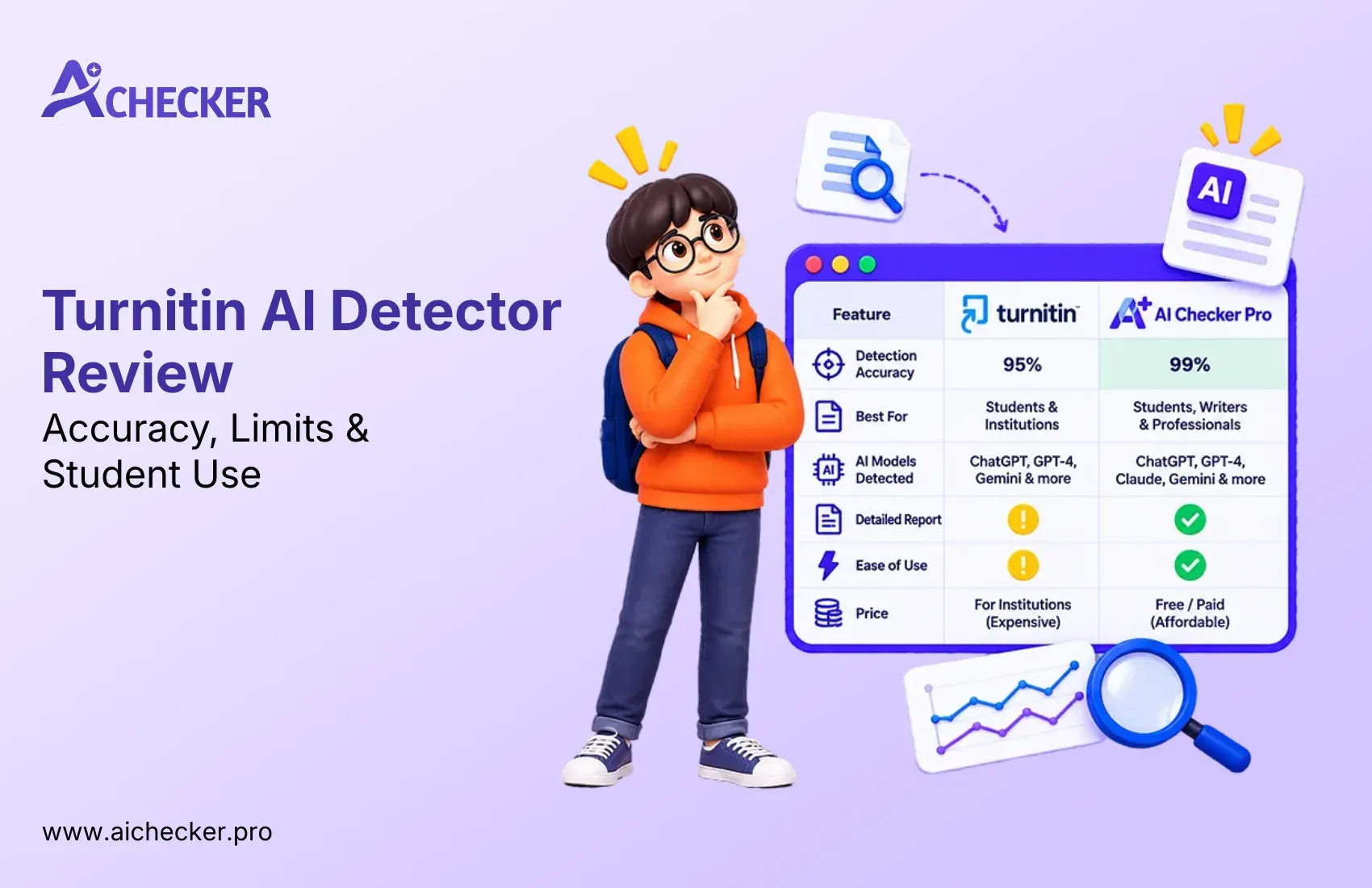
The most widely used tool is Turnitin, which now includes a built-in AI text detector alongside its plagiarism checker. The system identifies text that contains characteristics that are typical of AI-generated writing. You can read a detailed Turnitin vs AI Checker comparison for students to understand how these tools differ.
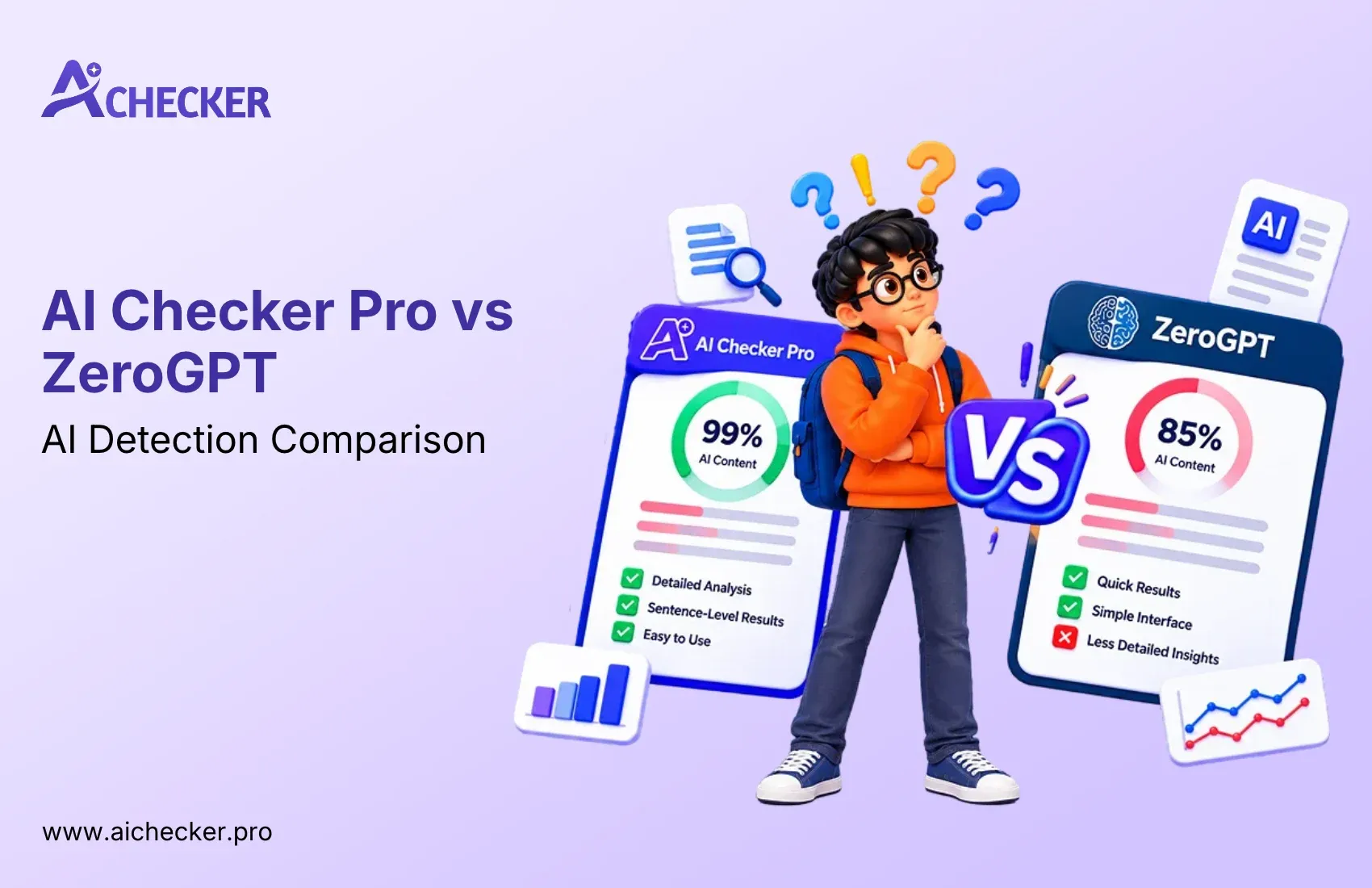
AI Checker Pro is an AI detector and humanizer tool that helps detect any AI-written text copied from various large language models. You can just paste your AI-written content and check whether it has been flagged by AI.
If you want to use the AI Humanizer, you can paste your AI-written content and get it converted into human-written text. It helps improve the credibility and overall reading experience.
The system combines plagiarism detection with AI analysis to provide teachers with a complete assessment of student work.
Understanding which tools your school will use enables you to identify the specific risks you must address. That is the key reason why conducting your own personal check matters so much.
How Does AI Detection Actually Work?
Most people struggle with this, so let me explain it simply.
AI detectors use two primary text signals to measure perplexity and burstiness.
Perplexity checks how predictable your document is. Human writers create unexpected shifts in their writing. They add an informal expression, which they follow with a formal statement. Detectors search for that element of unpredictability.
Burstiness measures how much writing content changes its style. Human writers naturally combine extended complex sentences with brief direct statements.
Think about how you text a friend compared to how you write a formal report. The natural rhythm changes constantly. AI writing from systems like ChatGPT maintains a constant style, with patterns that stay equal in length throughout.
When an AI detection tool scans your essay, it is basically asking: Does this text feel human? The system generates a flag when the text does not meet human writing standards.
The actual structure of an essay that presents an AI pattern will receive detection alerts even after a human editor has conducted extensive editing work. The pre-submission check process holds critical importance for this reason.
Why Free AI Detectors Can Still Be Accurate
People believe that free tools will provide inferior performance compared to paid tools. That skepticism is understandable. But it is not always true, especially now.
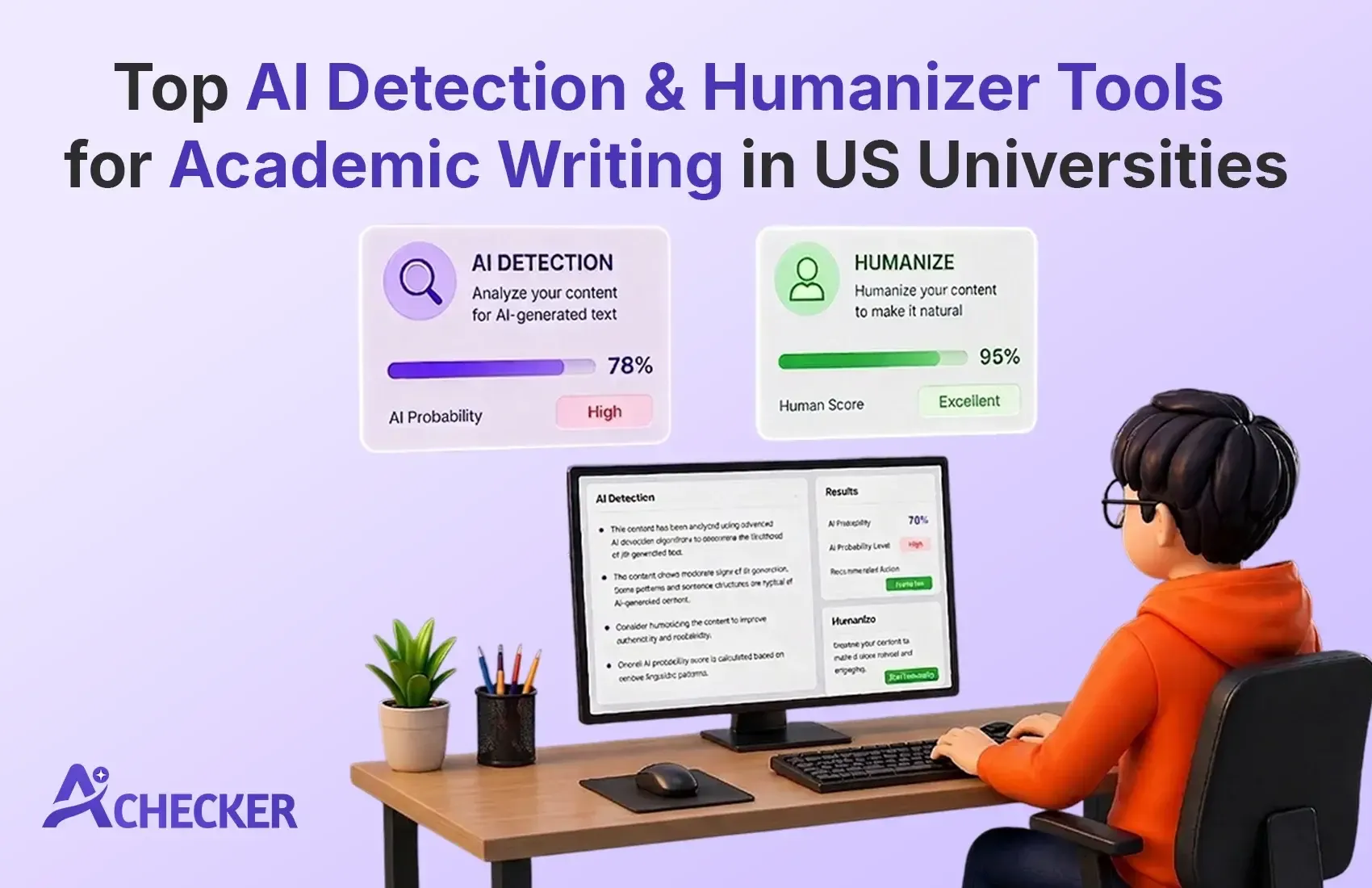
The free AI detector at aichecker.pro provides advanced detection capabilities through its AI detection models, which work for text evaluation just like professional tools. The sentence-level analysis, which identifies specific parts of the text, serves as the main advantage of the tool. It shows you exactly which sentences were identified as AI-generated content.
That precise information used to exist only in paid products. The complete information is now available at no cost. The sentence-level display provides everything you need when you have to complete line-specific work before a deadline.
How to Use a Free AI Checker Before Submitting Your Essay
This is the part that actually helps you. Here is the complete process step by step.
Step 1: Go to aichecker.pro The site is open. A new account is required to begin. It is built this way so that the process does not require a long time.
Step 2: Paste or upload your essay You can paste your content with 160 to 300 characters to get started quickly.
Step 3: Click "Check for AI" Press the button and wait for three seconds. The AI checker free tool will scan your content and display the results.
Step 4: Review your score and flagged sentences The display shows the complete AI-human comparison percentage. The system provides sentence displays through red and yellow highlights. The detector uses these particular sentences to identify AI-like patterns in their structure and tone.
Step 5: Use the built-in Humanizer Do not panic when your score exceeds your desired level. The page includes a built-in AI humanizer tool which you can use immediately to fix flagged sections.
Step 6: Re-check and repeat if needed Run the test again after the humanization process. Most cases require only two rounds. Once you achieve your desired score, you are ready to submit. The entire process takes around ten minutes for a full essay.
What Is a Safe AI Detection Score for University Submissions?
This is a question many students ask. The honest answer is that it depends on the institution.
Some universities flag anything above 20 percent. Others set their threshold higher. A few do not have a strict numerical cutoff at all. They use the score as one piece of context alongside other observations.
Your AI detection score needs to be as low as possible. Aiming for under 15 percent is a reasonable general target. You can also read about what AI detectors universities actually use to know exactly what your institution might be running.
Some departments enforce stricter rules than others, particularly in the humanities and social sciences, where writing style carries more weight.
What Is an AI Humanizer and Do You Need One?
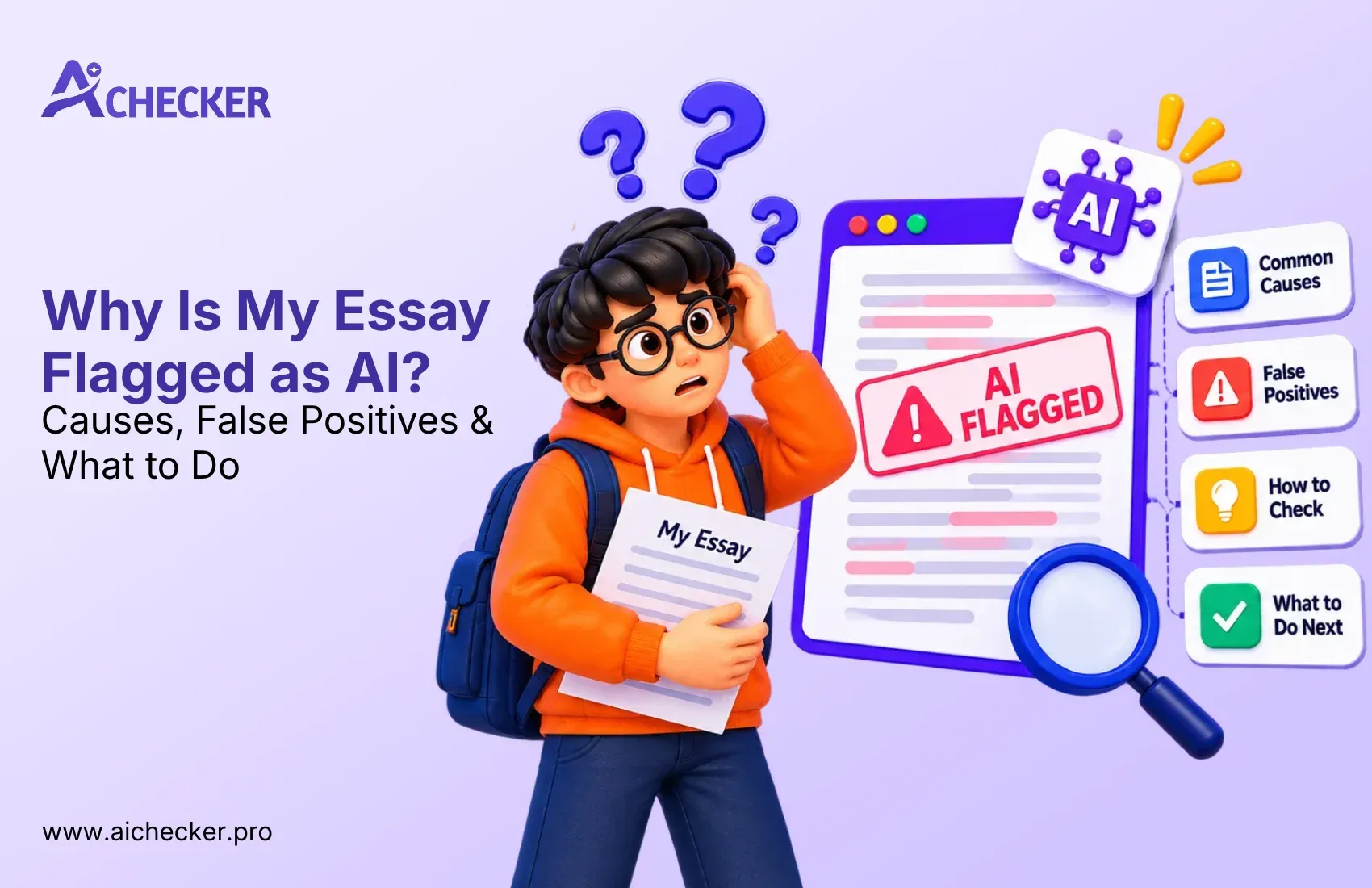
The AI humanizer tool exists to verify that your writing receives a fair evaluation. It helps protect your work from wrongful detection and unearned penalties.
Students learning through their second language often face difficulty because their structured academic writing gets detected as unoriginal work, even when it is entirely their own. AI detectors have limitations because they identify patterns in structured documents that resemble AI-generated content despite being authentic human writing.
The humanize AI text feature at aichecker.pro helps with exactly this. The system takes the sections that activate the detector and produces new text that sounds more natural. The meaning stays the same. The ideas are yours. The writing just sounds more human.
ESL students in particular benefit from this feature. Their grammar improves, but the detector stops flagging them. That is a genuinely good outcome.
If you are curious how other tools compare, the best AI humanizers that actually work is a helpful read before you decide on a tool.
The humanizer serves as your main tool when your essay receives detection despite your original writing. If you relied on AI output to write your work, you should start rewriting large parts of your content. The humanizer serves as a tool for finishing work, not as a means to take shortcuts.
How AI Humanizer Tools Work
The humanizer AI tool operates through a process that is more technical than it might appear. The system first detects the writing patterns that detection systems look for when analyzing your text, then proceeds to modify your text through its rewriting process.
It produces multiple sentence structures. It selects different words to create more authentic-sounding patterns. It decreases what experts identify as the "AI signature," which refers to the extreme smoothness that characterizes machine-generated content.
The goal of humanized text tools is not to change your voice. The purpose is to enhance your voice through improved clarity and naturalness. You can learn more about this in detail by reading about humanizing AI text for academic writing. The updated version of the text provides a superior reading experience compared to the original document.
Common Mistakes Students Make With AI Detection
Most students achieve better results when they avoid these common errors.
The main mistake is taking AI output and presenting it as your own work without modifying it. Spell checkers do not provide complete document verification. The detector will still identify AI-generated content because the text maintains its original AI-based structure and rhythm.
Students also commonly skip the pre-check step entirely. They believe their edits will make the paper acceptable. That sometimes works. But a two-minute pre-check with a ChatGPT detector or AI checker saves a lot of stress and potential consequences.
Some students depend too much on one particular tool. Every AI detection program contains some measurement errors, which make it impossible to achieve total accuracy. The reliability of your essay assessment improves when you evaluate it with one or two different tools.
Many people also believe that light editing is enough. The ChatGPT detector flags particular sentences that require substantial rework. Changing a word here and there will not move the score. You can also review tips to avoid AI detection in writing for a more complete picture of what actually works.
Finally, the failure to consider sentence-level feedback is a significant oversight. Your overall score may remain acceptable, yet a series of repeated sentence flags will create suspicion for human evaluators. Always examine particular sections instead of relying only on the general score.
Conclusion
The university assessment process now includes AI detection as a regular method to check student work. The smartest thing you can do is check your own work before your professor does.
You can complete your AI detection test within five minutes by using the free AI detector at aichecker.pro, which provides practical and effective results. The built-in AI humanizer system lets you instantly resolve flagged issues because it operates within a single interface without requiring multiple tool switches.
You spent the time and effort required to create your essay. Make sure it gets judged for what it actually is. AI Checker Pro allows you to check your essay without any cost right now.
FAQs
1. What is a free AI detector and how does it work?
2. Can universities really detect AI-written essays in 2026?
3. What is an AI humanizer and when should I use it?
4. What AI detection score is safe for university submissions?
5. Is a free AI checker accurate enough for academic use?
6. How does a ChatGPT detector identify AI-generated text?
7. Can an AI humanizer tool help ESL students avoid false flags?
8. How do I humanize AI text without losing my original meaning?
9. What mistakes should students avoid when using an AI detection tool?
10. Can I use an AI checker free tool on my phone or laptop?

Harshil Barvaliya
SEO Executive & Content Writer at AI Checker Pro
I’m Harshil Barvaliya, an SEO Executive and Content Writer at AI Checker Pro. I focus on improving the website’s search engine visibility through effective SEO strategies, including keyword research, on-page and off-page optimization, and content development.Get Started Free
Create a free account for advanced AI detection and scan history.
Trusted by thousands worldwide.
Recent Blog's
Discover how AI-powered content creation can elevate your website's reach and engage your audience like never before. Explore the real impact of AI on crafting content that connects.