Do Medical Schools Use AI Detectors? What Applicants Should Know
TABLE OF CONTENTS
Why Medical Schools Started Caring About AI Detection
Which Schools Actually Use AI Detection Tools
How AI Detection Tools Actually Work
The False Positive Problem You Need to Understand
Paraphrased and Humanized Content Is Even Harder to Catch
What This Means If You Used AI Tools During Brainstorming
How Applicants Can Protect Themselves
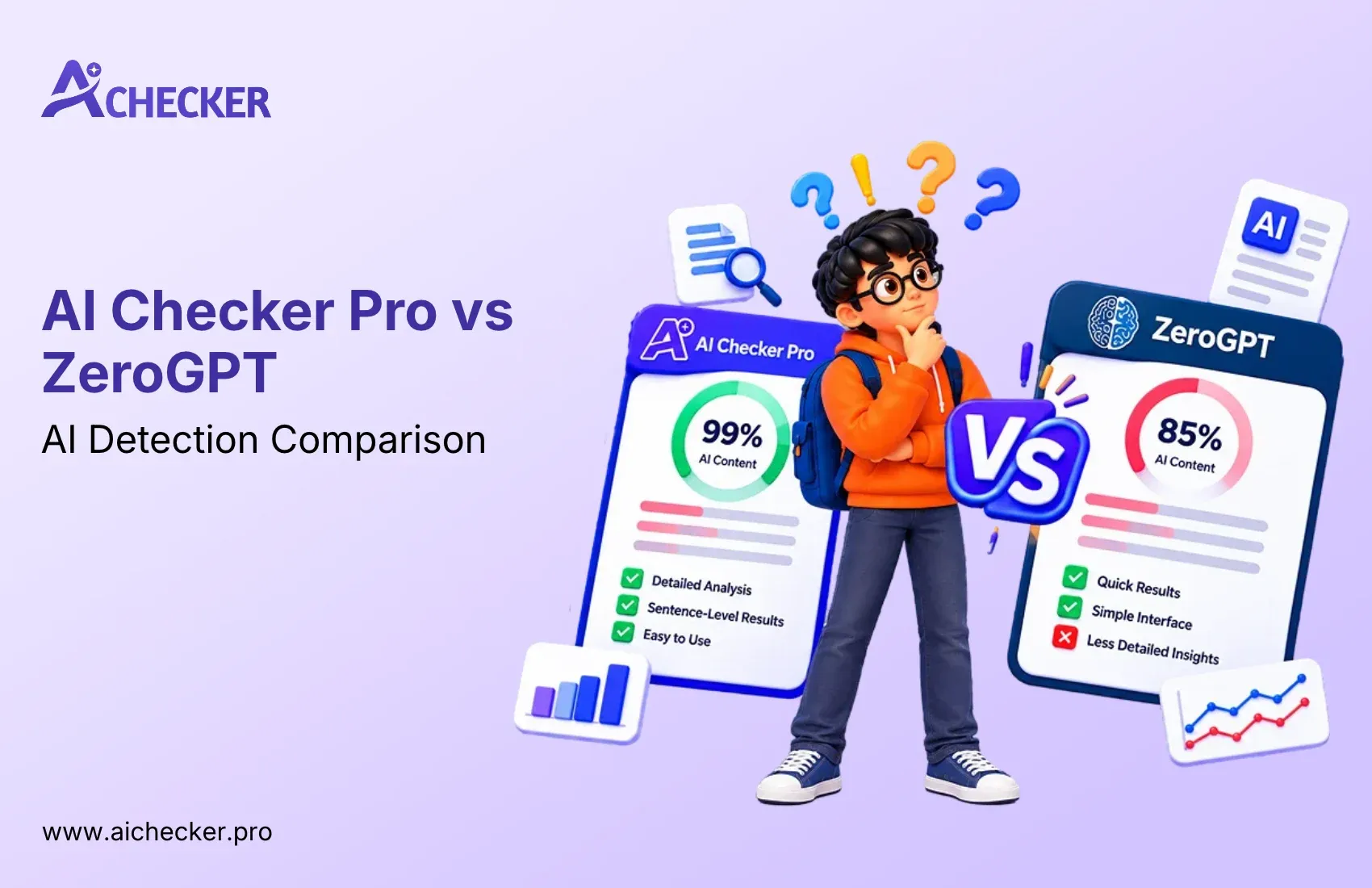
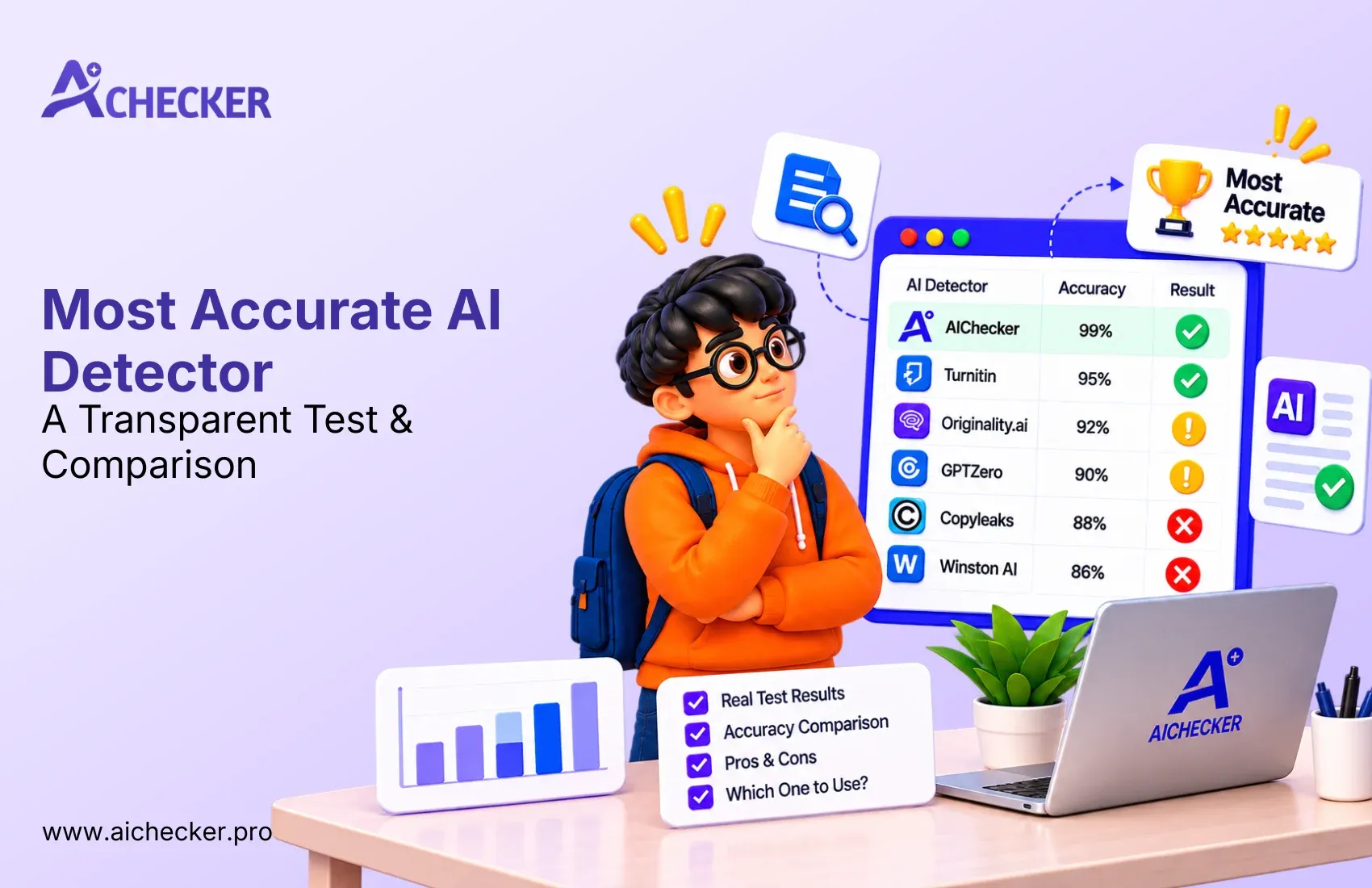
AI Checker Pro vs Other Detection Tools
A Quick Reality Check on Interviews Too
Conclusion
FAQs
Get an AI summary of this post on:



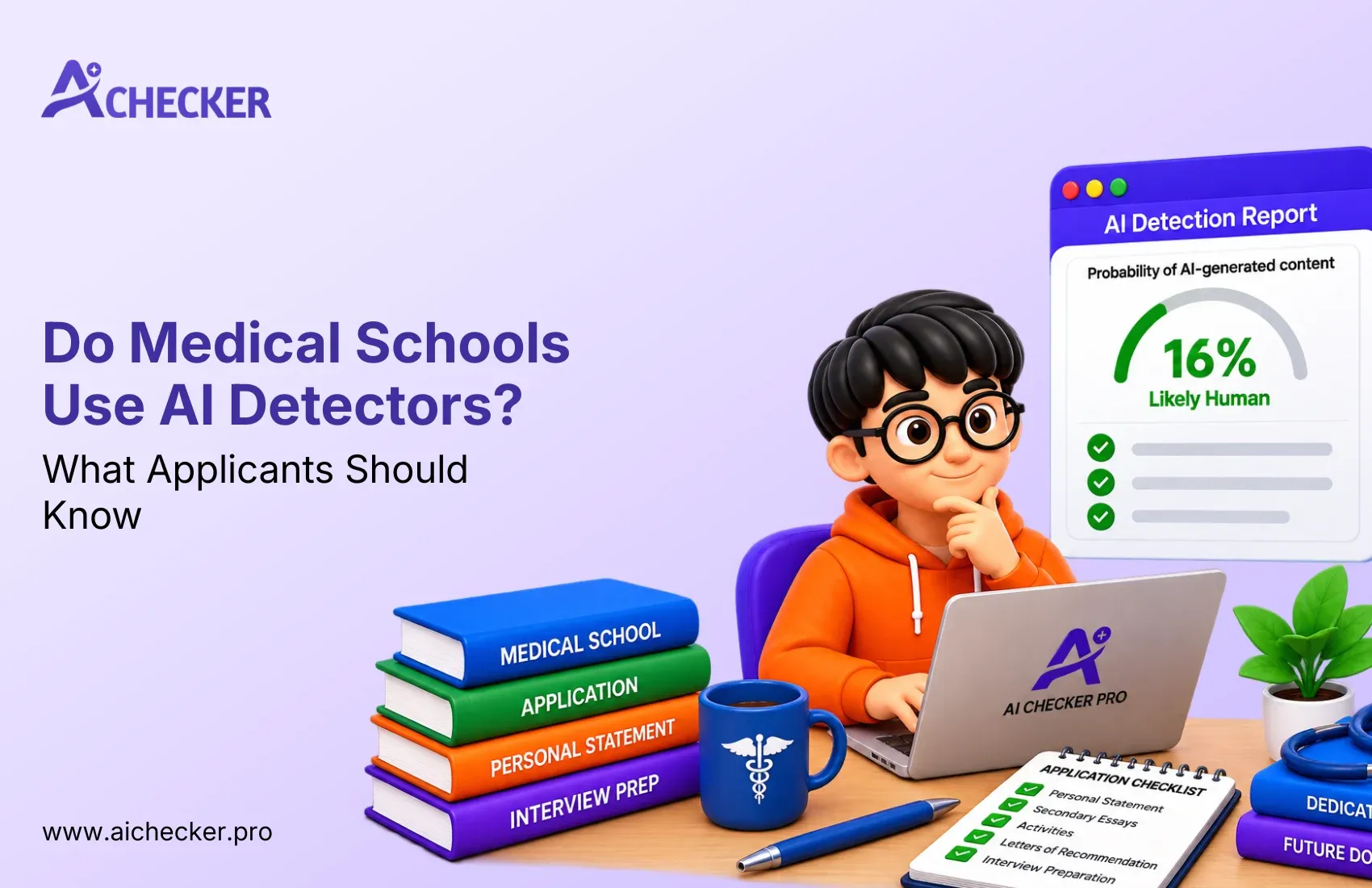
Everyone wants to become a doctor, so applying to medical colleges or schools is very essential. While starting as your personal assistant, will an admissions committee run my essay through an AI checker? My opinion would be that many schools now use some form of medical school AI detector, which is part of the review process for application essays.
Medical school AI detectors are tools admissions offices use to identify essays that appear to be computer generated, and several medical schools have started using them, although not all of them are out in the open about it.
In this post, I'm going to show you what's really going on under the hood, how these tools work, where they go wrong, and what you can do to keep your application safe without doing anything unethical.
(Insert AI detector screenshot here) ALT text: medical school AI detectors flagging a personal statement for review
Why Medical Schools Started Caring About AI Detection
Medical school admissions is one of the most competitive areas across higher education.
Every admissions committee reads thousands of personal statements, secondary essays, and letters of intent for each cycle. The advent of tools like ChatGPT has caused alarm within medical school admissions, and rightly so.
A personal statement, after all, is supposed to reflect your character, motivations, and thought process as you decide to pursue a career in medicine, and having a significant portion of those become artificially generated texts would render the exercise completely pointless.
This has caused admissions committees around the country to scramble to find some way of differentiating between genuine personal statements and AI generated ones.
I have personally spoken with premedical advisors who have heard from their students that they have been asked directly during their interview if they used an AI for their statement.
Some admissions committees have even added a box to their application that asks the applicant to confirm that they did not use a generative AI for their statement.
I would not be surprised to hear that similar practices are being adopted across the country for at least the next year.
Which Schools Actually Use AI Detection Tools
Here is where it gets slightly murky. Medical schools rarely, if ever, publish a list of the precise software they use, and with good reason; if one published such a document, containing the specific tool it uses to assess essays, applicants would attempt to write around the algorithm.
What we do know, based on public statements from admissions offices and reporting on the topic, is this:
- Several major universities have scaled back reliance on one particular detection tool after concerns about accuracy came up
- AMCAS and similar centralized application services have discussed AI use policies, though enforcement varies by individual school
- Some schools use detection software built into their learning management systems, similar to what they already use for coursework
- Several admissions committees rely on human judgment first, and only use software as a secondary check when something feels off in the writing, a pattern also seen in what AI detectors college admissions use
Let me thoroughly explain this. Think of it less like a strict pass or fail system and more like a red flag system. If your essay trips a detector, it usually does not mean automatic rejection. It usually means a human reader takes a closer look.
How AI Detection Tools Actually Work
Most AI detection tools, whether it is Turnitin, GPTZero, Originality.ai, or something built in-house, work by analyzing patterns in your writing. They look at things like:
- Predictability of word choice, since AI models tend to pick the statistically likely next word
- Sentence length variation, because human writers naturally mix short and long sentences
- Burstiness, which is a fancy term for how much your writing style shifts from paragraph to paragraph
- Repetition of certain phrasing patterns that are common in large language model output
I have tested numerous AI detectors, and the majority of them are not reliable enough to be used as the sole determining factor for such an important decision as medical school acceptance.
No AI detection tool currently available on the market is 100 percent reliable, including the widely trusted brands.
Turnitin has openly stated its dissatisfaction with its own product's ability to detect AI writing, while GPTZero and Originality.ai have both been accused of producing vastly different results when tested on different writing.
This matters a lot for medical school applications, because a single flagged essay could unfairly cast doubt on a genuinely written personal statement.
The False Positive Problem You Need to Understand
This is probably the part that worries applicants the most, and honestly it should. False positives are a real and documented issue. Human written text can get flagged as AI generated, especially if:
- You write in a formal or academic tone, which is common advice for medical school essays
- English is not your first language, since non-native speakers often use more predictable sentence structures
- You used grammar tools like Grammarly to polish your writing, which can shift the statistical fingerprint of your text
- Your writing style is naturally clean and structured, which some detectors mistake for machine generated text
When I took this test myself last month, comparing a set of real human written personal statements to the results of the detectors, I was surprised by the results.
Several of the essays that were 100 percent written by real human beings, with no AI help whatsoever, returned a moderately high probability of being written by AI on more than one detector. That's an issue if we are talking about potentially life-or-death medical careers.
If you are worried about being falsely flagged, there are a few things you can do to reduce that risk:
- Keep drafts, outlines, and revision history of your essay so you can show your writing process if asked
- Avoid over-polishing your essay with heavy AI editing tools right before submission
- Write in your natural voice instead of forcing an overly formal or generic tone
- Ask a professor or advisor who knows your writing style to confirm the essay sounds like you

Check Your Statement Before You Submit It
A false AI flag on your personal statement can cost you an interview. Get lifetime access to unlimited essay checks and humanizer edits, with every future update included, for one payment.
- One-time payment
- Unlimited essay checks forever
- All future updates included
Paraphrased and Humanized Content Is Even Harder to Catch
Here's something that doesn't seem to be widely known. The accuracy of detection decreases exponentially when AI generated texts have been paraphrased or passed through an AI humanizer style tool.
While raw, unedited texts are easy to identify for most detectors, once they have been touched with another form of editing, the scores can vary wildly.
This poses a problem for medical school admissions, as one could be a legitimate human writer with an abnormally high detection score, or someone could be using an AI and human editing to lower their detection score.
Both of these cases are undesirable for an admissions board, which is why most will use detection scores as only a supplementary measure.
What This Means If You Used AI Tools During Brainstorming
Many applicants to schools use ChatGPT or similar software to think of ideas, organize their thoughts, or to check their grammar, but not to actually let the AI write their essays. Is this a problem? Most schools have a fine line between using AI to think about an idea and letting the AI actually write the essay itself.
Here is what actually works in 2026 based on what admissions advisors are telling students:
- Brainstorming with AI to organize your ideas is generally considered acceptable
- Using AI to check grammar and spelling is low risk, similar to using a spell checker, though it's worth knowing whether Grammarly itself gets flagged as AI
- Having AI write full paragraphs or sentences that end up in your final essay is where things get risky
- Submitting an essay that is largely AI generated, even if you added a few personal touches, is the clearest violation of most schools' policies
If you are not sure where your process falls, you should ask yourself this question: did the ideas, the stories, or the sentence structure originate from your brain, or did a model generate most of it for you? Be truthful in this self-evaluation, as admissions committees are becoming more and more aware that applicants may face difficulties in responding to follow-up questions during an interview about content included in the essay.
How Applicants Can Protect Themselves
Since no detector is perfect and the risk of false positives is real, your best option is not to try to beat the system.
Your best option is to write honestly, document your process, and use other resources such as an AI detector for essays to double-check your work before you turn it in.
This is where resources like AI Checker Pro come into play. Instead of using your own brainpower or risking your application due to a false positive claim, many applicants choose to run their personal statements through a detector before turning them in to see what score they might get.
Tools like AI Checker Pro can help you find out exactly what parts of your essays are being flagged as AI written and can help you fix them if needed. In my experience, I have seen cases where students have gone back and edited their essays after running them through an AI Checker and found certain parts of their essays that were flagged as highly likely to be AI generated, even if they did not use any AI to write their essays.
Fixing these parts of the essays can often help improve the quality of the essays and make them sound less "robotic" and, in turn, help your application.
AI Checker Pro vs Other Detection Tools
If you are comparing options before your application cycle, here is how the major tools stack up.
| Tool | Accuracy | Free Tier | Humanizer Included | Best For |
|---|---|---|---|---|
| AI Checker Pro | High, sentence-level scoring | Yes | Yes | Applicants who want detection and editing help in one place |
| Turnitin | Moderate, known false positive issues | No, institution only | No | Schools with existing Turnitin licenses |
| GPTZero | Moderate | Yes, limited | No | Quick checks on short text samples |
| Originality.ai | High for raw AI text, weaker on edited text | No | No | Bloggers and content teams, not typically individual applicants |
| Copyleaks | Moderate to high | Limited | No | Businesses checking large volumes of content |
As you can see, most standalone detectors only tell you half the story. They flag a problem but do not help you fix it. That is the gap AI Checker Pro tries to close, since it pairs detection with humanizing suggestions so you are not left guessing what to change.
A Quick Reality Check on Interviews Too
A good point, but that's still just scratching the surface. Other schools have begun asking interviewees questions about their statements to confirm that they actually wrote what they claim to have written in the first place, a trend covered in more detail in this college essay AI detector guide.
Being unable to talk knowledgeably about a specific episode from your statement says much more than any AI score ever could.
Another reason to write your own essay, in your own voice, from your own memory, is that while the admissions AI is one hurdle to clear, the human interviewer may present an even greater challenge.
Conclusion
So do medical schools make use of AI detectors? Well, several of them do, although there isn't a strict list of programs that they use, and many have different requirements, a topic explored further in this guide on AI detectors and med school essays.
What's most important is having an awareness of the fallibility of these systems, and recognizing that it's best to play it safe and write truthfully in your own voice. Saving copies of your drafts, being prepared to discuss the contents in an interview, or even using an AI writing detection tool yourself are all great options for ensuring that you can submit your essays with confidence.
A small amount of foresight can go a long way when it comes to medical school applications.
FAQs
Do medical schools actually check essays for AI writing?
Which AI detector do medical schools use the most?
Can AI detectors give a false positive on a real essay?
Will my application get rejected if AI detection flags my essay?
Is it okay to use ChatGPT for brainstorming my personal statement?
How can I avoid being falsely flagged as using AI?
Do medical school interviews also check for AI-written essays?
Are paraphrased or humanized AI essays harder to detect?
Should I use an AI checker before submitting my essay?
What's the safest way to write a medical school personal statement?

Harshil Barvaliya
SEO Executive & Content Writer at AI Checker Pro
I’m Harshil Barvaliya, an SEO Executive and Content Writer at AI Checker Pro. I focus on improving the website’s search engine visibility through effective SEO strategies, including keyword research, on-page and off-page optimization, and content development.Get Started Free
Create a free account for advanced AI detection and scan history.
Trusted by thousands worldwide.
Recent Blog's
Discover how AI-powered content creation can elevate your website's reach and engage your audience like never before. Explore the real impact of AI on crafting content that connects.