AI Detector Free: Protect Your Freelance Reputation in 2026
TABLE OF CONTENTS
Why AI Detection Matters More Than Ever in 2026
Why AI Tools Keep Flagging the Wrong Content
How AI Detection Tools Actually Work
Step-by-Step Guide to Protecting Your Reputation
Best Tools for Freelancers in 2026
Common Mistakes Freelancers Make
Pro Tips From Experienced Freelancers
Future Trends: Where This Is Heading
Conclusion
FAQs
Get an AI summary of this post on:






You spent hours on that blog post. You researched carefully, rewrote the introduction multiple times, and felt good about the final result. Then the client emailed back: "Our system flagged this as AI-generated." This is the reality of freelancing right now.
AI detection has become a standard part of how clients review submitted work, especially those who already work with AI tools themselves. If you do not understand how this system works, it will keep getting in your way. This guide covers everything you need to know about AI detection tools, how they work, what triggers false positives, and the steps smart freelancers are taking to stay protected and competitive.
Why AI Detection Matters More Than Ever in 2026
A few years ago, AI detection was barely on anyone's radar. Today, it has become the standard practice.
All types of business, including marketing agencies, content platforms, publishers, and individual entrepreneurs, run their submitted work through AI detection tools before making payment. Some companies perform this task without drawing attention to it. Other companies include this process in their official directives.
Here is what is driving this shift:
- Google's quality guidelines continue to put pressure on original, human-driven content
- Client trust has become a major differentiator in saturated freelance markets
- More freelancers are using AI tools. Clients know this and want verification
- Platform policies on sites like Upwork and Fiverr are evolving around AI disclosure
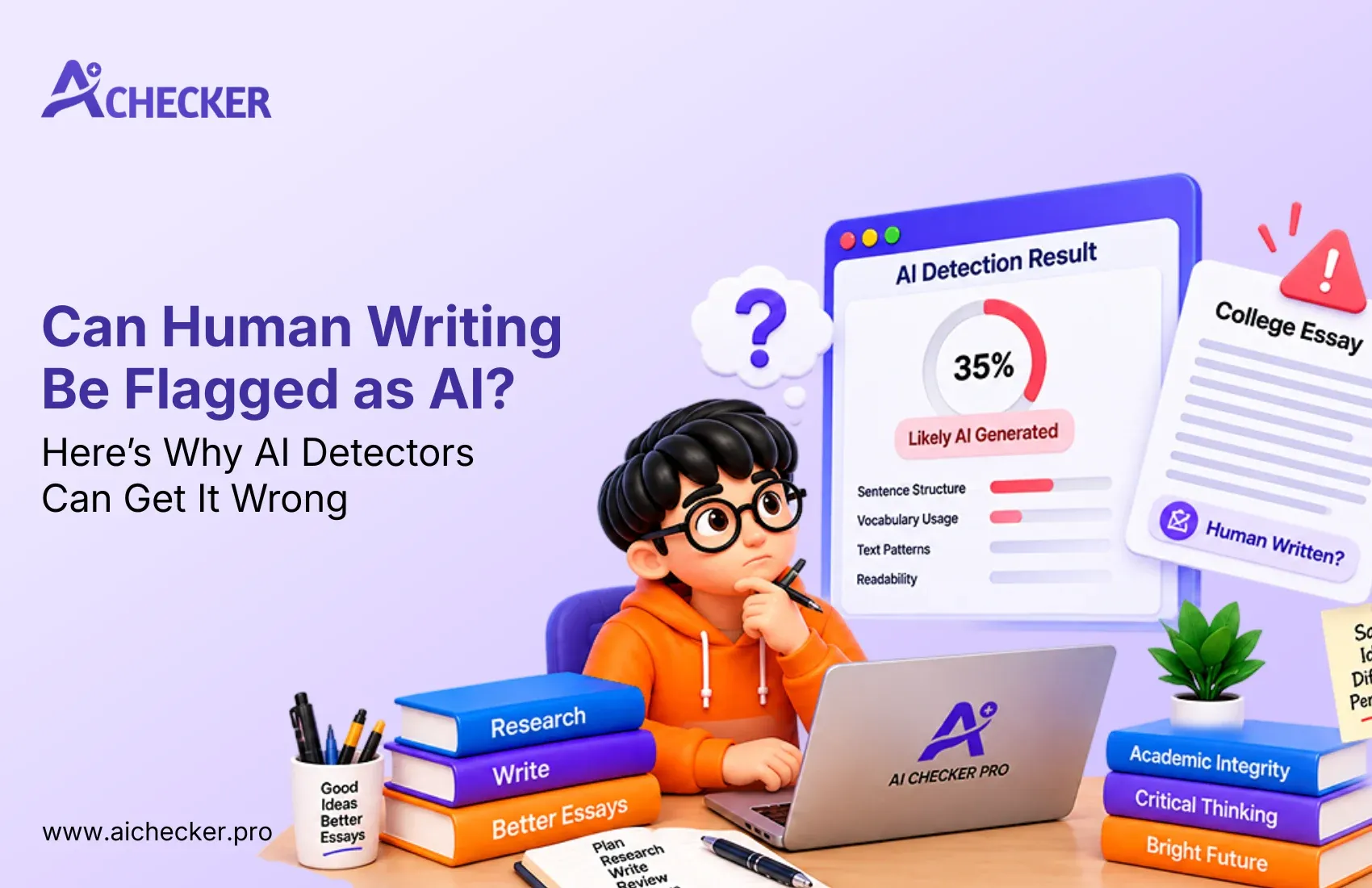
For freelancers, this creates a real problem: even legitimately human-written work can sometimes trigger false positives in AI detectors. Your reputation becomes endangered when you lack knowledge about how to manage it.
Why AI Tools Keep Flagging the Wrong Content
The uncomfortable truth which people avoid discussing is that AI detectors operate with imperfect accuracy.
The system functions through two main components, which examine text patterns including sentence structure, word predictability, and phrasing rhythm. The system uses two specific measurement components, which include perplexity and burstiness. AI-generated text exhibits low variation patterns, which make it easy to predict its content. Human writing demonstrates greater variability than AI-generated text.
But here is the catch:
- Academic writing is often very structured and formal and can trigger AI flags
- Templates and formulaic copy (product descriptions, legal clauses) often look "AI-like"
- Non-native English speakers tend to write in patterns that detectors sometimes misclassify
- Well-edited AI content with strong human input can pass easily
The result? Writers who use clear, organized, and professional writing styles get their work marked as suspicious. The freelancers who create AI content and make it more human-like succeed without problems.
Understanding how AI detectors work is what turns these tools into a competitive advantage rather than a threat.
How AI Detection Tools Actually Work
Most AI detection platforms use one of two approaches, or a combination of both:
1. Perplexity Analysis
Perplexity measures how surprised a language model is by the text. AI-generated text tends to follow predictable, low-perplexity patterns. High perplexity usually indicates that humans have different ways of expressing themselves.
2. Burstiness Scoring
Human writing develops its rhythm through the combination of short sentences with long sentences, unexpected word choices, and different sentence structures. The output from AI systems lacks this particular dimension of expression. Burstiness detects that natural variation.
3. Stylometric Analysis
Some advanced tools look at writing style fingerprints because they track your vocabulary choices, your sentence length patterns, and your usage of common phrases. This is how some platforms can distinguish between multiple writers.
Understanding these mechanisms helps you write and evaluate your work in a way that meets assessment standards. You can learn more about how AI content detectors work to better prepare your content before submission.
Step-by-Step Guide to Protecting Your Reputation
Step 1: Run a Baseline Check on Your Own Writing
Before you submit anything to a client, run it through a reliable AI detection tool. This is especially important if:
- You write in a clean, structured style
- You have used any AI tools at any point in your process
- Your client has mentioned AI detection in their brief
AIChecker.pro functions as a content scanning tool that provides users with detection scores they can check before showing results to their clients. Keeping this simple habit will help you avoid awkward conversations before they happen.
Step 2: Understand What "AI-Assisted" Actually Means
There is a spectrum here:
| Type of Use | Risk Level | What to Do |
|---|---|---|
| 100% human-written | Low | Baseline check before submitting |
| AI for research/outline, human writing | Low-Medium | Verify with the detector, disclose if asked |
| AI first draft, heavy human edit | Medium | Run through the detector, ensure personal voice |
| AI draft, light editing | High | Significant rewrite required |
| Unedited AI output | Very High | Do not submit |
Most clients who use AI detection are not trying to catch you using AI. They want to check for both quality and original content. Understanding your position on this spectrum enables you to speak with complete honesty.
If you are unsure where your workflow falls, this guide on how freelancers can make AI content look human gives a practical breakdown.
Step 3: Build a Verification Step Into Your Workflow
Make AI detection part of your delivery process, not an afterthought.
A simple freelance content workflow looks like this:
- Research and outline: use any tools you prefer
- Draft: write with your own voice and judgment
- Edit for quality: focus on clarity, flow, client tone
- Run AI detection scan: use AIChecker.pro or similar
- Review flagged sections: rewrite if needed
- Submit with confidence
The fourth step takes two minutes. It protects you from false alarms and gives you proof to use if a client ever challenges your work.
Step 4: Document Your Process (Especially for High-Value Clients)
Your workflow needs to be documented with basic records for both retainer clients and high-value projects. Research screenshots, drafts, and revision notes all provide proof of your original work.
A paper trail supports your case much better than simply saying "I wrote it myself" when a client disputes your content.
Step 5: Have a Clear AI Disclosure Policy
You need to decide your position and communicate it clearly. Some freelancers who operate with full transparency state their process upfront: "I use AI tools for research and ideation, but all writing is original." Others do not use AI at all and want clients to understand that from the start.
Both approaches are acceptable. The problem for most freelancers is not having a defined policy at all. A clear policy creates trust before any questions come up. For more guidance on tips to avoid AI detection in writing, having a consistent workflow is one of the best starting points.
Best Tools for Freelancers in 2026
Here is a quick overview of what actually deserves your attention. Focus on tools, habits, and strategies that build long-term trust, better client relationships, and consistent quality in your freelance work.
AIChecker.pro Clean interface, fast scanning, good for quick pre-submission checks. Useful for freelancers who want a straightforward detection score without noise.
GPTZero One of the original detection tools. Has improved significantly with multi-model detection. Good for longer documents. Read the full GPTZero AI detector review to see how it compares.
Originality.ai Popular with content agencies. Combines AI detection with plagiarism checking. See the Originality.ai review for a detailed breakdown.
Copyleaks A solid service for teams and large-scale workflows.
Grammarly Business Provides AI tone detection feedback, which works best for users already inside that software ecosystem.
Freelancers can establish strong protection by testing content with two tools: one fast and one thorough. AIChecker.pro works well as the first quick check, and a deeper tool handles the detailed review.
Common Mistakes Freelancers Make
Mistake 1: Not Checking Their Own Work The number of freelancers who face problems because they assume their writing reads as human is surprisingly high. The check takes 60 seconds.
Mistake 2: Over-editing AI Output Instead of Rewriting Editing and rewriting are not the same thing. Swapping a few words does not change the core pattern of an AI-generated paragraph. You need to write new sentences in your own voice, not just replace synonyms.
Mistake 3: Using AI Detection as a Pass/Fail Test A 95% human score does not prove content quality. A 75% human score does not mean the content fails. Use detection as one signal in your quality process, not the only one. For a more complete picture, check out the guide on AI detector accuracy.
Mistake 4: Ignoring Context-Specific Risks SEO blog clients often prioritize detection above all else. A small business needing product descriptions has completely different concerns. Different audiences need different levels of protection.
Mistake 5: Not Asking Clients About Their Detection Policy You need to know a client's AI requirements before starting work. Make it part of your onboarding conversation. Asking "Do you have any requirements around AI tools?" saves both sides time and prevents misunderstandings later.
Pro Tips From Experienced Freelancers
The best protection against AI detection flags is writing that sounds exactly like you. Your personal writing patterns, your choice of references, and your unique ways of expressing ideas all create a signature that machine-generated content cannot replicate.
AI is extremely useful for summarizing sources, generating structural options, and formatting data. Use it for that. Write the actual sentences yourself.
Vary your sentence structure deliberately. A short sentence. Then a longer one, with a dependent clause that gives readers something to hold onto. That rhythm is what keeps burstiness scores high and your work feeling human.
Freelancers who want to stand out now package their services with AI detection verification as a built-in step. This raises the professional standard, builds client confidence, and leads to better pricing and stronger retention. You can also look into using an AI humanizer as part of your revision process when working with AI-assisted drafts.
Future Trends: Where This Is Heading
All companies will start using watermarking as standard practice. AI companies are developing methods to embed hidden markers in their output. This will make detection more precise and harder to bypass.
The client base will split into two groups. Some will embrace AI tools in their own workflows while paying for superior quality and expert judgment. Others will pay a premium specifically for content written entirely by humans. Freelancers who can serve both markets will hold a strong position.
Disclosure standards will eventually become formalized. The industry is building its own norms around AI disclosure, much like how plagiarism rules evolved over time. Getting ahead of that standard now positions you as a dedicated professional who takes their work seriously. To understand what is coming, the article on humanized AI content as the future of digital marketing is worth reading.
Conclusion
AI content detection is not going away. It is getting more advanced, more widespread, and more consequential for freelancers who are not paying attention.
The good news is that most freelancers are not doing the basics. They do not check their work before submitting. They do not build any verification into their process. They do not communicate clearly with clients about how they use AI tools.
Build one simple habit: run your content through AIChecker.pro before every submission. It takes two minutes. It prevents major problems. And it builds the kind of confidence that comes from knowing your work can stand up to scrutiny.
FAQs
1. What is an AI detector and how does it work?
2. Can a free AI checker give accurate results?
3. Why does AI detection flag my human-written content?
4. What is the difference between an AI checker and a plagiarism checker?
5. How do I humanize AI text to pass an AI detector?
6. Is using an AI humanizer tool considered cheating?
7. What is the best free AI detector for freelancers in 2026?
8. Can AI detectors identify ChatGPT-generated content specifically?
9. How do I convert AI text to human text without losing quality?
10. Should freelancers tell clients they use AI tools?

Harshil Barvaliya
SEO Executive & Content Writer at AI Checker Pro
I’m Harshil Barvaliya, an SEO Executive and Content Writer at AI Checker Pro. I focus on improving the website’s search engine visibility through effective SEO strategies, including keyword research, on-page and off-page optimization, and content development.Get Started Free
Create a free account for advanced AI detection and scan history.
Trusted by thousands worldwide.
Recent Blog's
Discover how AI-powered content creation can elevate your website's reach and engage your audience like never before. Explore the real impact of AI on crafting content that connects.