Best AI Detection and Humanization Tools for US College Assignments
TABLE OF CONTENTS
Why AI Detection Matters for College Students
How AI Detection Tools Work
Top AI Detection Tools for College Assignments
What Are AI Humanization Tools?
Best AI Humanization Tools in 2026
Do AI Humanization Tools Actually Work?
Tips to Write More Human-Sounding AI Content
Ethical Use: Where to Draw the Line
Conclusion
FAQs
Get an AI summary of this post on:





You completed your essay by working until 2 AM. Your AI usage for assistance was minimal. The professor has started using an AI detector to check your work, but you are unsure about its success rate.
Do you recognize this situation?
At this moment, millions of US college students face the same situation. AI writing tools are everywhere. AI detectors have become just as common. If you want to understand what options are available, this free AI detector and humanizer guide for college essays covers exactly what you need to know. The tools you select for your work determine whether you receive an academic failure or an academic success.
This guide establishes a comprehensive evaluation of current AI detection tools that can transform text into human-readable format and their effectiveness measurement, together with their actual value to users.
Why AI Detection Matters for College Students
The writing process for students has transformed through the introduction of AI tools, which include ChatGPT, Claude, and Gemini. The software provides users with three main functions, which include generating ideas, correcting grammar, and creating complete essays within a time frame of several minutes. The universities have developed an excellent capacity to detect cheating through artificial intelligence systems, which they now use to monitor student activities.
US universities have adopted AI detection as a requirement for their academic integrity procedures. If you are wondering how colleges detect AI in essays, the answer lies in specialized tools that flag writing patterns common to AI-generated content. Any person who receives a flagging will face penalties which might include receiving a failing grade or experiencing more severe consequences. The first step to protecting yourself from detection through these tools requires you to understand their operational methods.
How AI Detection Tools Work
AI detectors analyze text using two main signals:
Perplexity - how predictable or "flat" the word choices are. AI tends to use very safe, expected words. Humans are messier and more random.
Burstiness - how much sentence length varies. Humans write short, punchy sentences. Then long, flowing ones that wander a bit. AI writing is often very uniform.
The majority of detectors analyze your written material using a model that has learned from millions of samples that include both human-generated and AI-generated content. The system outputs a score, which typically displays as a percentage, to indicate the extent of AI resemblance in the text. To get a deeper understanding of this process, you can read more about how AI checker tools detect AI-generated content.
The tools have a problem because they do not function correctly. The tools sometimes identify human-written content as AI-generated material. The reason that you need to understand your available choices is that it helps you make decisions.
Top AI Detection Tools for College Assignments
AIChecker.pro
AIChecker.pro serves as an AI detector free tool that currently operates in more than 1000 universities throughout the United States. The platform now includes AI detection as a permanent feature after professors first began using it in 2026.
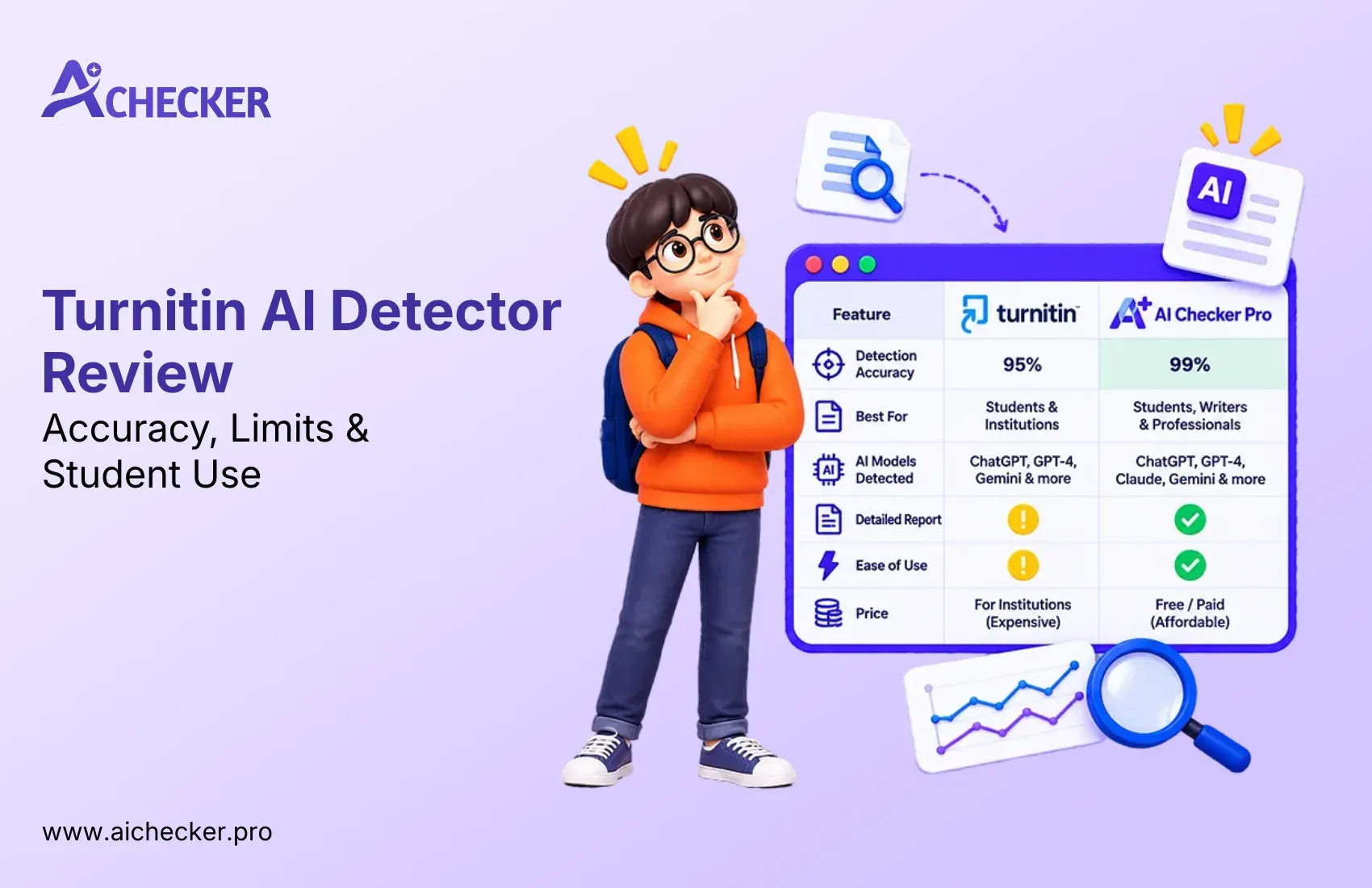
The system functions through academic writing training, which detects AI-generated content at the sentence level and displays results to professors. The most important software to understand is Turnitin because your school implements it.
AssignmentGPT
AssignmentGPT stands as one of the initial AI detection systems, which continues to maintain its present-day usage. The system provides two types of assessments through its ability to deliver both sentence-level information and a total score evaluation. The system demonstrates optimal performance when applied to texts that exceed 300 words in length.
The system offers free basic functionality, which enables students to use it as their preferred method for checking their work before they hand it in.
Originality.ai
Originality.ai serves content professionals, but certain academic institutions use it as well. The system performs simultaneous checks for both AI-generated content and plagiarism detection.
The service requires payment for access, yet it remains one of the most precise tools available in the industry.
Copyleaks
Copyleaks provides two services to its users through its AI detection technology and its established plagiarism detection system. You can check a detailed AIChecker vs Copyleaks comparison to see how it stacks up against other tools. The system supports more than 30 languages, and multiple US universities use it for their needs.
The system excels at identifying paraphrased AI content, content that includes text that shows AI writing patterns through its minor rewording.
Winston AI
Winston AI targets academic institutions and is gaining traction in US colleges. The system shows 99% accuracy performance and provides a readability score, together with its AI detection score.
The tool has been developed for educator use, so your school should consider it as its next potential selection.
What Are AI Humanization Tools?
AI humanization tools rephrase AI-generated texts to sound more human-like and naturally produced. If you want a tool that does this well, the AI humanizer by AIChecker.pro is a strong place to start.
They adjust things like:
- Word choice and phrasing
- Sentence length and rhythm
- Tone and voice
- Punctuation patterns
The goal is to lower the AI detection score while keeping the meaning of the original text intact. The process involves converting from "AI language" into "human language."
Best AI Humanization Tools in 2026
Undetectable.ai
Undetectable.ai is currently the most popular humanization tool used by people. You input AI-generated text into the system, select an appropriate style from available options, and the system rewrites the text to help you evade detection by most AI detection systems.
The system includes a native testing tool that evaluates your written content through various detection systems that include GPTZero and Turnitin. The system enables users to view all results before they submit any documents.
Best for: Academic writing, essays, research summaries.
Humanizer Pro
Humanizer Pro focuses heavily on academic use cases. The system creates natural-sounding speech that maintains the original text's structural elements and its main arguments.
Users achieve positive outcomes when they present their original content in an organized manner because the tool maintains logical progression while transforming surface elements of the text.
BypassGPT
BypassGPT serves as an advanced solution which claims to defeat all AI detection systems, including the most current version of Turnitin. The software provides complete content transformation through advanced rewriting capabilities that extend beyond basic word substitutions to complete sentence structure modifications.
The service provides a free plan with restricted features and a paid plan designed for users who need extensive access.
Best for: Students who need aggressive rewriting.
StealthGPT
StealthGPT works a bit differently because it creates content in a human-like manner from its initial output instead of transforming existing AI text. You provide a prompt to the system, which creates text that aims to remain undetected from its initial output.
It's useful if you're starting fresh rather than trying to fix already-generated content.
Best for: Generating original-sounding first drafts.
QuillBot
QuillBot functions as a humanization tool through its widely utilized paraphrasing feature. The system provides four different paraphrasing modes, which include Standard and Fluency and Formal and Creative, while it generates sufficient text modifications to decrease AI detection rates.
The product stands out as a budget-friendly solution that provides a dependable free version. Students currently use the service to check their grammar and writing flow, so it makes sense to use the service for transforming text into natural human language.
Do AI Humanization Tools Actually Work?
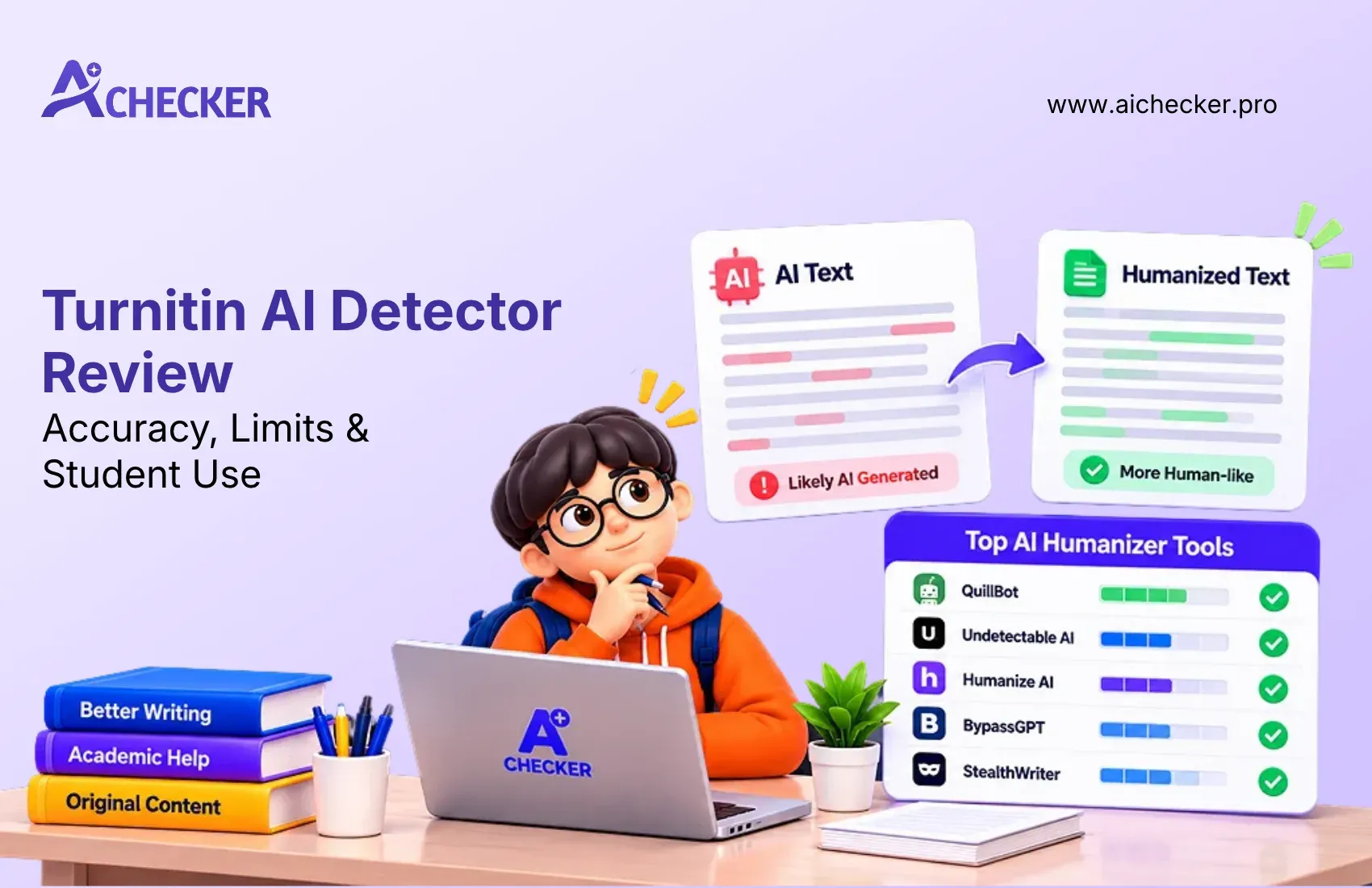
The better humanization tools do lower AI detection scores consistently, sometimes dropping from 90%+ down to under 10%. The two measurements show a significant difference between them. For a detailed breakdown of how reliable these scores actually are, read this guide on AI detector accuracy.
AI detectors keep advancing because their development continues. Turnitin's latest model has reached a higher performance level than its previous version from last year. The methods that succeed today will become ineffective during the next academic term.
Humanized text does not automatically become superior to existing text. The content becomes awkward and vague because of the rewriting process. You need to review the final product and make necessary edits before you can submit it.
The tools should be used as initial resources that lead to further development.
Tips to Write More Human-Sounding AI Content
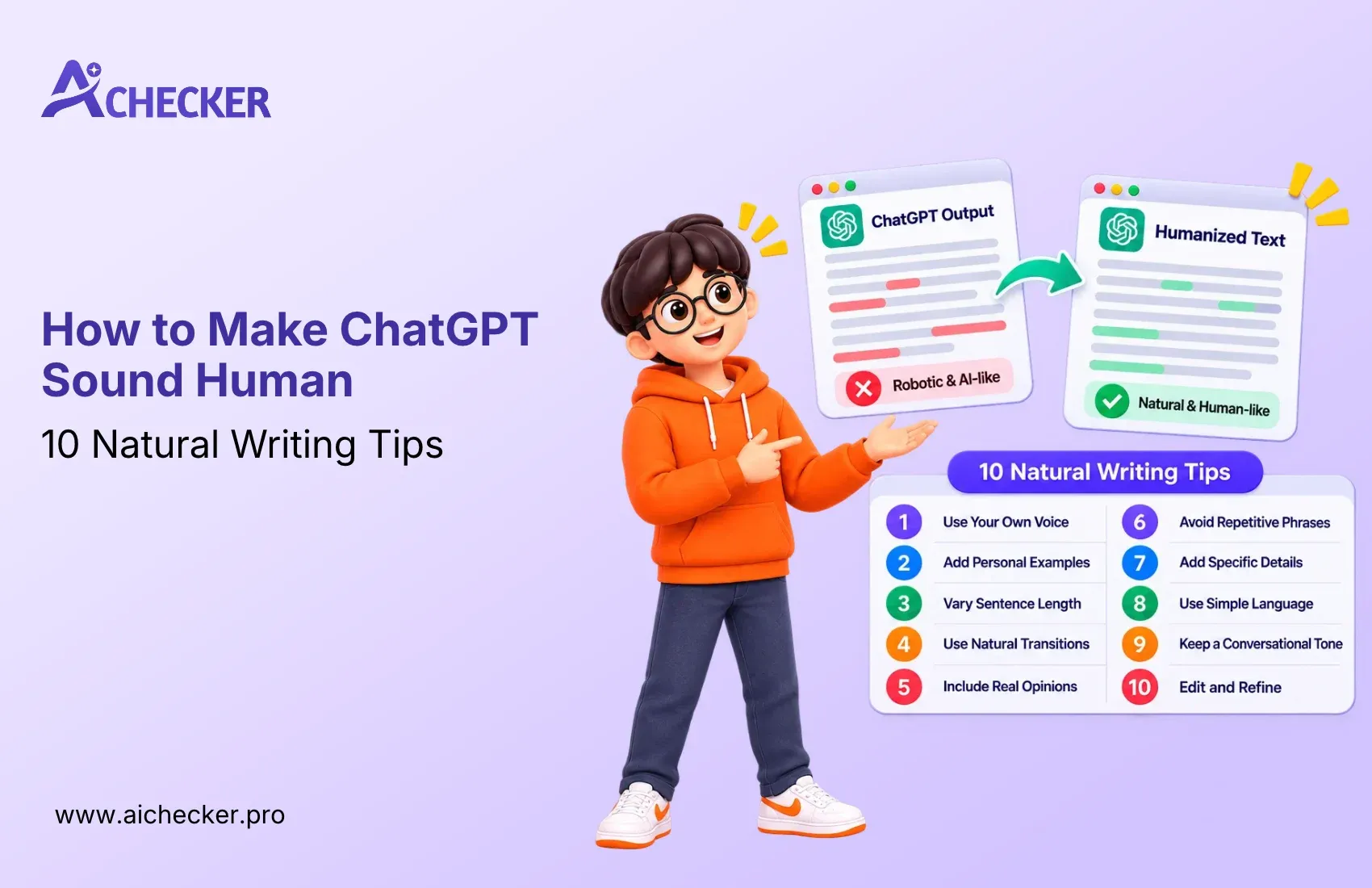
AI can be a clever assistant when it comes to making your writing sound like a real person wrote it. These tips to avoid AI detection in writing apply whether you are editing AI output or writing from scratch.
- Read it out loud. If it sounds like a robot reading from a textbook, edit it.
- Add personal examples. Reference something from class, a lecture, or your own experience.
- Break the pattern. Mix short sentences with longer ones. Start a sentence with "But." End with a question sometimes.
- Cut the fluff phrases. AI loves phrases like "It is important to note that..." so delete them.
- Change some vocabulary. Swap formal words for ones you'd actually use in conversation.
- Add an opinion. Take a small stance. Human writers do this naturally. AI usually hedges.
Ethical Use: Where to Draw the Line
We need to be truthful about this particular section.
Most schools allow students to use AI for brainstorming and organizing their ideas and for enhancing their writing skills. Most US colleges treat the practice of using AI to complete an entire assignment and submitting it as personal work without informing others as academic dishonesty. Understanding the role of AI in protecting academic integrity can help you stay on the right side of your school's policies.
You must verify your school's guidelines before using these tools. Some universities have updated their academic integrity guidelines to address AI directly. Others are still working on it.
A safer approach: use AI as a tool to support your writing, not replace it. You must develop your main arguments through personal writing. You should allow AI to assist you in creating your work through its capabilities. The ideas belong to you because you created them, but the sentences received some assistance.
Conclusion
AI detection and humanization tools have become essential components of academic writing in American universities. The tools will remain present regardless of whether you choose to acknowledge them.
The best way to write and revise your work is to learn about the functions of both the humanizers and the detectors. If you want a curated list of options that actually deliver results, check out this guide to the best AI humanizers that actually work. Your work needs these tools for improvement, but not for concealing its creation process. Your writing task requires you to create a powerful original work that will showcase your unique ideas and personal style. All other elements exist to support your achievement of this goal.
If this guide helped you, please forward it to a classmate who has the same questions. To boost your academic writing skills, you should begin using these tools right now because they will teach you important skills through their operation.
FAQs
1. What is the best free AI detector for college students?
2. How does an AI checker actually work?
3. Is there a ChatGPT detector that works for Turnitin?
4. What does an AI humanizer do to my text?
5. Can I humanize AI text for free?
6. Is using an AI humanizer considered cheating at college?
7. What is the difference between an AI detector and a ChatGPT checker?
8. Which AI detection tool do US universities use the most?
9. How do I make AI-written text sound more human?
10. Does humanizing AI text always lower the AI detection score?

Harshil Barvaliya
SEO Executive & Content Writer at AI Checker Pro
I’m Harshil Barvaliya, an SEO Executive and Content Writer at AI Checker Pro. I focus on improving the website’s search engine visibility through effective SEO strategies, including keyword research, on-page and off-page optimization, and content development.Get Started Free
Create a free account for advanced AI detection and scan history.
Trusted by thousands worldwide.
Recent Blog's
Discover how AI-powered content creation can elevate your website's reach and engage your audience like never before. Explore the real impact of AI on crafting content that connects.