Can Blackboard SafeAssign Detect AI Generated Content?
TABLE OF CONTENTS
What SafeAssign Was Actually Designed to Do
So Does SafeAssign Detect AI Writing at All?
What's Changed With Blackboard's AI Detection by 2026
How AI Detectors Actually Work Under the Hood
What Happened When I Checked My Work Before Submission
Can Professors Spot AI Use Without Any Detection Software?
When Schools Run SafeAssign and AI Detection Together
Using AI Responsibly Without Wrecking Your Own Learning
If Your Work Gets Flagged, Here's What Actually Helps
Where AI Checker Pro Fits Into All This
Why AI Detection Will Keep Changing
Practical Tips for Navigating This as a Student
Conclusion
FAQs
Get an AI summary of this post on:




Last spring, I was sitting in my room at 1 a.m. looking at my SafeAssign originality report, which showed a 4%. My paper was clear, there were no plagiarized parts of text highlighted in red, nothing at all. I let out a sigh of relief until my roommate, who had used ChatGPT to write half her lab report, got the same clean bill of health.
If you're reading this in 2026 wondering whether Blackboard's SafeAssign can catch AI-written essays, you're asking a smarter question than most people even know to ask. And the honest answer is still the same one it's been since ChatGPT first blew up: no, SafeAssign on its own was never built to catch AI.
I heard about AI Checker Pro, which offers the best AI detector tool to improve credibility and enhance productivity. You can avail more advanced features; AI Checker Pro seems to detect AI content.
I want to walk you through what's actually going on, based on what I've experienced, what professors have told me directly, and how the detection landscape has shifted heading into this year.
What SafeAssign Was Actually Designed to Do
SafeAssign has been around for Blackboard for over 10 years, well before generative AI existed in the minds of people. What is important to understand about SafeAssign is that it is basically a text-plagiarism checker.
It compares your submission to a vast database of resources. This includes academic journals, websites, ProQuest, and other students' submissions from your own school. When you submit, you get a similarity percentage and highlighted text that is similar to text found in the databases SafeAssign uses.
A low percentage with quoted material is expected and acceptable. A high percentage of plagiarized text without citation is what leads to an academic hearing.
SafeAssign Detection doesn't give you better accuracy, while AI Checker Pro's dedicated assignment checker gives you detection as well as humanization with better accuracy. If someone is generating content through ChatGPT, Claude, or an AI tool, this tool provides a simple interface that every beginner can use.
So Does SafeAssign Detect AI Writing at All?
No. I wish to state this plainly because I have witnessed too many misconceptions about it, even from professors. SafeAssign was created to ensure that plagiarized content can be easily identified, not content created by an AI.
So if you were to scan text generated by an AI through SafeAssign, you would typically expect to see a low percentage of similarity because that exact phrase has likely never been used before.
But something that I have learned through a friend who has unfortunately faced this issue is that having no plagiarism issues does not necessarily mean that the content is all your own, only that nothing has been directly copied from elsewhere.
What's Changed With Blackboard's AI Detection by 2026
This is where things have changed considerably after the early days of ChatGPT panic in 2023. Blackboard itself has not integrated any direct AI detection in the core SafeAssign plagiarism checking system; however, the ecosystem surrounding it has evolved considerably.
Based on our research, many organizations have started using content detection tools and have chosen AI Checker Pro as an alternative solution for better AI detection and content humanization. Our tool offers AI detection and humanization features at a reasonable price, making it accessible for businesses and individuals.
What this means practically is that your experience depends entirely on your specific college. Some schools I've talked to students from are running:
- Turnitin's AI writing indicator alongside SafeAssign
- Independent AI detectors that professors run manually outside Blackboard
- Blackboard's own evolving detection add-ons, rolled out unevenly across departments
- Nothing at all beyond standard SafeAssign plagiarism checks
There is genuinely no one universal answer, and there likely never will be. Every institution licenses things differently, and every integrity office has different risk tolerances.
The one thing that has changed is that "my school probably doesn't check for AI" is a far riskier assumption to make in 2026 than it was 2-3 years prior.
Detection add-ons have become both affordable and ubiquitous enough that many mid-tier and smaller institutions have quietly adopted them in the intervening period.
How AI Detectors Actually Work Under the Hood
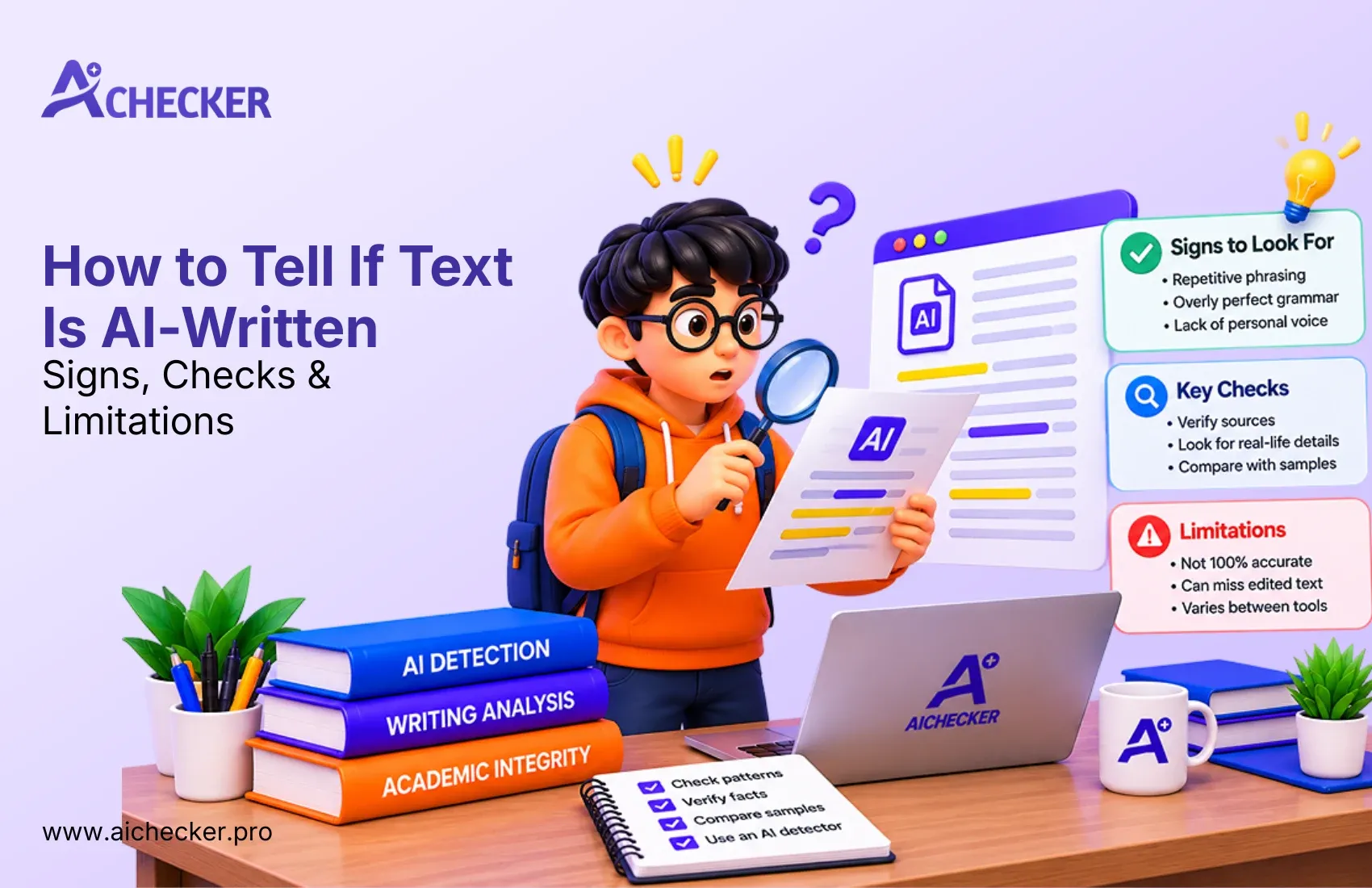
Once I started digging into this, partly out of curiosity, partly out of self-protection, I found that most AI detectors are built blind to ChatGPT. They're pattern-recognition algorithms designed to look for statistical clues that a text was produced by one type of source rather than another.
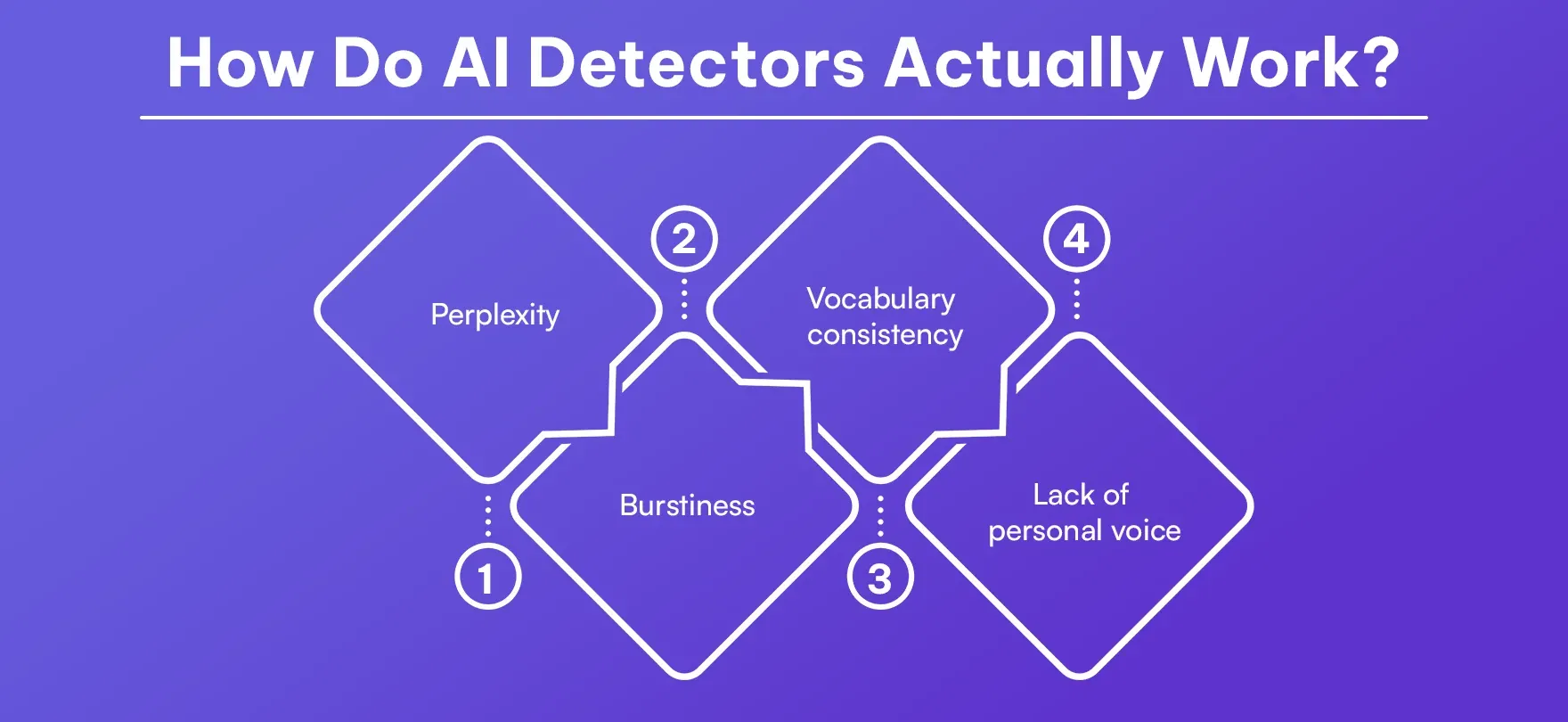
A few of the signals they depend on:
- Perplexity measures how predictable your word choices are. AI defaults to the statistically likely word, producing smoother phrasing than the messier, harder-to-fake unpredictability of human writing.
- Burstiness looks at variation in sentence length and rhythm. Human writing swings between short, blunt sentences and long, winding ones; AI text tends to settle into a steadier rhythm.
- Vocabulary range shifts naturally in humans depending on mood, topic, and how tired they are at 2 a.m.; AI tends to hold a more consistent polish throughout.
- Personal voice is the hardest thing to fake or measure automatically, a specific point of view or lived detail that only makes sense coming from one particular person.
None of the detectors are perfect, however. False positives, or instances where human language was falsely identified as AI-generated, could be an issue for students whose natural writing style uses a more "formal," structured format, or for non-native English speakers whose writing patterns could be too "predictable" for current algorithms.
False negatives could occur as well, if plagiarized AI text was put through a "paraphrasing" tool to conceal its origin.
What Happened When I Checked My Work Before Submission
I will be completely honest about my experience with ChatGPT. During my learning experience, I used it to restructure an already written rough draft for a political science paper due to time constraints. I had to reorganize certain paragraphs and arguments that I had already made previously in the paper.
While I did not use it to generate the majority of my content, I was still nervous about my submission and reread my paper multiple times to make sure that it still "sounded like me" before submitting, the same instinct that pushes a lot of students to double-check their work before turning it in.
I think that this was a valuable lesson that I learned about professors and AI technology. It was not about being able to catch me through some sort of plagiarism software, but rather through the explanation of my paper and what I was arguing, they could tell if something was a little off.
Can Professors Spot AI Use Without Any Detection Software?
Often, yes, the essay is written using artificial intelligence, which has become significantly common by the year 2026. However, the instructors have already had several years of experience with these kinds of writing, as they start hearing the same patterns within the students' papers.
It takes decades for the educator to analyze hundreds of essays and develop their skill in recognizing the particular student's writing. If the person has been performing reasonably well on prior assignments and suddenly submits a paper with a perfect structure, the instructor will suspect it was done using AI.
Common tells professors have mentioned to me directly:
- A sudden, unexplained jump in writing quality
- Generic phrasing that never actually engages with specific course readings or lectures
- Text that sounds impressive on a surface read but says very little when you dig into it
- The complete absence of small human imperfections, awkward transitions, personal asides, minor inconsistencies
- Technically fluent writing that somehow ignores the specific assignment instructions
More than one professor has told me they can sense it within the first paragraph, not through any formal analysis, but because the voice simply doesn't match the student they've been reading all semester.
When Schools Run SafeAssign and AI Detection Together
A growing number of institutions in 2026 are running a two-layer system: SafeAssign checks for copied text, and a separate AI detector checks for generated text, often independently and sometimes without much coordination between the two reports. Your submission effectively gets read twice, by two different kinds of scanners looking for two different problems.
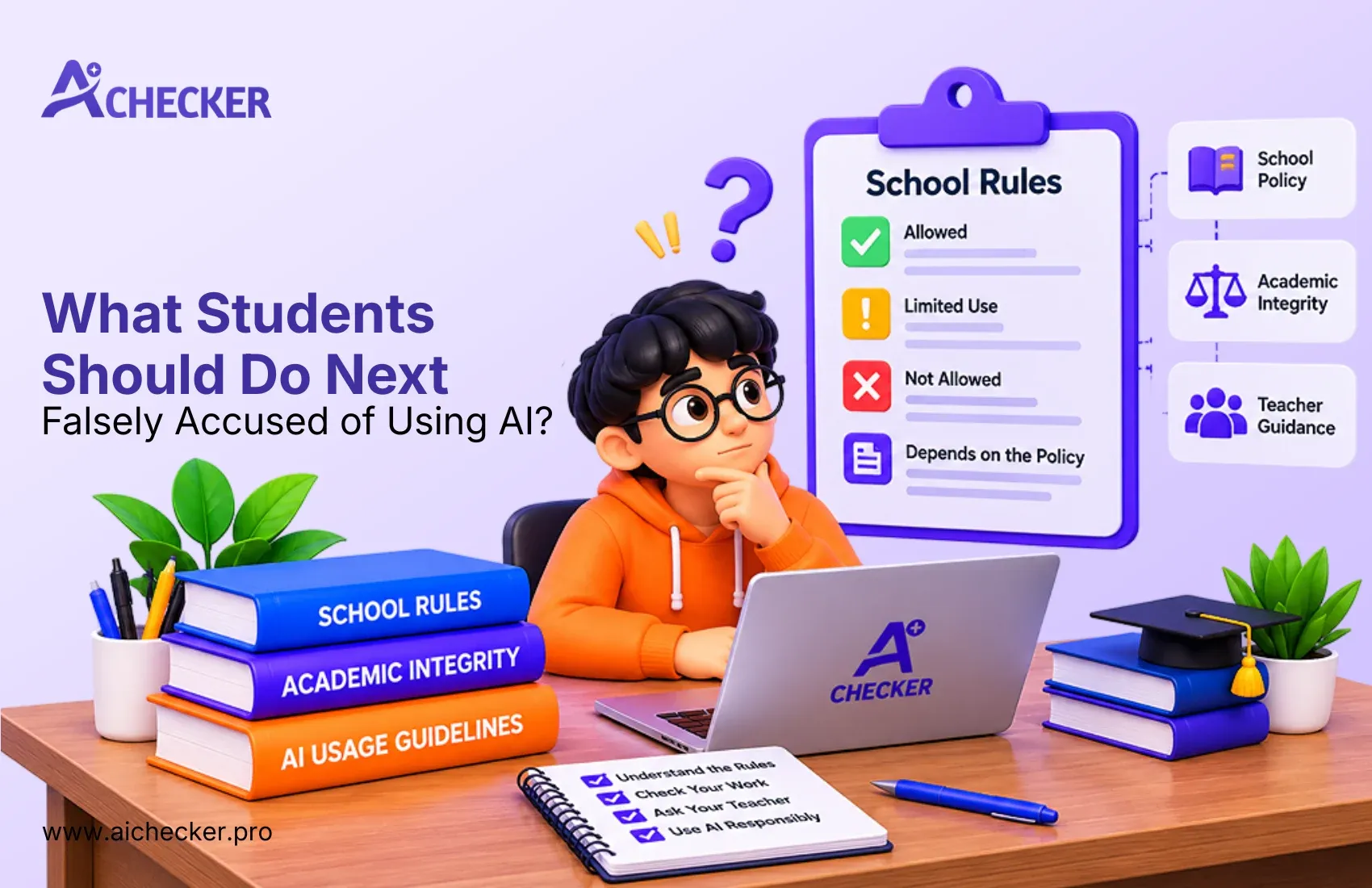
If the AI detector flags something, what happens next depends entirely on your school's academic integrity policy. Some treat AI-assisted writing as equivalent to plagiarism, full stop. Others have built out more nuanced tiers that distinguish between using AI for brainstorming, using it for editing, and using it to generate whole sections of content with very different consequences attached to each.
Get Lifetime Access with 60% OFF
Stop paying monthly subscriptions. Enjoy unlimited AI detection and humanizer access forever with future updates included.
- One-time payment
- Unlimited access forever
- All future updates included
Using AI Responsibly Without Wrecking Your Own Learning
I'm not going to pretend AI tools should be avoided entirely; that ship has sailed, and honestly, used well, they're genuinely useful. The real question isn't whether to use AI; it's where the line sits between assistance and outsourcing your own thinking. A few uses I'd consider defensible:
- Brainstorming and structuring: like a study group, to bounce around ideas or sketch a rough outline before writing the real content yourself.
- Untangling hard concepts: asking AI to explain something more simply, similar to attending office hours.
- Proofreading and polish: catching grammar issues, the same role a writing center tutor plays.
- Research direction: getting search term suggestions so you can go find and read the real sources yourself.
The question I've started asking myself before I touch any AI tool for schoolwork: am I using this to learn faster, or am I using it to avoid learning at all? If it's the second one, the person you're actually cheating is future-you, sitting in an exam or a job interview without the skills you skipped building.
If Your Work Gets Flagged, Here's What Actually Helps
Getting flagged by an AI detector does not automatically mean you did something wrong. AI detection tools can sometimes make mistakes and mark original work as AI-generated. If this happens, stay calm and avoid arguing.
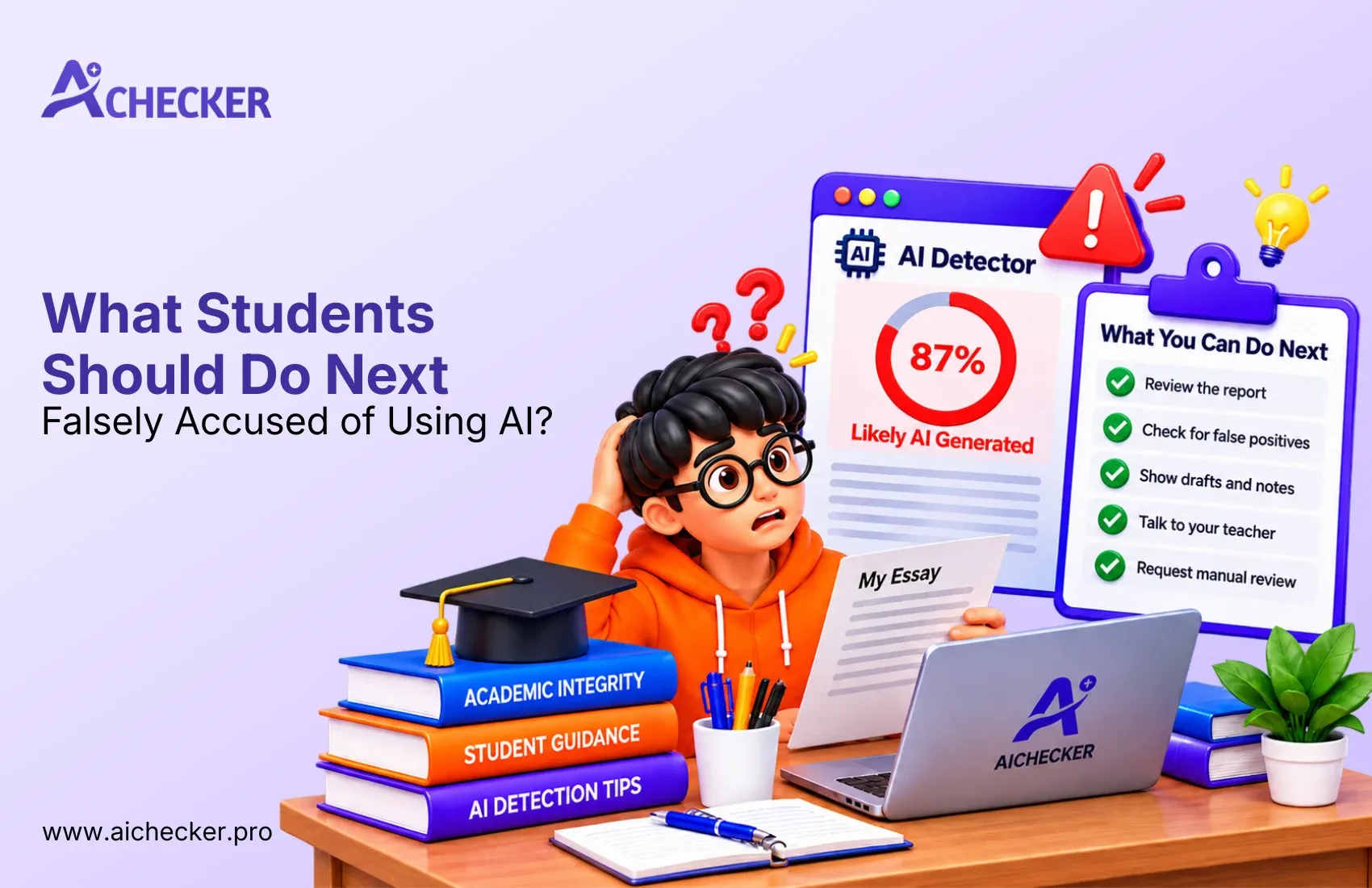
Ask your instructor what exactly caused the concern and whether it was only the AI detector or something else in your work. Then, show proof of your writing process, such as your outline, drafts, research notes, or Google Docs version history.
These details can clearly demonstrate that the work is yours. It is also helpful to understand your school's appeal process before you ever need it. Being prepared can make it much easier to explain your work with confidence.
This is where AI Checker Pro becomes useful. It lets you review your content before submission, identify sections that may trigger AI detection, and improve them so your writing feels more natural and authentic.
Where AI Checker Pro Fits Into All This
Given how uneven detection has gotten across schools, a lot of students and even instructors have started using dedicated tools like AI Checker Pro's humanizer to check their own writing before submitting it, or to sanity-check how a piece of writing might read to an automated system.
It's not a way to "beat" detection; it's more like proofreading for AI-likeness the way you'd run a grammar check before turning in a final draft.
If you've used AI at any stage of your process, running your work through AI Checker Pro's detector, or even its humanizing and blog-enhancement tools when you're revising your own drafts, can help you catch sections that read stiffly or inconsistently with your natural voice before a professor does.
I've started treating it as one more editing pass, the same way I'd use Grammarly, rather than a magic shield, because at the end of the day, the safest move is still writing something you can actually explain, in your own words, without a script.
Why AI Detection Will Keep Changing
The rate of advancement here shows no signs of slowing down. Detection technologies are becoming more sophisticated, and AI writing tools are constantly evolving to sound more human. The battle for dominance is eerily reminiscent of an arms race with no clear victor.
What seems to be taking shape in the years to come is that education is shifting away from penalizing the use of AI to rethinking how students are assessed in the first place. Oral exams, in-class writing, and projects and assignments requiring personal experience and reflection are all becoming more common as alternatives to traditional, AI-optimized writing.
The conversation around AI in education is gradually shifting from preventing student use to preparing students to use it effectively. This change in attitude is likely to have positive implications for all parties involved.
Practical Tips for Navigating This as a Student
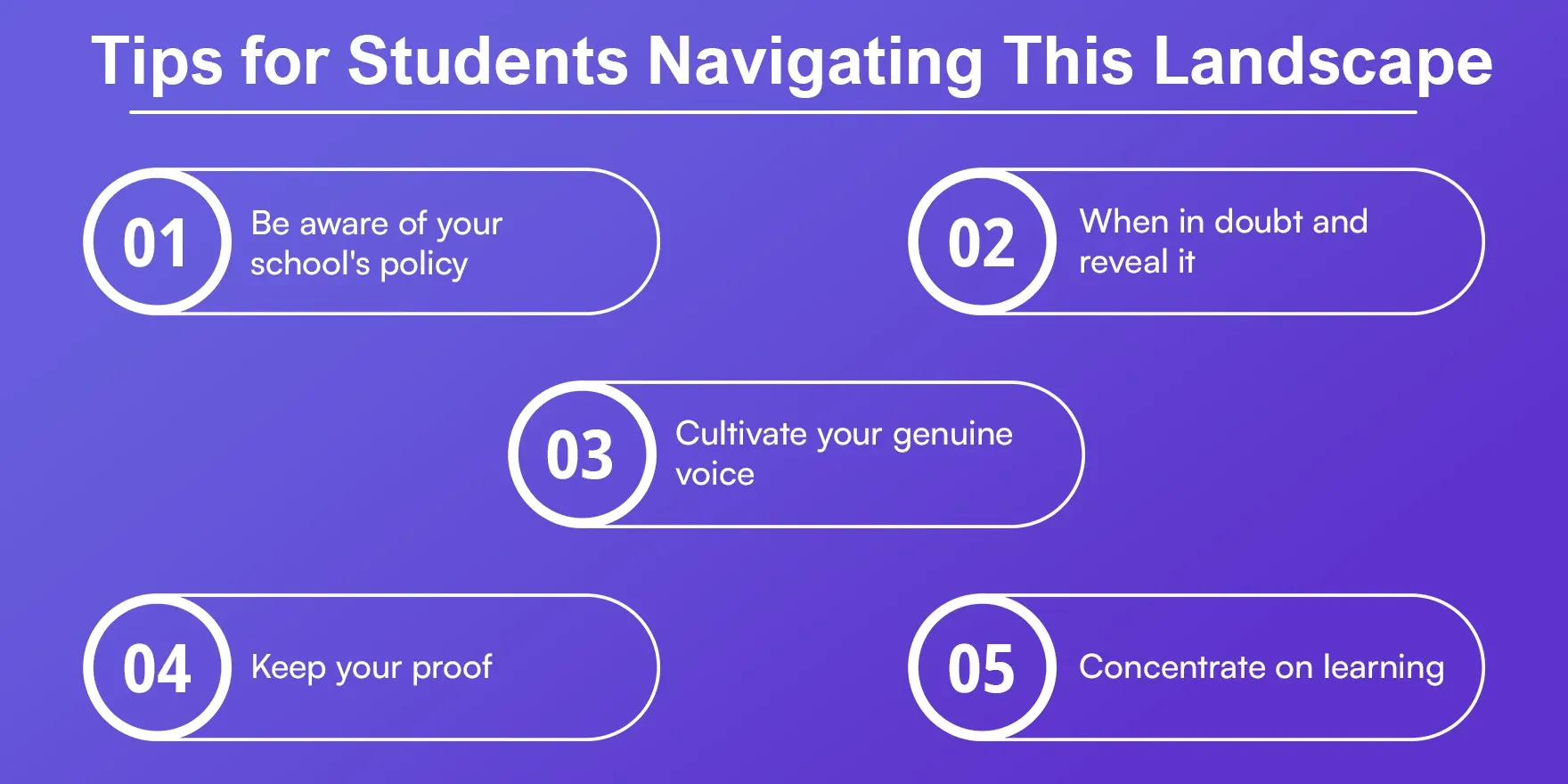
- Know your specific school's policy. Every institution treats AI differently, and course-level rules can vary even within the same school. Read the syllabus language carefully, not just the general handbook.
- When you're unsure, disclose. If you used AI in some capacity and aren't sure it's allowed, telling your professor upfront is almost always safer than hoping it goes unnoticed.
- Build a writing voice that's actually yours. The strongest protection against any detection tool, human or automated, is writing that draws on your real experiences and genuinely engages with your course material.
- Keep your process trail. Drafts, notes, and research history aren't just backup; they're proof, and they've genuinely saved students in appeals meetings.
- Remember what the assignment is actually for. The point was never just turning something in. It's building skills you'll need long after the class ends, and skipping that now tends to show up as a gap later.
Conclusion
AI is changing education faster than many schools can update their policies. As a result, students are often unsure about what is acceptable, and teachers have to make difficult decisions with limited guidance.
Instead of relying only on AI detection tools, schools also need to address why students use AI in the first place, such as heavy workloads, tight deadlines, and academic pressure. Until clearer guidelines are in place, the best approach is to think independently, save your drafts, and understand your school's AI policy before submitting your work.
Before you submit, you can also use AI Checker Pro to review your content, identify sections that may trigger AI detection, and make improvements with confidence.
FAQs
Does SafeAssign detect AI-generated content?
Can Blackboard catch ChatGPT writing?
What percentage on SafeAssign means AI was used?
How do professors know if I used AI without a detector?
Does Turnitin detect AI better than SafeAssign?
What happens if SafeAssign flags my AI use?
Can AI detectors give false positives?
Is it safe to use ChatGPT for school work in 2026?
How can I check if my writing looks AI-generated before submitting?
What should I do if I'm falsely accused of using AI?

Harshil Barvaliya
SEO Executive & Content Writer at AI Checker Pro
I’m Harshil Barvaliya, an SEO Executive and Content Writer at AI Checker Pro. I focus on improving the website’s search engine visibility through effective SEO strategies, including keyword research, on-page and off-page optimization, and content development.Get Started Free
Create a free account for advanced AI detection and scan history.
Trusted by thousands worldwide.
Recent Blog's
Discover how AI-powered content creation can elevate your website's reach and engage your audience like never before. Explore the real impact of AI on crafting content that connects.